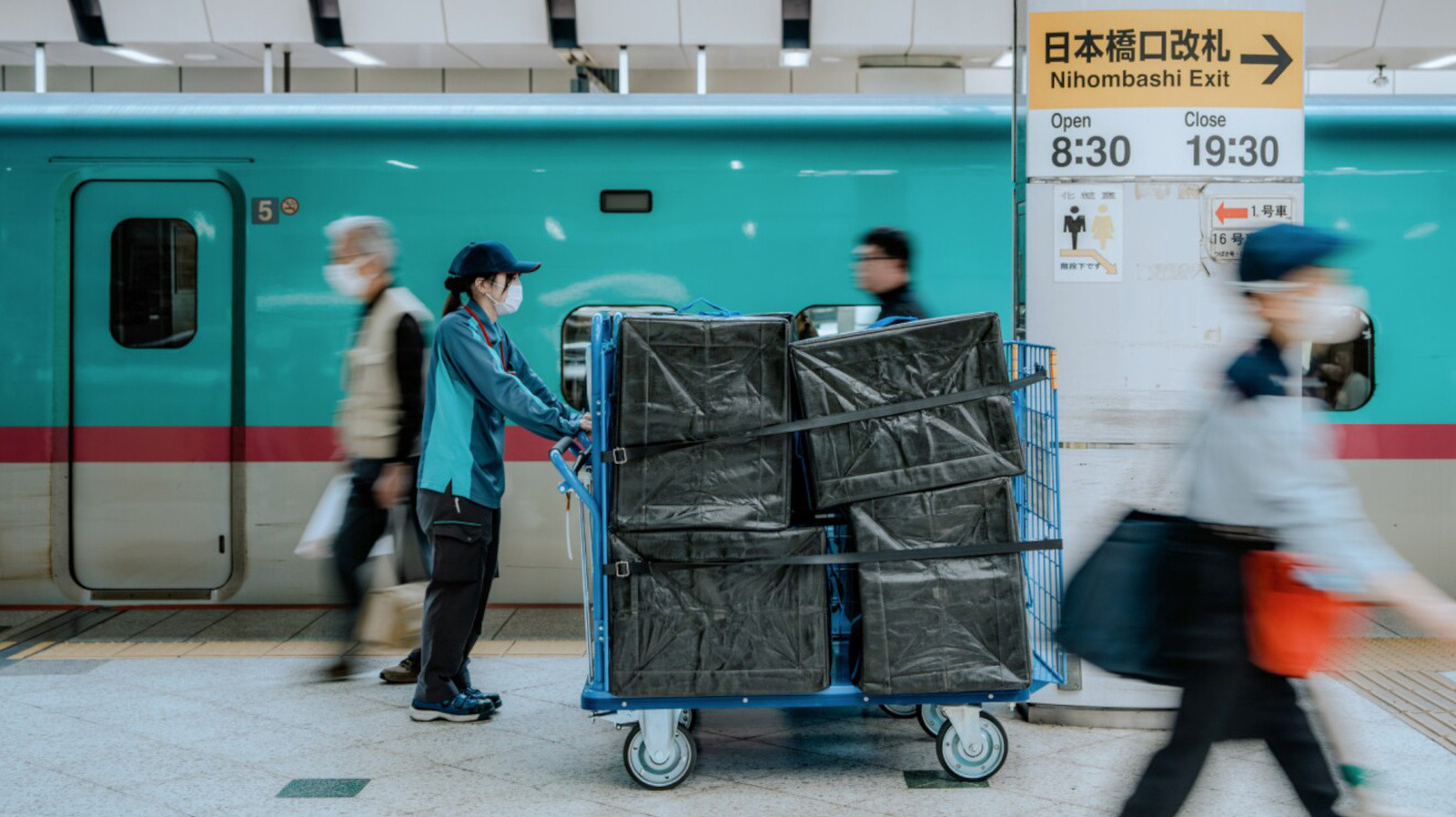
Amazon is turning bullet trains into a logistics lane
Amazon Japan has started moving packages on the country’s Shinkansen bullet trains, using non-passenger space on three rail routes to transport parcels between its facilities. The company says the partnership with Japan Railway is intended to reduce both delivery times and carbon dioxide emissions.
The move gives Amazon access to one of the world’s fastest rail systems for interregional logistics. The source report notes that Shinkansen trains can reach speeds of up to 200 miles per hour and can cut a route such as Tokyo to Osaka from roughly eight hours of travel time to about two and a half hours.
Three routes now in use
According to the report, Amazon began moving packages on the Tohoku Shinkansen in March 2026, linking Tokyo with destinations including Fukushima and Sendai. In May 2026, it added the Tohoku-Hokkaido Shinkansen, connecting Tokyo to Hokkaido, and the Hokuriku Shinkansen, which links Tokyo to the Hokuriku region including Nagano.
The fact that the company is using non-passenger space matters. It suggests Amazon is integrating with existing rail capacity rather than creating a bespoke cargo-only system. That can make the arrangement easier to scale incrementally while avoiding some of the infrastructure overhead associated with dedicated freight projects.

Speed and carbon goals align
The logistics logic is straightforward: electric high-speed rail can move shipments quickly while offering a lower-emission alternative to some other transport modes. Amazon says the move supports a longer-term climate strategy the company has been developing for several years.
Back in 2019, Amazon launched an initiative aimed at net-zero carbon deliveries and said it expected half its shipments to be net zero by 2030, supported by measures including electric vehicles, renewable energy, and renewable packaging. Under the broader Climate Pledge, which Amazon co-founded, the company committed to reach net-zero carbon across its global operations by 2040.
Why this is notable now
The announcement arrives with a degree of tension. The same source notes that Amazon’s overall carbon emissions increased for the first time since 2022, according to a sustainability report released in 2025. The company attributed much of that rise to its data-center expansion and the energy demands tied to AI chips, which use more power to run and cool than traditional hardware. Data-center construction also contributed to emissions growth.
That context makes the Shinkansen move more than a novelty. It shows Amazon looking for logistics efficiencies and lower-carbon transport options at the same time that its broader infrastructure ambitions are making climate targets harder to hit. In that sense, rail freight becomes both an operational tool and part of a larger balancing act.

A regional experiment with broader implications
Amazon already uses lower-emission delivery methods in other regions, including e-cargo bikes in parts of Europe and drone deliveries in several US cities. The Japan rail partnership adds another model to that mix, one tailored to a country with dense rail infrastructure and high-speed service between major regions.
If the approach works well, it could strengthen the case for using passenger rail networks more creatively for parcel movement where spare capacity exists. Not every market has a Shinkansen, but the principle of repurposing underused transport space for cleaner logistics could travel beyond Japan.
The significance is in the fit
The strongest part of the experiment may be how well the system fits its environment. Japan’s high-speed rail network is already built, electrified, and punctual. Amazon’s logistics needs are large, time-sensitive, and geographically distributed. Putting the two together is the kind of operational shift that looks obvious only after someone has done it.
For Amazon, the payoff would be faster regional movement with lower emissions intensity. For the wider logistics industry, the message is that decarbonization may come not just from new vehicles, but from better use of the transport systems already in place.
This article is based on reporting by Engadget. Read the original article.

Originally published on engadget.com


