Majorana's idea still shadows modern physics
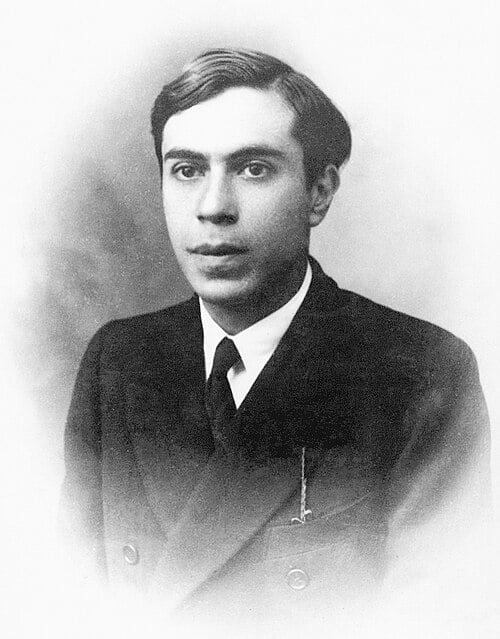
One of the strangest unresolved questions in particle physics has returned to the foreground: could neutrinos be particles that are also their own antiparticles? The idea traces back to Italian physicist Ettore Majorana, who published a paper in 1937 describing the theoretical possibility of a particle with exactly that property. Nearly a century later, physicists still do not know whether he was right.
The question carries unusual intellectual weight because it challenges a basic expectation about how matter is organized. In conventional particle language, particles and antiparticles come in pairs. An electron has a positron. A proton has an antiproton. The symmetry is one of the conceptual anchors that makes particle physics feel orderly, even when the underlying mathematics becomes difficult.
Majorana's proposal cut against that expectation. He described a type of particle that would not need a separate antiparticle counterpart because it would be its own opposite. If such an entity exists in nature, it would not just add another odd detail to the Standard Model era. It would force physicists to revisit how they define some of the most basic categories in the field.
The neutrino is the leading suspect
Neutrinos are natural candidates for this possibility because they are already among the most elusive particles known to science. They interact only weakly with matter, pass through ordinary material with astonishing ease, and have a history of disrupting neat theoretical expectations. In the supplied source text, that reputation is treated almost as a running grievance: neutrinos are the particles that refuse to behave the way physicists would prefer.
That characterization is playful, but it points to something real. Neutrinos have repeatedly forced revisions to established thinking. They are difficult to detect, difficult to measure, and closely associated with some of the most persistent gaps in modern physics. The idea that they might also be Majorana particles therefore feels less like a random speculation than a natural extension of their history as troublemakers.
If neutrinos are their own antiparticles, the implications would be significant. It would mean that a particle long treated as a difficult edge case is actually revealing a deeper truth about the structure of matter. It would also elevate Majorana's final paper from an elegant theoretical curiosity to a foundational insight that was simply decades ahead of experimental confirmation.

The man behind the idea
The mystery is sharpened by the biography of the physicist who proposed it. Majorana disappeared in 1938 at the age of 31 after buying a ferry ticket from Palermo to Naples and sending a farewell note to Antonio Carrelli, director of the Naples Physics Institute. He was never seen again. The details of his disappearance have fueled fascination ever since, but the scientific significance lies in the work he left behind in the year before he vanished.
Majorana's stature among physicists was extraordinary. The source text cites Enrico Fermi, who reportedly ranked scientists in several tiers before placing Majorana among the rare geniuses comparable to Galileo and Newton. Whether or not one accepts that assessment in full, the remark captures how highly he was regarded by his peers.
That context matters because it helps explain why a short, initially overlooked paper still commands attention. Majorana was not merely proposing an exotic abstraction. He was one of the brightest theoretical minds of his generation suggesting that physics might be missing a category of particle altogether.
Why the answer matters now
The reason this question remains compelling is not only historical. It sits at the intersection of theory, experiment, and the limits of the Standard Model. Physicists have built a remarkably successful framework for describing elementary particles and forces, but neutrinos have a habit of exposing its incompleteness. When a particle repeatedly strains the boundaries of a theory, researchers have to ask whether the theory is missing a structural principle.
A Majorana neutrino would be exactly that kind of structural clue. It would suggest that the usual particle-antiparticle distinction is not universal. In practical terms, it would tell physicists that at least one class of matter can be organized in a more economical and more surprising way than the textbook pattern implies.
There is also a broader conceptual reason the question resonates. Physics often advances by discovering that a category once treated as fundamental is actually provisional. Space and time, particle and wave, mass and energy: history is full of concepts that were reshaped once new evidence arrived. The Majorana possibility sits in that tradition. It asks whether the definition of a particle is less rigid than it appears.
A puzzle that remains open
What makes the story durable is the combination of a clear theoretical proposal, a particle already famous for defying expectations, and an answer that remains experimentally unresolved. That is rare. Many old ideas in physics are either discarded or absorbed into settled knowledge. This one has done neither. It remains alive because the underlying question is still scientifically active.
The supplied article frames the neutrino almost as a hostile witness against neat physics, but the deeper point is more useful: some of the most important discoveries begin as violations of comfort. A particle that barely interacts, seems to slip through matter, and resists simple categorization is exactly the kind of object that can expose hidden assumptions in a theory.
For Developments Today readers, the story is a reminder that not all frontier science arrives as a new instrument, launch, or lab breakthrough. Sometimes the frontier is a question that refuses to go away. Majorana's proposal has survived because it is not merely strange. It is testable in principle, foundational in consequence, and tied to one of the most unruly particles in physics.
Whether neutrinos are truly their own antiparticles remains unknown. But the endurance of the question says something important on its own. Modern physics still contains deep uncertainties at its foundations, and some of the most consequential answers may come not from adding more pieces to the puzzle, but from realizing the puzzle's basic shapes were drawn too narrowly in the first place.
This article is based on reporting by Universe Today. Read the original article.
Originally published on universetoday.com