Artemis 2 reaches a milestone moment
NASA’s Artemis 2 mission crossed a historic threshold on April 6 when its four-person crew flew around the far side of the moon, a passage that made them the farthest-traveled humans of all time. The moment carried both technical and symbolic weight: it is the first human flight to the moon since the Apollo era, and it places NASA’s current lunar campaign into a new stage beyond rehearsal and back into deep-space execution.
Hours after the flyby, President Donald Trump spoke with the crew and praised what he described as a history-making achievement. His comments reflected the national spectacle surrounding the mission, but the larger significance lies in the flight itself. Artemis 2 is demonstrating that human lunar missions are once again operational, not merely aspirational.
The first crewed moon mission in more than half a century
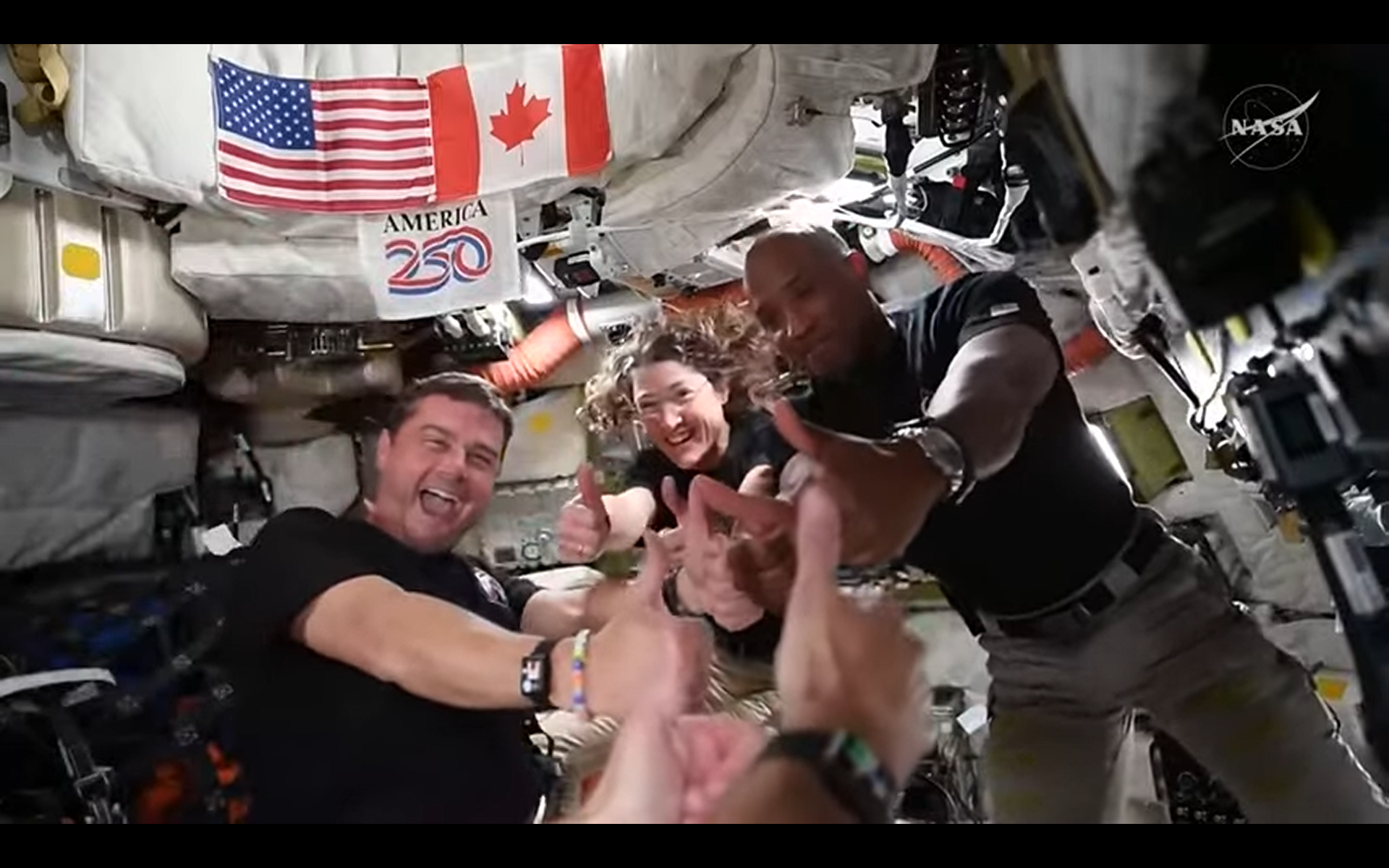
The mission launched from Florida on April 1 atop NASA’s Space Launch System, beginning a 10-day flight that is intended to send astronauts around the moon and back without landing. The crew includes commander Reid Wiseman, pilot Victor Glover, and mission specialists Christina Koch, all from NASA, along with Jeremy Hansen of Canada.
That crew lineup already made Artemis 2 a high-profile international mission. The flyby around the far side of the moon elevated it further. According to the source report, the astronauts spent seven hours on Monday observing parts of the moon never before seen by human eyes. The mission also broke the record for farthest distance from Earth traveled by humans.
Records alone are not the central point of Artemis, but they help communicate how far beyond low Earth orbit this mission extends. Most modern human spaceflight has remained comparatively close to Earth. Artemis 2 changes that frame in dramatic fashion by returning people to the Earth-moon system at full scale.

Why the far side passage matters
Flying around the far side of the moon is one of those mission moments that resonates for both engineers and the public. Operationally, it tests the spacecraft, the mission profile, and the crew in a true deep-space environment. Symbolically, it reconnects modern human spaceflight to one of the most powerful chapters in exploration history.
The far side has long held a special place in lunar flight because it is literally the hidden face from Earth’s perspective. For astronauts, passing behind the moon means entering a region that generations have imagined but only a handful of crews have experienced directly. For Artemis 2, that passage is also proof that the program is capable of carrying humans through the kind of translunar mission architecture that future landings will require.
There is also an institutional meaning here. NASA’s Artemis campaign is designed to be more than a one-off return. It is intended as the framework for sustained lunar exploration. A successful crewed flyby helps validate the overall direction of the program and demonstrates that the agency can once again execute long-distance human missions with international participation.
Apollo legacy, Artemis future
Any crewed lunar mission will inevitably be measured against Apollo, but Artemis 2 is not simply a repeat of the past. It is part of a different strategic effort, one aimed at building a longer-term presence around and on the moon. That makes this mission both backward-looking and forward-looking at once.
The backward-looking part is obvious. The moon remains one of the clearest benchmarks of what human spaceflight can achieve, and the gap since the last Apollo lunar mission has given any return enormous historical weight. The forward-looking part is more consequential. Artemis exists as a bridge to future missions, including landings and broader lunar operations.
By putting four astronauts into lunar flight again, NASA is not just revisiting old territory. It is reestablishing the capability, public expectation, and operational cadence needed for the next generation of exploration. In that sense, Artemis 2 matters less as a single event than as a systems test of a wider program.
The political spotlight and the mission itself
Trump’s remarks after the flyby underscored how quickly space achievements become political theater as well as national milestones. He told the crew that they had made history and made the country proud, framing the moment as a point of national accomplishment.
That response is unsurprising. Human lunar flight occupies a rare place in public life where technology, national identity, prestige, and exploration all intersect. Yet the most important element remains the performance of the mission. Artemis 2 is significant because it is flying, because it has carried humans around the moon, and because it is doing so as the opening crewed chapter of NASA’s current lunar return effort.
The crew itself also embodies the collaborative character of the program. With three NASA astronauts and one Canadian mission specialist aboard, the mission signals that lunar exploration is being pursued as a partnership, even as it remains heavily identified with US space leadership.
A turning point for modern human spaceflight
There are moments in spaceflight that function as proof of direction. Artemis 2’s moon flyby is one of them. It shows that the post-Apollo return to deep space is no longer a matter of slide decks, hardware rollouts, or countdowns alone. A crew has launched, traveled to the moon, gone around it, and set a new human distance record in the process.
That does not by itself guarantee the success of every later Artemis objective. Programs of this scale are judged over years, not days. But it does establish a fact that matters: human lunar exploration has resumed in operational terms.
For NASA, for its partners, and for a public that has not seen a crewed moon mission in more than half a century, that is the key development. Artemis 2 has taken the moon from long-term ambition back into lived experience. The astronauts are still on their 10-day journey, but the mission has already delivered its defining image: humans once again circling the moon.
This article is based on reporting by Space.com. Read the original article.
Originally published on space.com