Training Against the Threat That Changed Modern Warfare
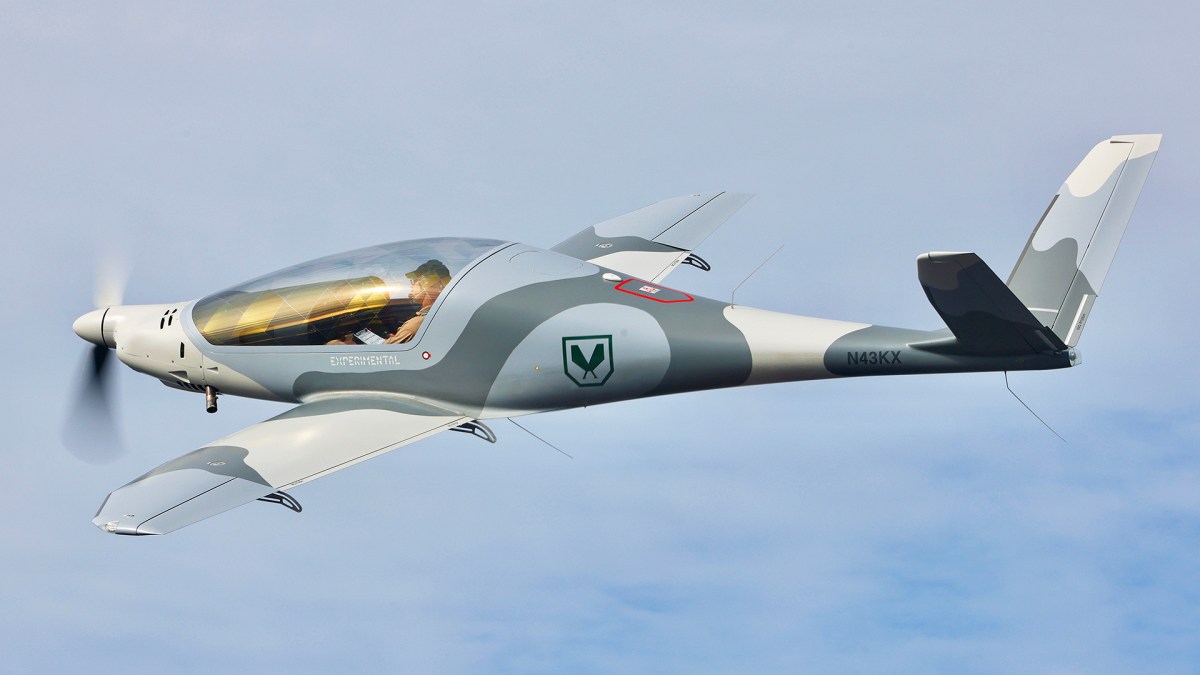
Two small experimental aircraft have been operating off the coast of Savannah, Georgia, with an unusual mission: pretend to be Iranian-made Shahed-136 kamikaze drones so that American fighter pilots can learn how to stop them. The aircraft, built by private defense contractor KestrelX, are providing what military planners describe as the most realistic drone-threat training available to U.S. forces.
The KestrelX KX-2 is a manned ultra-low observable microlight aircraft specifically designed to replicate the flight characteristics and radar signature of the Shahed-136, the delta-wing loitering munition that has become one of the defining weapons of the Ukraine war. With a radar cross-section smaller than a bird and the ability to fly 12-hour missions, these aircraft present fighter pilots with exactly the kind of slow, low, and hard-to-detect target that has frustrated air defense systems worldwide.
Sentry South 26.1
During the recent Sentry South 26.1 exercise off the Georgia coast, two KX-2 aircraft flew as surrogate drones, providing training for F-22 Raptor, F-15E Strike Eagle, and F/A-18 Super Hornet pilots. The exercise simulated a drone launch from approximately 50 miles away from friendly targets, with the KX-2s operating at about 1,000 feet above the water and cruising at roughly 120 miles per hour.
These parameters closely match the Shahed-136's operational profile. The real drone typically flies at low altitude and relatively slow speed, relying on its small size and minimal radar signature rather than maneuverability to evade defenses. For fighter pilots accustomed to engaging fast-moving aircraft at high altitude, detecting and tracking a target this small and slow requires fundamentally different tactics.
Why Existing Drones Cannot Replicate This Threat
The U.S. military operates a variety of drone targets for training purposes, but most are designed to simulate conventional aircraft threats rather than the specific challenges posed by Shahed-class weapons. Standard target drones are either too large, producing unrealistic radar returns, or too small and short-ranged to support the extended scenarios that realistic training requires.
The KX-2 fills this gap by combining the radar signature of a Shahed-136 with the endurance and flexibility of a manned aircraft. Having a human pilot onboard means the aircraft can react dynamically to the training scenario, adjusting its flight path to present more challenging or realistic situations as the exercise develops.
The Drone Challenge
The Shahed-136 and its derivatives have posed a severe challenge to air defense systems in Ukraine, the Middle East, and elsewhere. The drones are cheap enough to deploy in large numbers, small enough to evade many radar systems, and slow enough that engagement algorithms designed for faster targets often struggle to prioritize them correctly.
For fighter pilots, the challenge is both technical and doctrinal. Shooting down a 200-dollar drone with a million-dollar missile is economically unsustainable. Using cannon or other close-range weapons requires getting dangerously close to a target that might be one of dozens in a swarm. And the sensor and command-and-control architecture designed for conventional air combat does not always translate to the slow, distributed threat pattern that drone swarms present.
Adapting Tactics in Real Time
The Sentry South exercise was specifically designed to force Blue forces to develop and test new counter-drone tactics. Fighter pilots practiced detection techniques using their onboard radars, experimented with engagement profiles optimized for slow and low targets, and worked on coordination procedures for handing off drone tracks between multiple aircraft and ground-based sensors.
Scaling the Training
KestrelX's KX-2 program is still relatively small, with only two aircraft currently operational. But the company is actively seeking contracts to expand its fleet and support additional exercises across the military services. The Marine Corps, Army air defense units, and Navy surface combatants all face the same Shahed-class threat and could benefit from similar realistic training.
The broader lesson from Sentry South is that the U.S. military is taking the drone threat seriously enough to invest in dedicated training infrastructure. Fighter pilots who may one day face hundreds of Shahed-class drones over a contested battlespace need to develop tactics and confidence now, and the KX-2 gives them the closest thing to reality without actual combat.
This article is based on reporting by The War Zone. Read the original article.
Originally published on twz.com