The Navy’s newest carrier is pausing in Croatia for maintenance
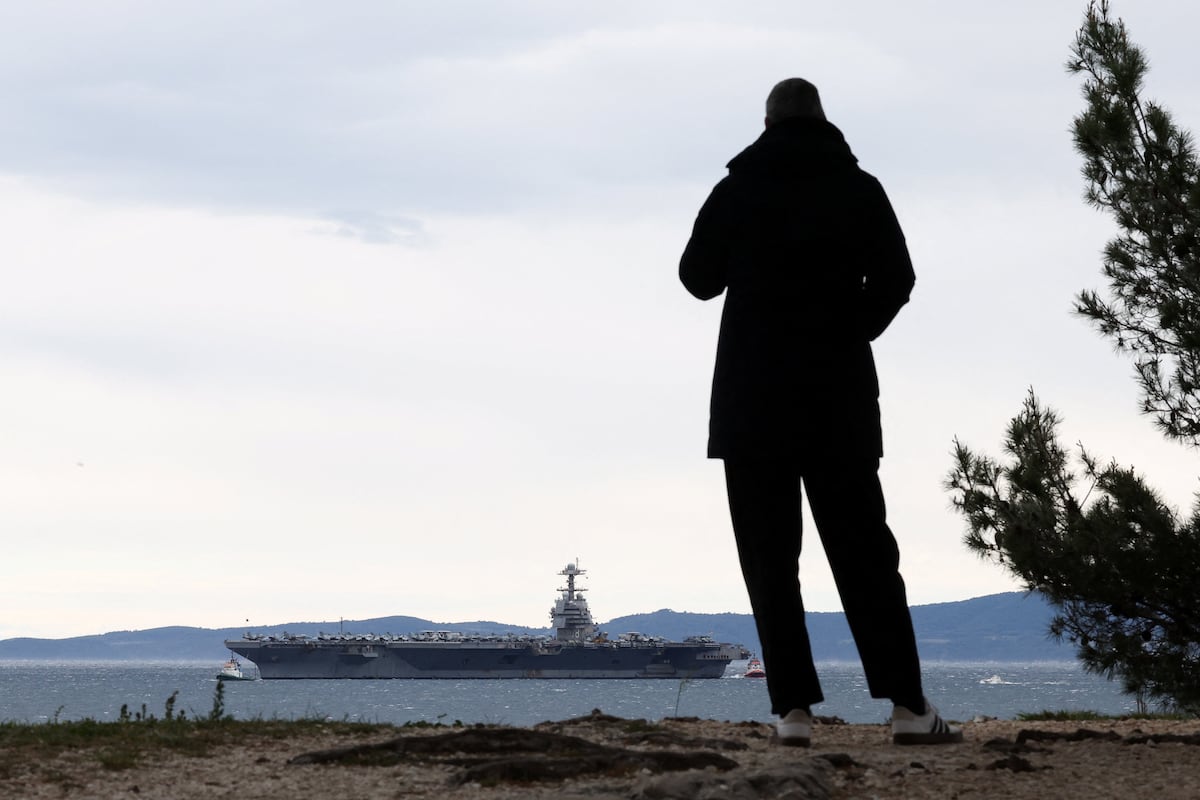
The USS Gerald R. Ford, the newest aircraft carrier in the U.S. fleet and the largest carrier in the world, has arrived in the Croatian port of Split for repairs and maintenance after a punishing nine-month deployment that included operations in multiple theaters.
The stop comes after a non-combat fire broke out in the ship’s main laundry room on March 12 while the carrier was operating in the Red Sea in support of Operation Epic Fury. The fire injured three sailors, and a U.S. official said nearly 200 more were treated for smoke-related issues. The blaze reportedly took hours to control and affected roughly 100 sleeping berths onboard.
For a flagship vessel meant to symbolize the Navy’s technological edge, the repairs underscore a more basic reality of power projection: even the most advanced warships remain vulnerable to routine onboard systems failures, maintenance strain, and the cumulative wear of extended deployment.
A deployment marked by strain
The Ford’s arrival in Croatia follows a demanding operational stretch. The carrier had already spent nine months deployed and had participated in operations against Venezuela in the Caribbean before reaching the Middle East. By the time it reached the Adriatic, the ship had accumulated not only combat-support obligations but also a record of internal technical difficulties.
Among the most persistent issues cited during the deployment were plumbing problems affecting the ship’s nearly 650 toilets. While such details can sound trivial next to a carrier air wing and advanced radar systems, they matter enormously in practice. Habitability, sanitation, and internal services are central to the readiness of a crew of more than 5,000 sailors, especially over a long deployment.
The fire added a more visible layer of disruption. A laundry-room blaze is not the type of battle damage associated with naval combat, but smoke injuries, damaged berthing areas, and the logistical aftermath of a shipboard fire can still degrade day-to-day operations and crew conditions in meaningful ways.
Prior to its move to Split, the Ford had temporarily stopped at Souda Bay on the Greek island of Crete. Croatia, a NATO ally, approved the carrier’s arrival earlier in the week, making Split the latest allied port to support sustainment for a U.S. naval asset operating far from home.
Strategic symbolism remains part of the visit
The stop is not only about repairs. According to a statement from the U.S. embassy to Croatia, the carrier will host local officials and key leaders during the visit to reaffirm the alliance between the United States and Croatia. That diplomatic framing is typical of major port calls by American naval vessels, especially in allied territory where logistics and alliance signaling often go hand in hand.
Port visits by carriers carry military and political messages simultaneously. They provide an opportunity for rest, repairs, and replenishment, but they also demonstrate access, interoperability, and ongoing regional ties. In the current security environment, a carrier entering a NATO ally’s port after active operations can be read both as a maintenance necessity and as a reminder of U.S. reach and alliance structure.
The Ford class still lives under a spotlight
The Gerald R. Ford occupies a special place in U.S. naval planning because it is the lead ship of a new carrier class intended to modernize the Navy’s carrier force. That makes every high-profile disruption more visible. Supporters see the ship as a central part of future maritime power projection. Critics have long argued that next-generation carriers remain expensive and operationally demanding even before facing the full pressures of combat.
This latest repair stop does not settle those debates, but it does add another data point to the story of a ship class still being judged on reliability as much as capability. The Ford carries more than 75 aircraft, including F-18 Super Hornets, and fields a sophisticated radar system for air traffic control and navigation. Those capabilities are substantial. Yet long deployments also test everything that sits behind the headline specifications: survivability, maintainability, and the resilience of onboard systems under sustained use.
The current stop in Split therefore matters beyond routine upkeep. It highlights how modern naval readiness is shaped not just by missiles, aircraft, and sensors, but by the ability to keep an enormous floating city functional after months of operational stress.
For now, the Ford remains a powerful symbol of U.S. naval reach. But its arrival in Croatia is also a reminder that readiness is never abstract. It is built, degraded, repaired, and tested one deployment at a time.
This article is based on reporting by Defense News. Read the original article.
Originally published on defensenews.com