High-Stakes Talks Collapse in Islamabad
The first direct U.S.-Iranian talks in more than a decade have ended without a deal, raising fresh doubts about whether a tenuous ceasefire can hold. According to Defense News, citing Reuters reporting, the negotiations in Islamabad ran for 21 hours but concluded on April 12 with both delegations departing Pakistan and no agreement in place.
The failure matters well beyond diplomacy. The conflict has already killed thousands, disrupted the global economy, and sent oil prices sharply higher, according to the supplied report. The talks had represented the most significant opening between Washington and Tehran since the 1979 Islamic Revolution, and their collapse now returns attention to the unresolved issues that pushed the war to this point in the first place.
Both Sides Blamed the Other
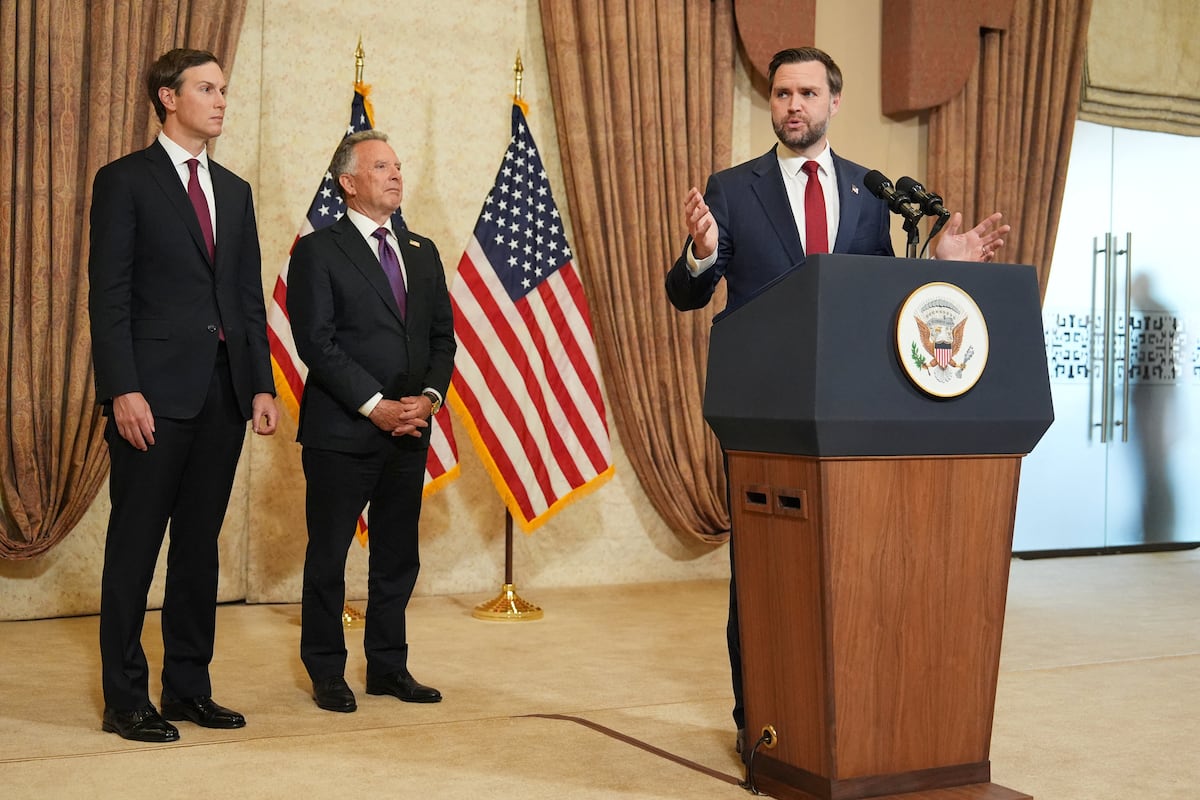
Vice President JD Vance, who led the U.S. delegation, said after the talks that no agreement had been reached and argued that the outcome was worse for Iran than for the United States. He also reiterated what he described as Washington’s red lines, centered on an affirmative Iranian commitment not to seek a nuclear weapon or the tools needed to achieve one quickly.
Iranian officials gave a sharply different account. Parliamentary Speaker Mohammad Baqer Qalibaf, who led Tehran’s team alongside Foreign Minister Abbas Araqchi, said the United States had not earned Iran’s trust despite what he described as forward-looking initiatives from the Iranian side. Iranian media quoted in the report said there had been agreement on some issues, but that differences over the Strait of Hormuz and Iran’s nuclear program remained the principal obstacles.
That split framing is important because it suggests the talks did not fail over procedure alone. The dispute appears substantive and strategic. Washington wants clear constraints tied to nuclear capability. Tehran, at least as represented in the report, is demanding proof that any diplomatic arrangement is credible and not simply a vehicle for pressure under another name.

The Ceasefire Is Holding, but Barely
The immediate concern is the ceasefire agreed the previous week. Pakistan’s Foreign Minister Ishaq Dar said it was imperative to preserve the two-week pause in fighting as both sides attempt to wind down a war that began on February 28 with airstrikes by the United States and Israel on Iran.
That wording captures the precariousness of the moment. A ceasefire without a broader political settlement can freeze conflict, but it does not resolve it. If core disputes remain active and neither side feels it gained enough from talks, even a temporary halt in fighting can become fragile very quickly. The fact that direct negotiations occurred at all was significant. The fact that they ended with both parties publicly hardening their positions is equally significant.
Israeli security cabinet minister Zeev Elkin, quoted in the report, said additional talks remained possible but warned that Iran was playing with fire. That comment points to another reality shaping the diplomatic environment: the conflict is not purely bilateral in its consequences. Regional actors and global energy markets are both tightly linked to what happens next.
The Strait of Hormuz Remains a Central Pressure Point
Among the biggest unresolved issues is the Strait of Hormuz, one of the world’s most strategically important energy chokepoints. The report notes that Iran has blocked the passage since the war began and that the strait normally carries about 20% of global energy supplies. Any lasting dispute over access immediately becomes a global economic issue, not only a military one.
That gives the ceasefire an economic dimension as well as a security dimension. Even if large-scale fighting pauses, uncertainty around shipping can continue to raise costs and disrupt supply expectations. Markets do not need total closure to react; prolonged ambiguity can be enough. The report says Iranian media identified Hormuz as one of the major sticking points in the negotiations, which suggests that maritime access is not merely a side issue but one of the conflict’s central bargaining chips.
In that sense, the failed talks expose how tightly security policy, nuclear diplomacy, and energy flows are now bundled together. An agreement on one front may be hard to reach without movement on the others. That makes negotiation more complicated and raises the risk that partial deals will collapse under the weight of linked demands.

What Failure Means Now
The collapse of the Islamabad talks does not automatically mean a return to full-scale war, but it does narrow the margin for error. The report makes clear that this was the highest-level direct engagement in years. When talks at that level end without a framework or even a public pathway to continue, uncertainty grows on every front: military, diplomatic, and economic.
Still, the door is not fully closed. Statements from multiple sides imply that further talks remain possible. That matters because the alternatives are deeply costly. The war has already killed thousands and destabilized markets. Neither side can assume that a prolonged unresolved crisis will remain contained.
For now, the most concrete fact is simple. After 21 hours of negotiations in Islamabad, the United States and Iran left without a deal. The ceasefire remains in place, but its future is uncertain. The main divides identified in the report, Iran’s nuclear program and the Strait of Hormuz, are exactly the kinds of issues that are difficult to postpone and dangerous to leave unsettled.
That leaves diplomacy in a familiar but hazardous position: still possible, yet materially weaker than it was a day earlier.
This article is based on reporting by Defense News. Read the original article.
Originally published on defensenews.com