A wartime startup targets a harder mission
Ukraine’s defense industry has become a laboratory for fast, low-cost military innovation, and one of its emerging firms now says it wants to push that model into one of air defense’s most difficult and expensive jobs: intercepting ballistic missiles.
According to Reuters reporting cited by Defense News, Fire Point, the company behind Ukraine’s Flamingo cruise missile, is in talks with European partners to develop a new air defense system that could enter service as soon as next year, with a first ballistic missile interception targeted for the end of 2027. The company’s co-founder and chief designer, Denys Shtilierman, described the effort as a lower-cost alternative to systems such as the Patriot.
The timing is important. Governments across Europe and the broader West are reassessing air and missile defense as wars in Ukraine and Iran expose both the intensity of modern strike campaigns and the limits of current stockpiles. Proven systems like Patriot remain in high demand, but their missiles are expensive and, in the current strategic climate, increasingly hard to obtain in sufficient numbers.
The cost problem is driving the opportunity
Fire Point’s pitch is clear: ballistic missile defense needs a cheaper intercept model. Shtilierman said Patriot batteries often require two or three missiles to destroy a ballistic target, with each interceptor costing several million dollars. Fire Point says it wants to bring the cost of intercepting a ballistic missile to below $1 million.
If that target proves achievable, it would represent more than a marginal efficiency gain. It would change how countries think about defending cities, bases, and infrastructure against repeated missile attacks. Cost exchange ratios matter in air defense. When the defender has to spend far more than the attacker for each engagement, even tactically successful defense can become strategically unsustainable.
That is one reason Ukraine’s wartime engineering base has attracted attention. Years of fighting Russia have forced Ukrainian firms to optimize around affordability, adaptability, and production speed. Fire Point’s leadership is effectively arguing that those same lessons can now be applied to missile defense, one of the most capital-intensive segments of the defense market.

A collaborative European path
The proposed system is not presented as a purely Ukrainian build. Fire Point says it is discussing cooperation with European companies and is especially interested in radar, seeker technology, and communications systems, areas where it says it lacks expertise. Shtilierman specifically pointed to firms such as Weibel, Hensoldt, SAAB, and Thales as having strong radar solutions.
That collaborative model reflects the current structure of European defense industrial policy. Many countries want more sovereign or regional production capacity, but few can independently field an entire next-generation air defense architecture on short timelines. A Ukrainian-European partnership would combine battlefield-driven design experience with the specialized sensor and systems integration capabilities of established Western suppliers.
It would also fit the larger trend of Ukraine moving from weapons recipient to defense exporter and partner. The source report notes that Ukrainian firms are now looking to export excess capacity as global military spending rises and that Kyiv has loosened some wartime export restrictions, even though proposed deals still face strict review and state approval.
The Patriot gap and Europe’s pressure points
The strategic context is doing much of the work here. Patriot systems remain the best-known Western answer to ballistic missile threats, but supply is tight. The report notes extensive deployment in the Gulf against Iranian attacks. Europe’s other anti-ballistic option, the Franco-Italian SAMP/T, is produced in comparatively small numbers.
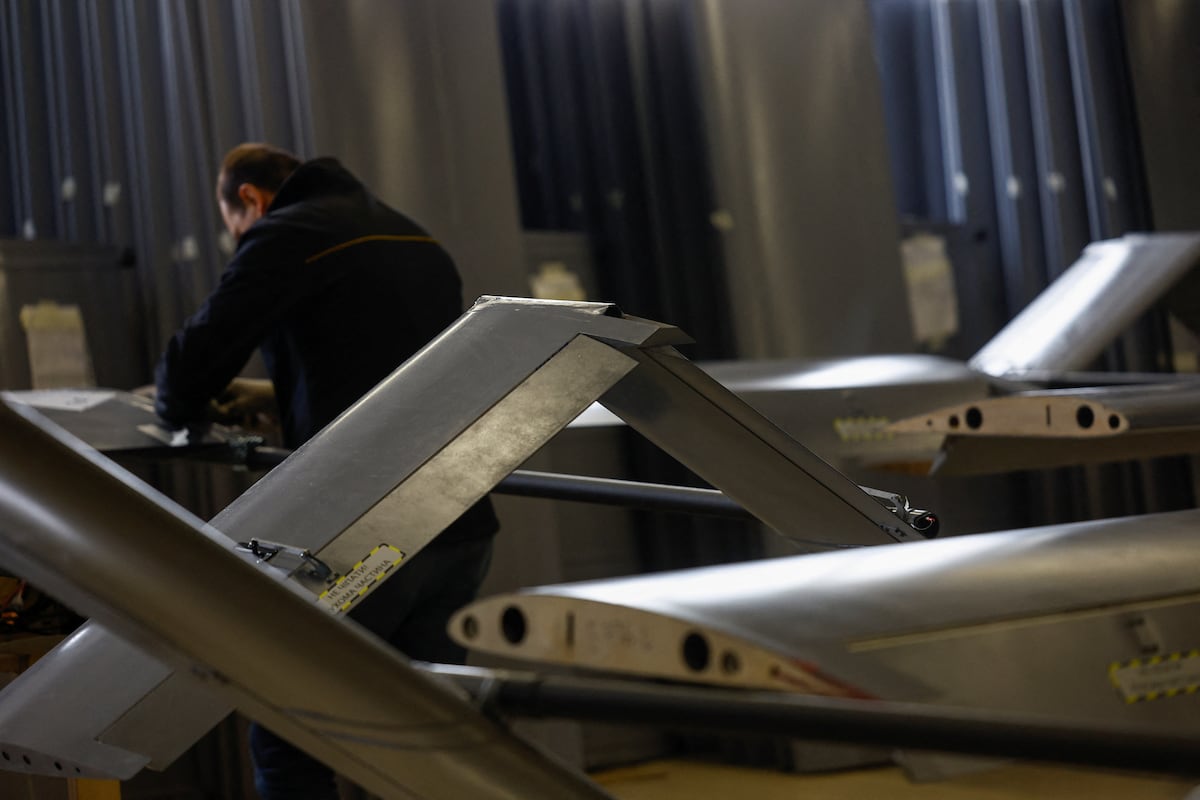
That leaves allies searching for alternatives that are affordable, scalable, and available on a useful timeline. Fire Point is trying to position itself in exactly that gap. The company was founded after Russia’s 2022 full-scale invasion and has become Ukraine’s largest maker of the long-range drones used in many deep strikes into Russia. Its FP5 long-range cruise missile, better known as the Flamingo, has added to its profile in recent months.
Moving from drones and cruise missiles into ballistic missile defense is a major leap in technical difficulty. Tracking, discrimination, guidance, and kill-chain timing are all harder. The company is not claiming it has already solved those problems. It is saying that the market need is large enough, and the industrial base dynamic favorable enough, to justify the attempt.
More than a single product bet
The report also says Fire Point is awaiting government approval for an investment from a Middle Eastern conglomerate that would value the company at $2.5 billion and could expand opportunities including low-orbit satellite launches. That detail suggests the firm is trying to evolve beyond a single wartime product line into a broader aerospace and defense platform.
Whether Fire Point can deliver on its air defense timetable remains uncertain. The project depends on partnerships, government approvals, and successful development in some of the most demanding areas of modern weapons engineering. But the significance of the announcement does not depend solely on near-term success.
It shows how the wars of the 2020s are reshaping the defense market. Countries want more missile defense. Traditional systems are scarce and costly. Ukrainian firms, forged under battlefield pressure, increasingly believe they can fill some of the gap. If Fire Point’s concept matures, it could become one of the clearest examples yet of wartime necessity turning into exportable military-industrial capability.
This article is based on reporting by Defense News. Read the original article.
Originally published on defensenews.com