Britain publicly accuses Moscow of a covert undersea operation
The UK says it uncovered and tracked what it described as a secret Russian submarine mission in and around British waters, a deployment that British officials said threatened undersea cables and other critical infrastructure in the North Atlantic.
British Defense Secretary John Healey said there was no evidence that any cables or underwater pipelines had been damaged. But he used an unusually direct public statement to warn Moscow that the UK and its allies had watched the operation closely and were prepared to respond if subsea infrastructure were attacked.
“We see you,” Healey said in a message aimed at Russian President Vladimir Putin, according to Breaking Defense coverage from London.
A month-long mission, tracked “every mile”
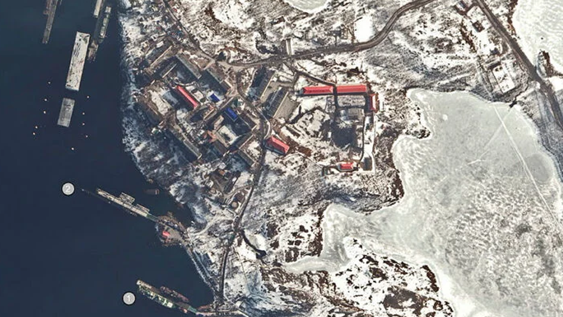
Healey said the UK, working with allies, tracked “every mile” of a deployment involving an Akula-class attack submarine and two Main Directorate for Deep Sea Research, or GUGI, surveillance submarines. He said the Akula was likely used as a decoy while the GUGI vessels spent time over infrastructure relevant to Britain and allied countries.
The allegation matters because GUGI-linked platforms have long drawn attention for the role they could play in monitoring, mapping or potentially interfering with undersea systems. Modern economies and military alliances depend heavily on seabed infrastructure, including communications cables and energy links. Even absent confirmed damage, the proximity of specialized Russian submarines to that infrastructure is enough to trigger a major security response.
The scale of the allied monitoring effort
British officials used the announcement not only to describe the Russian mission but also to demonstrate the scale of the Western surveillance effort that followed it. At the national level alone, the UK said a Royal Air Force P-8 Poseidon maritime patrol aircraft logged more than 450 flight hours as part of the tracking operation. The Royal Navy frigate HMS St Albans covered several thousand nautical miles. The UK also deployed sonobuoys, Merlin helicopters and the Royal Fleet Auxiliary support ship Tidespring.
Norway supported the response with its own P-8 aircraft and a frigate, according to its defense minister, Tore O. Sandvik. That cooperation underscores that the issue is not being treated as a narrow British territorial concern. It is being framed as an allied infrastructure-security problem extending across the North Atlantic.
No damage reported, but a clear deterrent message
The British government emphasized that it had not seen evidence of physical damage. That distinction is important. London is accusing Russia of threatening infrastructure, not of carrying out a confirmed act of sabotage in this case.
Still, Healey coupled that caveat with a warning that there would be “serious consequences” if Moscow attempted to destroy subsea systems. He declined to describe specific options, saying that doing so would only make the Russians wiser.
The Russian embassy in London reportedly denied the claims. That denial was predictable, but it does little to reduce the strategic significance of the confrontation. Once a government decides to publicize a submarine-tracking operation, it is usually doing more than sharing information. It is signaling that it wants deterrence effects to be seen in public, not just delivered in private channels.
Why undersea infrastructure has become a front-line concern
Europe’s security environment has made undersea cables and pipelines a higher-profile vulnerability than they were just a few years ago. Seabed infrastructure is difficult to guard continuously, costly to repair and essential to civilian life, finance, communications and military coordination. That makes it an appealing pressure point in periods of confrontation below the threshold of open warfare.
The UK’s decision to reveal this operation suggests London wants to make clear that such movements are neither invisible nor cost-free. Public exposure can complicate adversary planning, reassure allies and demonstrate domestic readiness. It can also shape the narrative before a future incident occurs.
For Britain and its partners, the message is that undersea surveillance and cable security are no longer niche naval topics. They are now central to deterrence in the North Atlantic. By saying it tracked the Russian deployment “every mile,” the UK is claiming not only operational awareness but also political resolve. Whether that is enough to deter future missions remains uncertain, but the confrontation itself shows how quickly seabed infrastructure has moved into the foreground of European defense policy.
This article is based on reporting by Breaking Defense. Read the original article.
Originally published on breakingdefense.com