A Nation Secures Its Own Skies
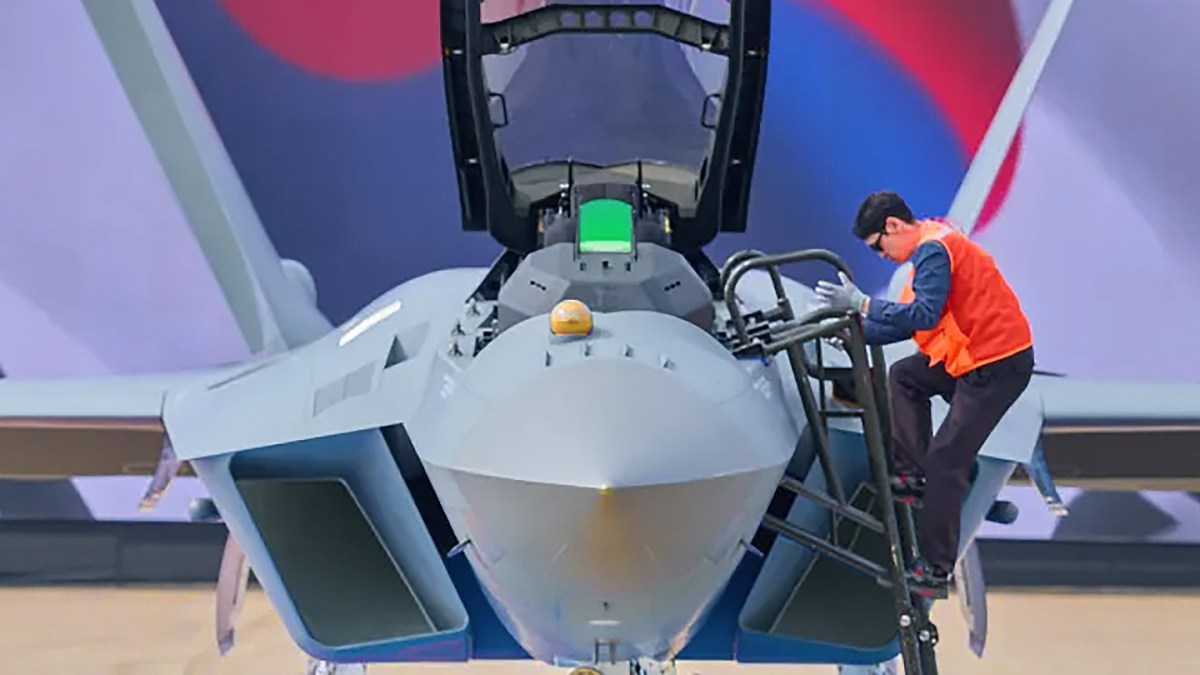
On March 25, 2026, South Korea celebrated a milestone that many in the defense industry had considered ambitious when the program began: the rollout of the first series-produced KF-21 Boramae fighter jet. The ceremony at Korea Aerospace Industries headquarters in Sacheon drew senior government officials and military leadership, with South Korean President Lee Jae Myung declaring that the nation had "finally secured weapons to protect peace with its own technology."
The KF-21 — whose name means "hawk" in Korean — represents the culmination of a decade-long effort to reduce South Korea's dependence on foreign fighter suppliers and establish a domestic aerospace industrial base capable of developing, manufacturing, and sustaining a frontline combat aircraft. The achievement places South Korea in a small group of nations capable of designing and producing advanced jet fighters independently.
Faster to Production Than Any Rival
What makes the KF-21 program particularly noteworthy is its timeline. The first prototype rolled out in April 2021. The first series-produced aircraft followed just over five years later — a remarkably compressed development cycle by any comparison. The F-35 program took approximately 11 years from first flight to initial production deliveries. Russia's Su-57 took roughly a decade. The European Eurofighter Typhoon required more than 15 years from initial concept to operational service.
South Korea achieved this pace in part by making deliberate design trade-offs. The KF-21 is intentionally positioned as a "4.5-generation" fighter rather than pursuing the full stealth signature of an F-35 or F-22. Internal weapons bays — a key stealth requirement — are planned for future variants but were deferred from the initial production version. This decision allowed engineers to focus on proven technologies and avoid the design complexity that added years and billions to American and European fifth-generation programs.
What the KF-21 Brings to the Fight
Despite its 4.5-generation classification, the KF-21 incorporates technologies that were unavailable to the previous generation of fighters. Its AESA (Active Electronically Scanned Array) radar provides modern electronic warfare capabilities, and an infrared search-and-track system adds passive detection to complement the radar suite. Armament includes ramjet-powered MBDA Meteor beyond-visual-range missiles, giving it genuine long-range air-to-air engagement capability.
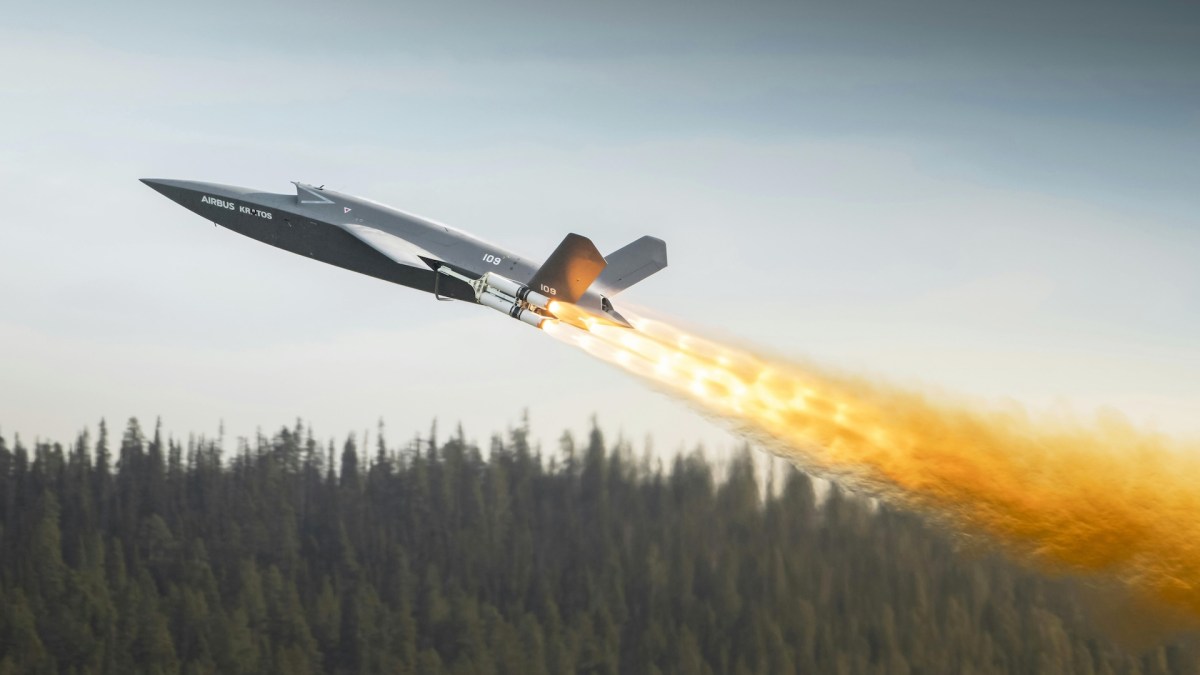
Future development roadmaps include internal weapons bays for reduced radar cross-section on strike missions, escort jamming systems to support other aircraft in contested airspace, and crewed-uncrewed teaming integration that would allow the KF-21 to serve as a mothership for loyal wingman drones. These capabilities, when fielded, would substantially increase the aircraft's operational flexibility and survivability against advanced air defense systems.
The Republic of Korea Air Force has announced plans to take delivery of 40 KF-21s by 2028 and a full fleet of 120 aircraft by 2032. These aircraft will operate alongside the ROKAF's existing F-35A fleet, providing a high-low mix that maximizes capability while managing cost.
Export Ambitions and Regional Context
South Korea has emerged as one of the most aggressive defense exporters in the world over the past five years, driven by strong domestic production capacity, competitive pricing, and geopolitical alignment with Western partners seeking to diversify supply chains. The K9 self-propelled howitzer and Cheongung medium-range air defense system have both found international buyers in recent years.
The KF-21 is positioned as the flagship of this export push. Discussions are ongoing with Indonesia, which co-funded early development stages and is exploring a potential order of 16 aircraft. Other Southeast Asian and Middle Eastern air forces have expressed preliminary interest. For buyers who cannot access F-35s due to cost or political constraints and find European aircraft prohibitively expensive, the KF-21 offers a modern alternative at a competitive price point.
The regional security context adds strategic weight to the program's success. North Korea continues to develop ballistic missile and drone capabilities, and China's air force expansion has accelerated. South Korea's ability to field domestically produced advanced fighters reduces its vulnerability to supply chain disruptions and foreign policy constraints in a neighborhood where security conditions can change rapidly.
What Comes Next
Korea Aerospace Industries is now focused on transitioning from the development organization that built the prototypes to the production organization that will deliver 120 aircraft over the next six years. Manufacturing ramp-up, supply chain localization, and pilot training pipeline expansion are all concurrent priorities. The ROKAF has stood up a dedicated KF-21 conversion training program to prepare pilots for the new platform.
For South Korea's defense industrial base, the KF-21 is more than a combat aircraft. It is proof that a mid-sized economy with sustained political will and strategic focus can develop a world-class aerospace program within a single generation — a model that other aspiring defense producers are watching closely.
This article is based on reporting by twz.com. Read the original article.
Originally published on twz.com