Washington is expanding one kind of military cooperation while shrinking another
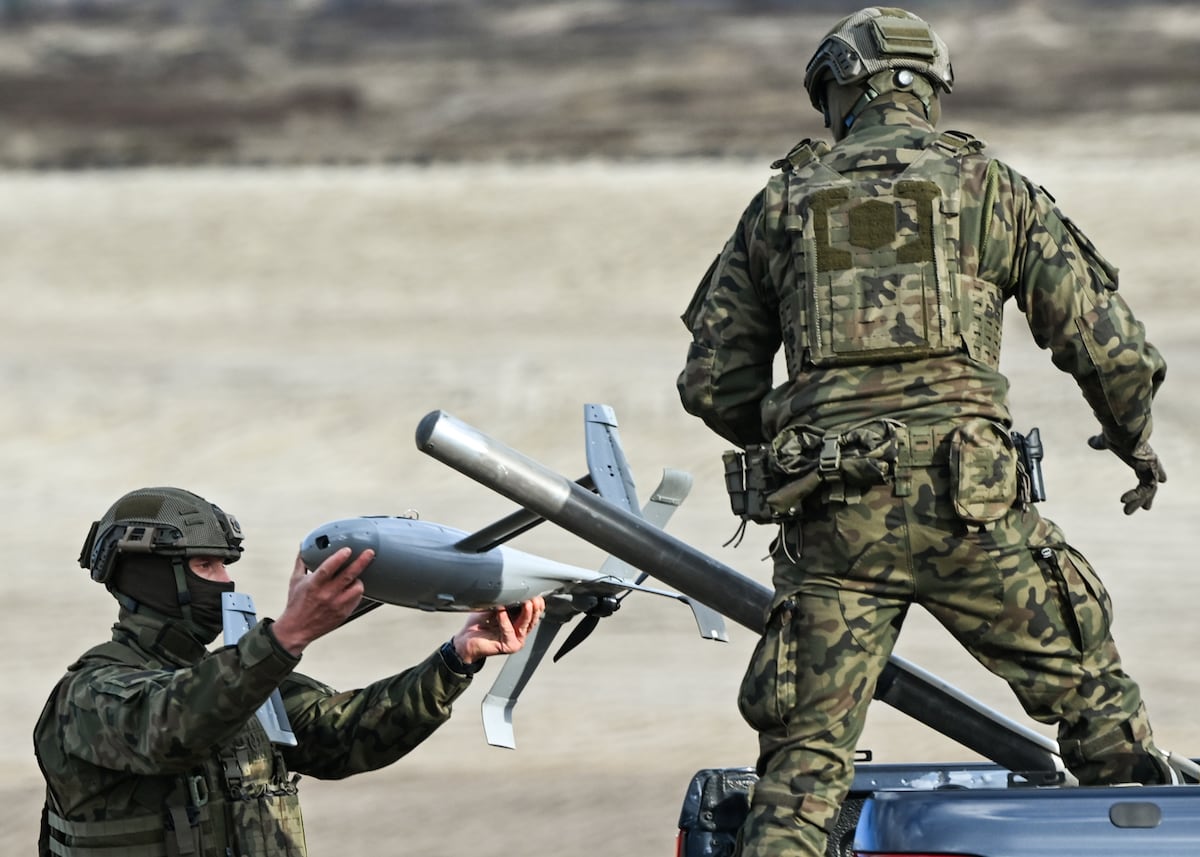
Poland has agreed to join the Pentagon’s counter-drone marketplace, a U.S.-managed initiative designed to help allies buy defense technology faster and with greater interoperability. The move deepens military cooperation between Washington and one of NATO’s most strategically exposed members, even as the U.S. Army faces scrutiny for abruptly cancelling a planned rotational deployment to Poland earlier this year.
The juxtaposition is notable. On one side, the United States is scaling a new acquisition framework meant to help allies respond more quickly to evolving drone threats. On the other, it is sending an ambiguous signal about physical force presence on NATO’s eastern flank at a time when Russia’s war in Ukraine continues to shape European security calculations.
The marketplace is meant to speed procurement across allies
According to the Army, the platform connects partner nations with emerging counter-drone technologies and is overseen by the Pentagon’s Joint Interagency Task Force 401, created in 2025 to streamline procurement in this area. Poland joins Australia and South Korea as new entrants, alongside existing participants including the United Kingdom and Romania.
The logic is straightforward: rather than forcing each ally to navigate slow and fragmented acquisition systems alone, the marketplace is meant to aggregate demand and improve access to tested systems that can work together. That has real appeal in counter-drone defense, where threats evolve quickly and procurement cycles often lag behind operational needs.
Maj. Matt Mellor, the task force’s lead acquisitions specialist, said the mission includes working with international partners to aggregate demand for counter-drone capabilities. That framing suggests the program is not only about technology access, but also about using allied scale to improve purchasing speed and coherence.
Poland’s role makes strategic sense
For Poland, joining the initiative is a logical step. The country sits near both Ukraine and Belarus and has been one of the most consequential NATO states in the alliance’s eastern security posture. Access to interoperable counter-drone capabilities matters not just for national defense but for coalition readiness, especially as unmanned systems continue to reshape surveillance, strike operations, and base protection.
The agreement was formalized in a statement of intent signed by Army Secretary Dan Driscoll and Poland’s Deputy Minister of National Defense, Paweł Zalewski. Symbolically, it reinforces the political relationship. Operationally, it offers a path to faster technology alignment with U.S. and allied systems.
But the political signal remains complicated
The positive technology story arrives alongside unresolved questions about U.S. troop posture in Europe. The cancelled rotational deployment to Poland drew criticism from members of Congress, particularly because it came not long after the U.S. announced the withdrawal of 5,000 troops from Germany. Critics argue such moves risk unsettling allies at a moment when NATO cohesion is under sustained pressure.
That tension gives the marketplace decision added importance. It shows the U.S. is still investing in alliance modernization, even if its posture choices create uncertainty. In practical terms, acquisition cooperation on counter-drone systems can strengthen deterrence by improving readiness and interoperability. In political terms, however, technology collaboration does not automatically replace the reassurance provided by visible troop commitments.
The broader lesson is that allied defense relationships are now being shaped through both presence and platforms. Poland’s entry into the marketplace underscores how procurement architecture has become part of strategy. But it also highlights a harder truth: when frontline allies are watching for signs of commitment, how the U.S. moves forces can matter just as much as how it shares technology.
This article is based on reporting by Defense News. Read the original article.

Originally published on defensenews.com