Cheap Drones That Kill Other Drones
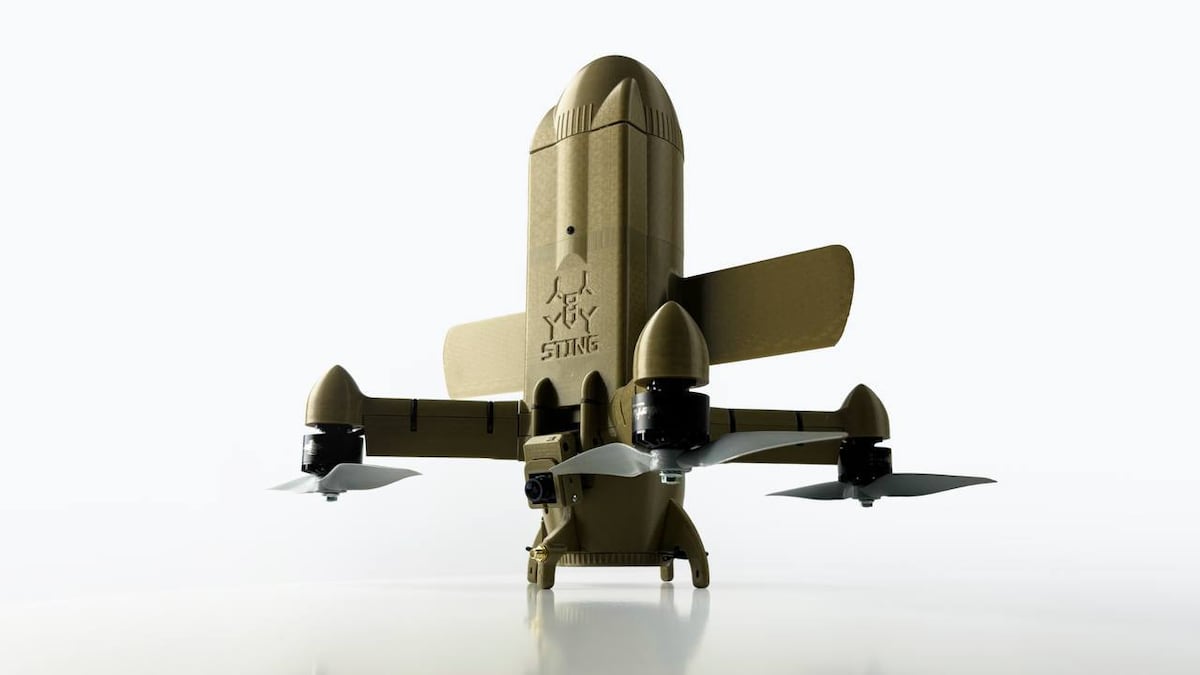
Ukraine's years-long war has produced an unexpected export opportunity: inexpensive interceptor drones that cost roughly $1,000 each and are designed to shoot down or ram enemy drones out of the sky. After watching the United States and its allies burn through billions of dollars worth of sophisticated missiles intercepting relatively cheap drone threats over just three days of combat operations, the Pentagon has turned to Ukrainian drone manufacturers for a battle-tested, cost-effective alternative.
The interceptor drones represent a solution to one of the most pressing military asymmetries of the current era. When a $2 million Patriot missile is used to destroy a $500 drone, the economics favor the attacker overwhelmingly. Every interception depletes expensive munition stocks while the adversary can afford to keep launching cheap drones indefinitely. Ukraine's front-line experience has driven the development of interceptors that flip this equation.
Forged in Combat
Ukraine's interceptor drone programs did not emerge from defense ministry laboratories or major contractors. They were developed by small, agile drone units operating on the front lines, iterating designs based on daily combat experience. These units tested dozens of configurations — fixed-wing interceptors, quadcopter hunters, FPV racers modified for air-to-air engagements — and refined the most effective designs through a brutal evolutionary process where failure meant real casualties.
The resulting interceptor drones are remarkably simple compared to conventional air defense systems. Most use off-the-shelf commercial components — consumer-grade flight controllers, standard FPV cameras, hobby-grade motors — assembled into airframes optimized for speed and maneuverability. Some carry small explosive charges to detonate near their targets; others physically ram enemy drones, using kinetic impact to destroy both aircraft.
Ukraine's top drone units are scheduled to visit Washington this month to share their front-line experience with Pentagon officials, congressional leaders, and defense industry representatives.
The Cost Disparity Problem
The Pentagon's interest in Ukrainian interceptor drones is driven by a stark mathematical reality. Modern integrated air defense systems like Patriot, THAAD, and NASAMS are designed to counter ballistic missiles, cruise missiles, and manned aircraft — threats that cost millions of dollars each. Using these systems against small, inexpensive drones is technically effective but economically unsustainable.
Recent combat operations have demonstrated this unsustainability in dramatic fashion. During a three-day period of intense drone and missile attacks, the US and its allies expended billions of dollars in interceptor missiles. A $1,000 interceptor drone that can be manufactured in days and deployed in quantities of thousands changes this calculus fundamentally.
Technical Characteristics
Most interceptors operate in the small UAS category, with wingspans under one meter and weights under five kilograms. Flight times range from 15 to 30 minutes, sufficient for point defense missions where the interceptor is launched in response to an incoming threat detected by radar or visual observers.
Navigation typically relies on a combination of GPS for initial positioning and FPV camera feeds for terminal guidance. A human operator pilots the interceptor during the final approach, using real-time video to visually acquire and track the target drone. Some designs incorporate autonomous tracking algorithms that assist the human operator by keeping the target centered in the camera feed.
Procurement and Production Challenges
Translating Ukrainian front-line innovation into Pentagon procurement presents challenges. The US defense acquisition system is designed for large, complex programs managed by established defense contractors. Procuring thousands of simple, inexpensive drones from small Ukrainian manufacturers requires a different procurement model — one that prioritizes speed, volume, and iterative improvement.
The Pentagon has been experimenting with accelerated acquisition pathways for counter-drone technology, including the Replicator initiative aimed at fielding autonomous systems in large numbers. Ukrainian interceptor drones could fit within these fast-track programs, but adapting them to US military standards for communications, identification friend-or-foe systems, and logistics support will require engineering work.
Despite these challenges, the direction is clear. The era when expensive missiles were the only option for drone defense is ending. The front lines of Ukraine have demonstrated that the most effective counter to cheap, mass-produced attack drones may be equally cheap, mass-produced interceptor drones — and the Pentagon is paying attention.
This article is based on reporting by C4ISRNET. Read the original article.
Originally published on c4isrnet.com