From Lab to Battlefield: The Directed Energy Transition
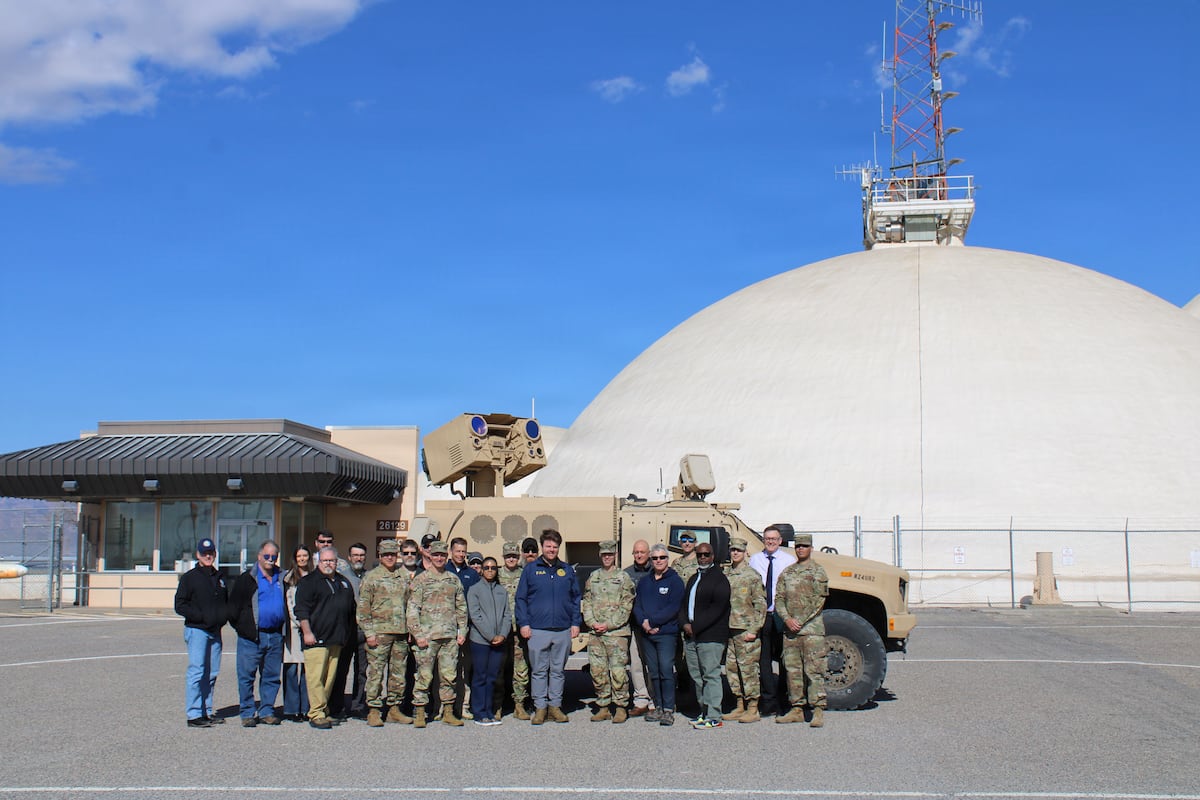
High-powered laser weapons have been a staple of defense research programs for decades, producing impressive demonstrations while remaining perpetually on the horizon of actual deployment. That horizon may finally be approaching. The Pentagon has publicly set a three-year target to field directed energy weapons at meaningful operational scale—not as technology demonstrators, but as weapons systems integrated into unit-level military equipment and trained for by operational forces.
The announcement represents a significant shift in how the Department of Defense is framing directed energy. Prior programs were structured around technology development: proving that lasers could generate sufficient power, maintain beam quality over operational distances, handle thermal management challenges, and survive in field environments. The new framing is operational: existing technology is mature enough to field, and the priority is now acquisition, integration, and the training and doctrine development that must accompany any new weapons capability.
Why Now: The Drone Threat
The timing of the Pentagon's directed energy push is inseparable from the drone proliferation that has fundamentally changed the character of modern conflict. Unmanned aerial systems—ranging from commercial quadcopters modified for payload delivery to purpose-built kamikaze drones—have demonstrated in Ukraine, the Middle East, and elsewhere that cheap, expendable aerial threats can overwhelm expensive conventional air defense systems.
The economics of traditional missile-based air defense become unsustainable when defending against drone swarms: a missile costing tens of thousands or hundreds of thousands of dollars destroying a drone costing hundreds of dollars is simply not a viable long-run strategy. Directed energy weapons change this calculus fundamentally. Once a laser system is emplaced and operational, the cost per engagement is essentially the cost of electricity—measured in dollars rather than thousands of dollars per shot.
Current Technology Status
The US military has been operating developmental laser systems in field environments for several years. The Army's HELIOS and DE M-SHORAD programs have accumulated hundreds of hours of operational testing. The Navy has deployed laser systems aboard surface vessels, demonstrating the ability to disable unmanned aerial vehicles in operational maritime environments. These systems represent first-generation fielding rather than full-scale deployment, but they have validated the core technical capability at a level that justifies the transition to program-of-record acquisition.
Power output is the primary technical parameter that determines what a laser can and cannot do. Current fielded systems operate in the tens of kilowatts range, which is sufficient for soft-kill of small and medium unmanned systems. The Pentagon's scaling ambitions include systems in the hundred-kilowatt range and eventually megawatt-class weapons capable of engaging more demanding targets including cruise missiles, mortars, and artillery shells in flight.
Integration Challenges
Scaling from developmental to operational deployment is not merely an acquisition problem. Directed energy weapons require significant changes to how units are organized and how they fight. Power generation requirements are substantial—laser systems need consistent access to significant electrical capacity that must be provided by vehicle power systems or dedicated generators. Thermal management creates weight and volume constraints. The atmospheric conditions that degrade laser performance—humidity, dust, aerosols—require operators to develop judgment about when directed energy is and is not the appropriate response to a threat.
Training is perhaps the most underappreciated challenge. Military operators are experienced with weapons that follow predictable ballistic trajectories. Lasers travel at the speed of light along line-of-sight paths but are affected by atmospheric conditions in ways that are not immediately intuitive. Building operator proficiency requires a new training paradigm and simulators that can reproduce the visual and sensor signatures of laser engagement in realistic conditions.

Alliance and Industrial Implications
Israel's announcement this week that it is developing laser weapons for integration onto fighter jets and helicopters underscores that directed energy is becoming a widely pursued military capability rather than a uniquely American technology advantage. The Israeli Air Force's Iron Beam ground-based laser system has already demonstrated capability against rockets and drone targets; integration onto airborne platforms would extend that capability to mobile, expeditionary contexts where ground-based systems cannot deploy. For the US defense industrial base, the three-year fielding target implies significant near-term production contracts, creating commercial momentum that could further accelerate the technology's development.
This article is based on reporting by Defense News. Read the original article.
Originally published on defensenews.com