A costly submarine repair effort comes to an end
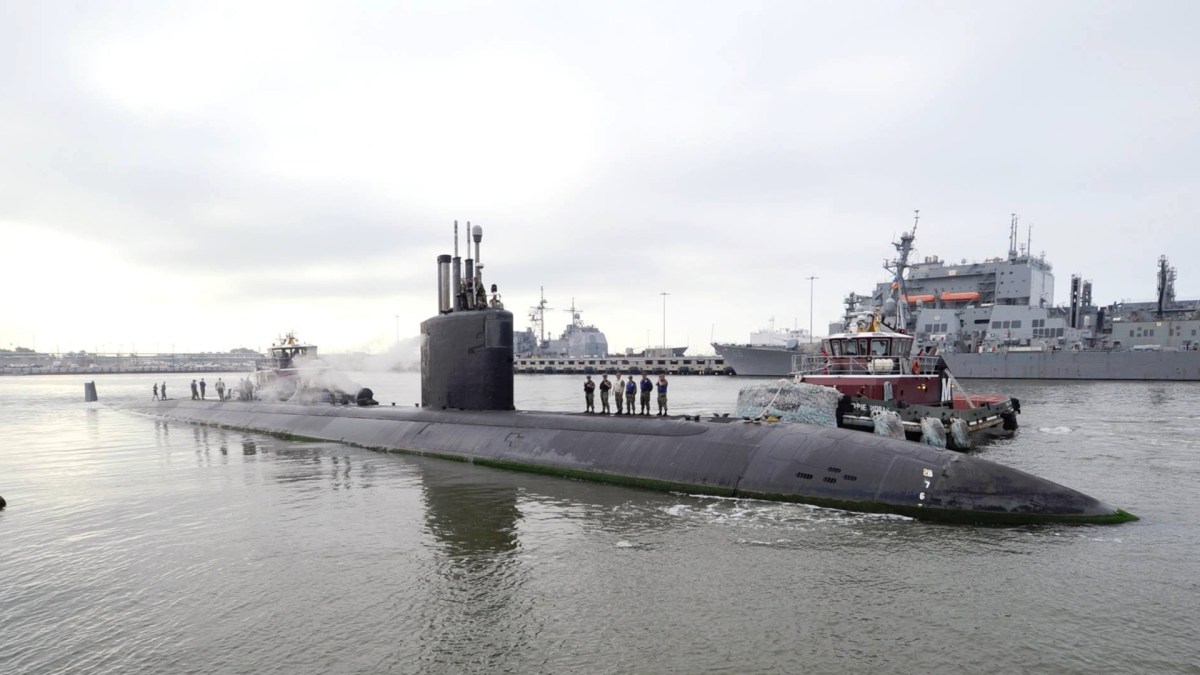
The U.S. Navy has abandoned plans to return the Los Angeles-class attack submarine USS Boise to active duty, closing out one of the service’s most visible and troubled overhaul programs. The decision ends a maintenance saga that stretched for more than a decade and had turned the submarine into a stand-in for larger concerns about U.S. naval shipyard capacity, aging fleet support, and the cost of deferred repair work.
Boise was first commissioned in 1992. By the Navy’s own account, however, its attempted return to service had become increasingly difficult to justify. The service said it made the call after what it described as a rigorous, data-driven review. Rather than continue sinking money and specialized labor into a submarine still far from completion, the Navy will now redirect those resources toward newer boats and broader fleet readiness.
Why the Navy walked away
The case against finishing the overhaul had become stark. According to figures cited in the source material, the Navy had already spent about $800 million on Boise’s overhaul, yet the work was only 22 percent complete. Estimates to finish the job had climbed to roughly $3 billion. For a submarine that had already spent more than a third of its life in limbo, that math appears to have broken the Navy’s tolerance for further delay.
Adm. Daryl Caudle, the Chief of Naval Operations, framed the move as a hard tradeoff rather than a narrow accounting exercise. In the Navy’s telling, ending the Boise effort frees skilled labor and funding for higher-priority programs, especially the delivery of Virginia- and Columbia-class submarines and the readiness of vessels already in service.
That matters because submarine availability is not just a budgeting issue. Attack submarines remain central to intelligence gathering, deterrence, anti-ship warfare, and undersea dominance. Every maintenance delay reduces usable fleet capacity, and every major repair bottleneck consumes workforce attention that could support operational boats or new production.
A symbol of maintenance backlog problems
Boise’s story has been unusually visible because it combines several chronic Navy problems in one case: too little shipyard capacity, too much deferred work, and repair schedules that can spiral beyond realistic recovery. The Navy itself has struggled for years with submarine maintenance backlogs, and Boise became a particularly striking example because of how long the overhaul remained incomplete.
The deeper issue is not just one submarine. The U.S. defense industrial base has faced continuing pressure in naval repair and submarine production, with public and private shipyards both under strain. When a major overhaul drags on for years, it can stop being a restoration program and start becoming a resource sink. That appears to be the threshold Boise crossed.
The Navy’s language suggests the service wants to show that it is willing to make triage decisions sooner, even when they are politically and operationally uncomfortable. That is notable in a military system that often prefers to preserve optionality and defer final cancellation choices.
What the decision signals
In practical terms, the Boise decision signals a stronger preference for concentrating labor and money on assets with clearer returns. The Navy said the move is part of a broader effort to optimize fleet composition and ensure funding goes to capabilities that directly support warfighting advantage. That wording points to a wider prioritization strategy, not just a one-off cancellation.
It also reinforces the premium now placed on submarine modernization. Virginia-class boats remain a cornerstone of current U.S. undersea capability, while Columbia-class ballistic missile submarines are central to nuclear deterrence. If Boise was competing for workforce and budget against those programs, it was competing against the Navy’s highest priorities.
At the same time, walking away from a partially completed overhaul is its own warning sign. It means years of spending, planning, and shipyard effort still ended without a usable submarine returning to the fleet. Even if the Navy is making the correct choice now, the need to make it reveals how costly maintenance dysfunction can become once it is allowed to compound.

The broader readiness lesson
Boise’s fate is likely to be read as both a budget decision and a readiness lesson. The Navy is effectively acknowledging that not every delayed platform can or should be rescued, especially when recovery costs start to crowd out more strategically important work. That may improve force planning in the near term, but it also raises uncomfortable questions about how a vessel reached this point at all.
For policymakers and defense planners, the lesson is straightforward: shipyard capacity and maintenance discipline are strategic assets, not back-office details. Once those systems fall behind, the military eventually pays twice, first through delay and then through cancellation.
USS Boise will now be remembered less for its operational history than for what its overhaul revealed about the limits of the Navy’s repair pipeline. The submarine’s retirement from comeback status may help the service focus on newer platforms. But it also leaves behind a clear marker of the costs of industrial strain in an era when undersea competition is only growing more important.
This article is based on reporting by twz.com. Read the original article.
Originally published on twz.com