A New Era of Manned-Unmanned Teaming
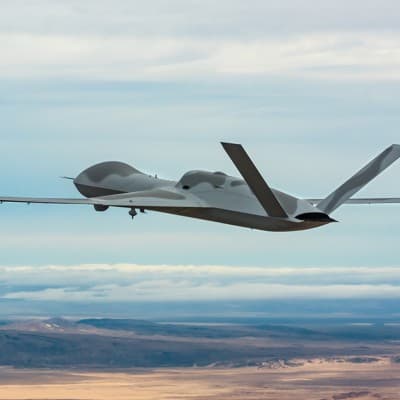
The U.S. Air Force has reached a significant milestone in its collaborative combat aircraft program after an MQ-20 Avenger drone successfully flew mock combat missions alongside an F-22 Raptor stealth fighter. The exercises, which tested coordinated tactics between the manned and unmanned platforms, represent the most advanced demonstration yet of the military's concept for autonomous wingmen operating in contested environments.
During the tests, the MQ-20 performed a range of missions in coordination with the F-22, including forward reconnaissance, simulated weapons employment, and electronic warfare support. The drone operated semi-autonomously, following mission plans uploaded before flight while adapting to dynamic tactical situations as they developed. The F-22 pilot maintained supervisory control throughout, issuing high-level commands while the drone's onboard AI handled the details of navigation, sensor management, and tactical positioning.
What the MQ-20 Brings to the Fight
The MQ-20 Avenger is a stealthy, jet-powered unmanned aerial vehicle originally developed by General Atomics as a high-performance complement to manned fighters. Unlike the company's well-known Predator and Reaper drones, which are designed primarily for surveillance and strike missions in permissive environments, the Avenger is built to operate in contested airspace where adversary air defenses pose a significant threat.
The drone's primary value in a manned-unmanned team lies in its ability to extend the situational awareness and combat reach of the human pilot without putting additional aircrew at risk. An MQ-20 operating ahead of an F-22 can use its sensors to detect threats, relay targeting data, and even draw fire from adversary defenses — roles that would otherwise require a second manned aircraft and crew.
- The MQ-20 can carry a mix of sensors, electronic warfare equipment, and weapons in internal bays
- Its jet propulsion system allows it to keep pace with manned fighters during high-speed tactical maneuvers
- The drone can operate at ranges exceeding the communications horizon through relay systems
- Each MQ-20 costs a fraction of a manned fighter, making attrition more strategically acceptable
Tactical Integration Challenges
Pairing a drone with a fifth-generation stealth fighter presents unique technical challenges. Communication between the platforms must be low-probability-of-intercept and low-probability-of-detection to avoid compromising the F-22's stealth advantage. If the drone's communications are detected by adversary electronic warfare systems, they could reveal the general location of the manned aircraft it is supporting.
The Air Force has invested heavily in developing secure, resilient datalinks that minimize electromagnetic emissions while providing sufficient bandwidth for tactical coordination. These systems use frequency-hopping, directional antennas, and burst transmissions to reduce the risk of detection and jamming.
Another challenge is the cognitive workload on the human pilot. Managing an autonomous wingman while simultaneously flying a complex combat aircraft and making tactical decisions adds a layer of task management that can strain even experienced aviators. The system's designers have worked to simplify the pilot-drone interface, reducing commands to high-level directives like 'scout this area' or 'engage that target' rather than requiring detailed flight path inputs.
The Broader CCA Program
The MQ-20's partnership with the F-22 is part of the Air Force's Collaborative Combat Aircraft initiative, a program that aims to field hundreds of autonomous and semi-autonomous drones that can operate alongside manned fighters. The CCA concept envisions a force structure where each manned aircraft operates with two or more drone wingmen, dramatically multiplying the combat mass available to commanders without proportionally increasing personnel requirements.
Anduril Industries and General Atomics have both won contracts to develop CCA platforms, with initial operational capability expected before the end of the decade. The MQ-20 serves as a surrogate platform for testing the tactics, techniques, and procedures that will eventually be employed by purpose-built CCA drones.
The program is driven by strategic necessity. In a potential conflict with China over Taiwan or in the Western Pacific, the Air Force would face an adversary with advanced integrated air defenses and a large inventory of modern fighters. The ability to absorb attrition through expendable drone wingmen while preserving the limited fleet of stealth fighters could be a decisive advantage.
What Comes Next
The Air Force plans to expand the scope of manned-unmanned teaming exercises throughout 2026, incorporating additional drone types and increasing the complexity of the tactical scenarios. Future tests will include multi-drone formations working with single manned aircraft, as well as scenarios involving electronic warfare, suppression of enemy air defenses, and offensive counter-air operations.
The ultimate goal is a seamless human-machine combat team where the strengths of both are leveraged to maximum effect — the creativity, judgment, and ethical reasoning of human pilots combined with the speed, endurance, and expendability of autonomous systems. The MQ-20's successful pairing with the F-22 suggests that vision is closer to reality than many skeptics believed.
This article is based on reporting by Defense One. Read the original article.


