The Future of Air Combat Takes Shape
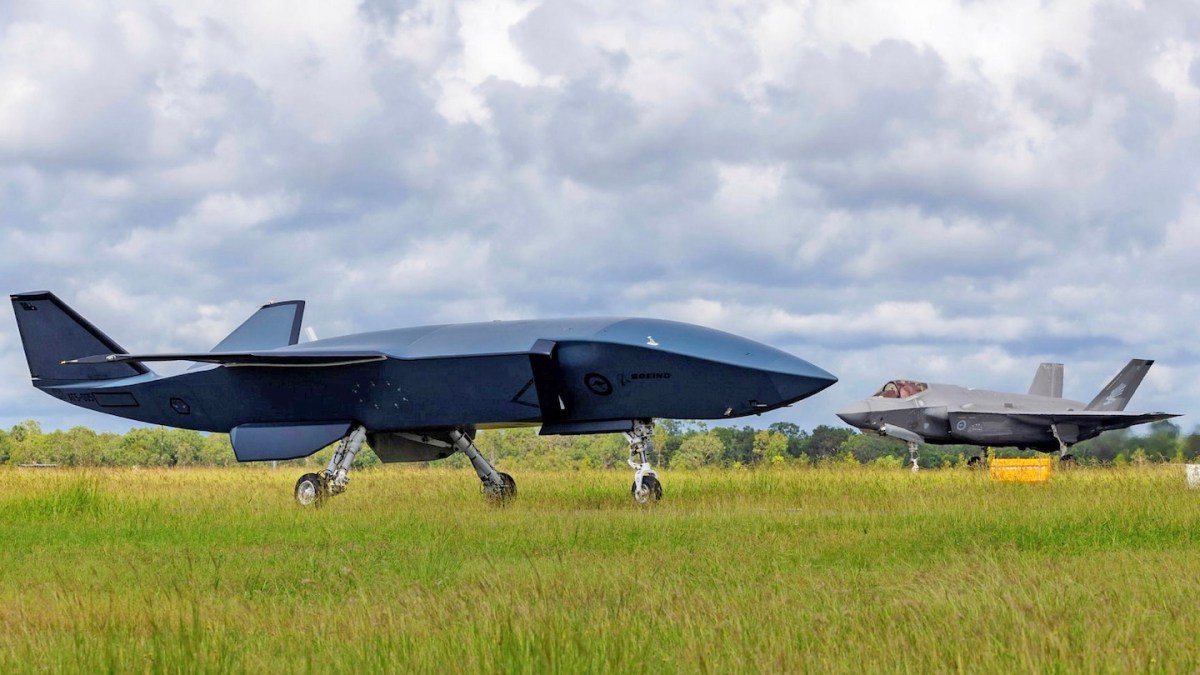
For decades, air superiority has been defined by the capabilities of individual crewed aircraft — the radar cross-section, thrust-to-weight ratio, and sensor suite of each fighter jet determining the outcome of engagements. The US Air Force's Collaborative Combat Aircraft program represents a fundamental challenge to that paradigm, envisioning a future where crewed fighters like the F-22 and F-35 operate as mission commanders directing swarms of autonomous wingman drones that extend their reach, absorb risk, and create tactical dilemmas that adversaries' air defense systems cannot simultaneously address. A recent series of flight tests at a Nevada range has moved that vision significantly closer to reality: Boeing's MQ-20 Avenger unmanned aircraft successfully teamed with an F-22 Raptor in a series of simulated combat missions, demonstrating autonomous coordination capabilities that the Air Force considers a validation of the core CCA concept.
The tests, conducted by the 412th Test Wing at Edwards Air Force Base in partnership with Air Combat Command, involved scenarios in which the MQ-20 operated as a loyal wingman — flying a coordinated mission profile alongside the F-22, receiving targeting and tactical direction from the crewed aircraft, and executing autonomous maneuvers in response to simulated threat environments. The specific tactical scenarios have not been publicly described in detail, but the Air Force's characterization of the results as a successful demonstration of the mock combat mission teaming capability suggests that the autonomous coordination functions — formation flying, data link management, threat response, and task assignment — performed to specification.
The MQ-20 Avenger
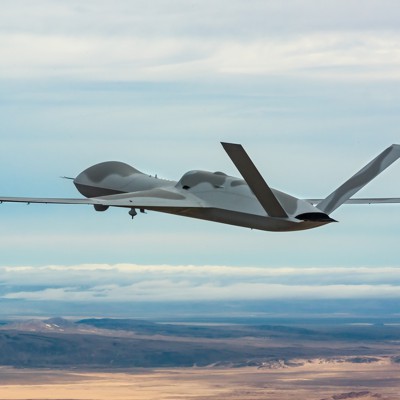
The MQ-20 Avenger, formerly known as the Predator C, is Boeing's jet-powered unmanned aircraft designed for both ISR and strike missions. Unlike the propeller-driven MQ-9 Reaper, the Avenger has a performance envelope — speed, altitude, and maneuverability — that allows it to operate in more contested airspace alongside high-performance crewed fighters. Its internal weapons bay can carry a range of munitions, and its low-observable design incorporates features intended to reduce radar detectability, though it is not considered as stealthy as purpose-built low-observable aircraft.
For the CCA teaming role, the MQ-20's jet performance is critical: a drone wingman that cannot keep pace with an F-22 during tactical maneuvering would be tactically useless. The Avenger's cruise speed and altitude capability are broadly compatible with the operational envelopes within which the F-22 typically operates during air-to-air and air-to-ground missions, making it a viable platform for the wingman role even if it would not be expected to match the Raptor in a pure turning engagement.
Autonomous Coordination Challenges
The technical challenges in autonomous teaming are significant and go well beyond simply keeping two aircraft in formation. A viable CCA must be able to understand the tactical situation as communicated by the crewed aircraft, allocate tasks appropriately between itself and the manned aircraft, react to dynamic threat environments in ways that protect both aircraft, manage its own sensor and weapons employment within the rules of engagement established for the mission, and communicate relevant information back to the human pilot without overwhelming them with data.
The AI architectures that underlie these capabilities draw on advances in multi-agent reinforcement learning, where autonomous agents learn to collaborate on complex tasks through simulated experience. The Air Force has been conducting AI vs. AI and AI vs. human dogfighting research through the DARPA ACE program, and the lessons from those experiments — including the surprising finding that AI-controlled aircraft can outperform experienced human pilots in certain one-vs-one engagement scenarios — have informed the development of the autonomous tactical algorithms used in CCA testing.
The Broader CCA Program
The MQ-20 tests are part of a broader Air Force evaluation that will eventually select one or more platforms for the CCA increment 1 program of record. Alongside Boeing's Avenger, General Atomics' XQ-67A and other designs have been evaluated. The Air Force has stated an intent to field CCAs in meaningful numbers alongside the F-35, eventually extending to next-generation crewed aircraft. The operational concept involves each F-35 or future crewed fighter commanding one to four autonomous wingmen, multiplying the sensor coverage, weapons capacity, and tactical options available to a single pilot without proportionally increasing the cost or risk of the crewed portion of the force.
The Air Force has been careful to emphasize the human-on-the-loop nature of the current CCA concept: the autonomous aircraft execute missions under human direction and oversight, with the human pilot retaining authority over weapons employment. This framing is both operationally accurate for current systems and politically important — autonomous weapons systems that make their own lethal targeting decisions remain legally and ethically contentious, and the Air Force has been deliberate about establishing a command framework that keeps human judgment in the critical decision loop.
The successful F-22 teaming tests represent genuine progress toward a capability that could reshape air power in the next decade. Whether adversaries — particularly China, which is developing its own loyal wingman concepts under programs like the FH-97 — achieve similar milestones on a parallel timeline will determine how much operational advantage the Air Force can build from its current lead.
This article is based on reporting by Defense One. Read the original article.
Originally published on defenseone.com