Redefining What It Means to Be Combat Ready
For generations, military fitness has been measured in pushups, sit-ups, and run times. A soldier who could max the Army Physical Fitness Test was considered ready for combat, regardless of what that combat actually required. But as the nature of warfare evolves, with battles increasingly fought through screens, sensors, and autonomous systems as much as through physical confrontation, military leaders are fundamentally rethinking what it means to be a capable warfighter. The new paradigm treats soldiers not as athletes to be trained, but as "human weapon systems" to be optimized.
Drew Hammond, a human-performance specialist with U.S. Special Operations Command, captures the shift succinctly: the military is moving away from the antiquated idea of visceral combat experiences focused on the ability to run and ruck. The new focus is on cognitive presence, intrinsic motivation, and the comprehensive performance metrics that predict actual mission success rather than just physical prowess.
This is not a rejection of physical fitness. Soldiers still need to be strong, fast, and enduring. But physical capability is being repositioned as one component of a larger system, alongside cognitive performance, emotional resilience, nutritional status, sleep quality, and metabolic health. The goal is to measure and optimize the complete human system, not just one dimension of it.
The Holistic Health and Fitness Academy
The Army's Holistic Health and Fitness Academy at Fort Benning is the institutional engine driving this transformation. The program is expanding to cover 111 brigades, a scale that will eventually touch the majority of the active force. The academy's approach integrates soldier-borne biometric devices, sleep monitoring, wellness data collection, and traditional physical training benchmarks into a comprehensive performance management system.
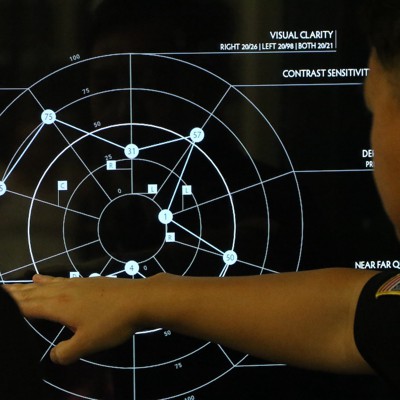
The 101st Airborne Division is piloting wearable biometric devices in the third quarter, providing real-time data on heart rate, activity levels, sleep patterns, and physiological stress markers. These devices, currently cleared Garmin trackers, give commanders and performance specialists an objective picture of their soldiers' physical state that goes far beyond what a periodic fitness test can reveal.
The data from these devices feeds into a broader analytics architecture that can identify patterns and trends across units. If a battalion shows declining sleep quality ahead of a major exercise, performance specialists can intervene before the deficit translates into degraded performance or increased injury rates. If certain metabolic markers correlate with improved marksmanship scores, training programs can be adjusted to optimize those markers across the force.
The Air Force's Systems Approach
The Air Force Research Lab is taking the systems analogy even further. Chris Myers describes a framework that explicitly treats soldiers as weapon systems with three maintenance components that mirror how the military maintains its aircraft and vehicles. Procurement corresponds to basic training, the process of selecting and preparing raw material. Fueling corresponds to nutrition, the ongoing input of energy and nutrients needed to sustain performance. Monitoring operator health and performance corresponds to the maintenance and diagnostics that keep a weapon system functioning at peak capability.
This is not a dehumanizing metaphor. It is a conceptual framework designed to bring the same rigor and systematic thinking that the military applies to its most expensive equipment to its most important asset: its people. Just as the Air Force would never fly a fighter jet without monitoring its engine performance, fuel levels, and structural integrity, the argument goes, it should not send soldiers into combat without comparable monitoring of their physical and cognitive state.
The framework also implies a shift in how performance problems are addressed. In the traditional fitness model, a soldier who fails a test faces punitive consequences: remedial training, negative evaluations, or even separation. In the systems model, a performance deficit is treated as a diagnostic finding that triggers investigation and intervention, not punishment. The question changes from "why can't this soldier pass the test?" to "what factors are degrading this system's performance, and how can they be corrected?"
Beyond the Gym: Cognitive and Metabolic Performance
The most significant aspect of the human weapon systems concept is its expansion beyond physical fitness to include cognitive and metabolic dimensions of performance. Modern military operations demand sustained attention, rapid decision-making, complex problem-solving, and the ability to manage stress over extended periods. These cognitive capabilities are at least as important as physical strength in determining mission outcomes, yet they have historically received far less attention in training and evaluation.
Metabolic and inflammation markers are emerging as key indicators of overall readiness. Chronic inflammation, often driven by poor nutrition, inadequate sleep, and excessive physical stress, degrades both physical and cognitive performance. By monitoring these markers through blood tests and wearable sensors, performance specialists can identify soldiers whose readiness is compromised before the degradation manifests in mission failure.
Stress management is another critical dimension. The psychological demands of modern combat, which may involve long periods of monitoring followed by moments of intense action, require a different kind of resilience than the physical endurance that traditional training emphasizes. Programs that build stress management skills, teach mindfulness techniques, and develop emotional regulation are being integrated into training alongside physical conditioning.
Operating in Classified Environments
One of the practical challenges of implementing biometric monitoring is operating in classified environments where commercial devices may pose security risks. The military is developing data architectures that can collect and analyze biometric data without compromising operational security. This includes approved device lists, secure data transmission protocols, and analytics platforms that operate within classified networks.
The Garmin trackers currently being piloted represent a first step, but more sophisticated devices are under development. Future systems may incorporate continuous glucose monitoring, real-time cortisol measurement, and advanced cognitive performance tracking through wearable EEG sensors. The goal is a comprehensive real-time picture of each soldier's status that commanders can use to make informed decisions about deployment, rest cycles, and mission assignment.
A Cultural Shift
Perhaps the greatest obstacle to the human weapon systems concept is cultural. The military has deep traditions around physical fitness as a measure of warrior identity. The soldier who can run the fastest and carry the heaviest load has long been held up as the ideal, and changing that cultural narrative requires more than new technology. It requires leadership at every level to embrace a more nuanced understanding of what makes a soldier effective in the modern operating environment.
The shift is already underway, driven by operational necessity as much as by institutional policy. As combat evolves to demand a broader range of human capabilities, the military has no choice but to evolve its approach to developing and measuring those capabilities. The era of measuring combat readiness in pushups is giving way to something far more comprehensive, more scientific, and ultimately more effective at preparing soldiers for the wars they will actually fight.
This article is based on reporting by Defense One. Read the original article.
Originally published on defenseone.com