A New Era of Unmanned Naval Warfare
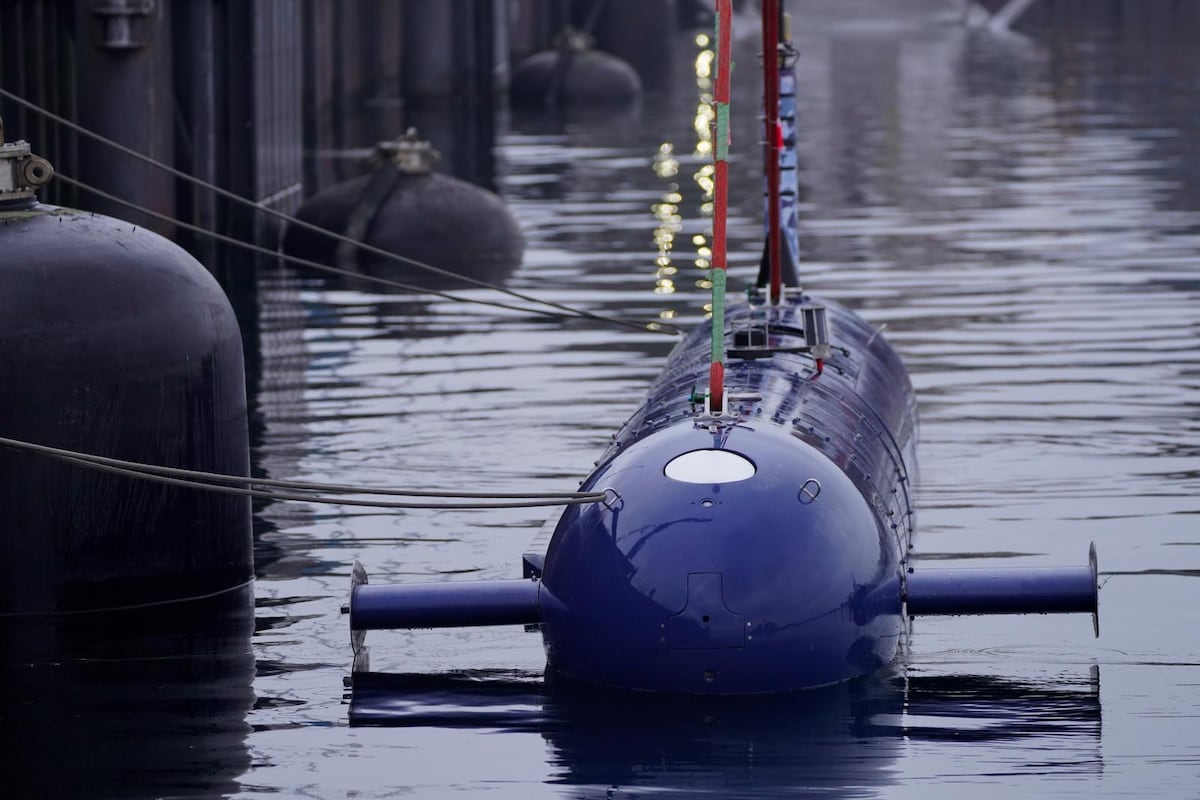
Israel Aerospace Industries (IAI) has officially delivered a BlueWhale autonomous submarine to the German Navy, marking a significant milestone in the rapidly evolving landscape of unmanned maritime systems. The handover ceremony took place at the German naval base in Eckernförde, following a rigorous series of tests conducted by the German Navy in the Baltic Sea.
The BlueWhale represents the first unmanned submarine developed by an Israeli defense company. It is the product of a joint venture between IAI and Atlas, a subsidiary of Germany's ThyssenKrupp Marine Systems (TKMS) — the same manufacturer responsible for building the Israeli Navy's manned submarine fleet. While neither party disclosed the total number of vessels Germany will ultimately receive, nor the full scope of the procurement deal, the delivery signals a deepening of Israeli-German defense cooperation that has been building for decades.
Capabilities and Mission Profile
The BlueWhale is designed for extended autonomous operations beneath the waves. Traveling at approximately 7 knots underwater, the unmanned vessel can sustain continuous operations for two to three weeks, depending on the specific mission profile. Its compact design allows it to be transported by land, air, or sea inside a standard 40-foot shipping container, giving naval commanders flexible deployment options across theaters of operation.
The submarine is equipped with an array of surface and subsurface sensors, enabling it to perform a wide range of missions without risking human crews. According to the joint IAI-TKMS announcement, the BlueWhale's envisioned roles include unmanned anti-submarine warfare and covert maritime operations.
"The vehicle is capable of conducting reconnaissance operations, detecting targets above and below the sea surface, collecting acoustic information, and locating sea mines on the seabed," the companies stated. "It acts as an extended sensor arm for manned platforms."
Strengthening the Israeli-German Defense Axis
The delivery of the BlueWhale is viewed in Israeli defense circles as a significant step toward strengthening bilateral military ties with Germany. The relationship already runs deep in the maritime sector, with TKMS having long supplied Israel with Dolphin AIP submarines and Sa'ar 6 corvettes.
The autonomous submarine deal comes alongside another landmark agreement: the supply of the Arrow 3 air defense system, also manufactured by IAI, which represents Israel's largest defense export contract in its history. Within approximately four years, TKMS is scheduled to begin delivering three Decker-class submarines ordered by Israel in 2022, further cementing the intertwined defense-industrial relationship between the two countries.
Germany's Navy 2035+ Modernization Push
For Germany, the BlueWhale acquisition fits into its broader Navy 2035+ modernization program, a service-wide initiative focused on rapidly testing and adopting new technologies under real-world operational conditions. The German Navy completed testing of the BlueWhale prototype in late 2024, and the delivery represents the transition from evaluation to operational deployment.
The program reflects a growing recognition across NATO navies that unmanned systems will play an increasingly central role in future naval operations. From mine countermeasures to intelligence gathering and anti-submarine warfare, autonomous underwater vehicles are poised to reshape how navies patrol, surveil, and defend their maritime domains.
Implications for NATO Maritime Strategy
The BlueWhale delivery arrives at a particularly sensitive moment for European defense posture. With growing concerns about Russian submarine activity in the Baltic Sea and North Atlantic, NATO allies have been accelerating investments in underwater surveillance and anti-submarine warfare capabilities. An autonomous submarine that can operate for weeks without surfacing, while collecting acoustic and sensor data, addresses a critical gap in continuous maritime domain awareness.
The containerized deployment capability is especially noteworthy for rapid response scenarios. Rather than requiring a submarine to transit thousands of miles from a home port, the BlueWhale can be transported to a theater of operations and launched from virtually any coastal facility — or even from a surface vessel at sea.
As unmanned systems proliferate across all domains of military operations, the BlueWhale delivery represents yet another step in the gradual transformation of naval warfare from crewed platforms toward a hybrid fleet of manned and autonomous vessels operating in concert. For Israel, it validates the country's expanding role as a global exporter of cutting-edge autonomous defense systems. For Germany, it provides a tangible capability boost as Europe reckons with the need to spend more on its own defense.
This article is based on reporting by C4ISRNET. Read the original article.
Originally published on c4isrnet.com