Prized Radars Under Fire
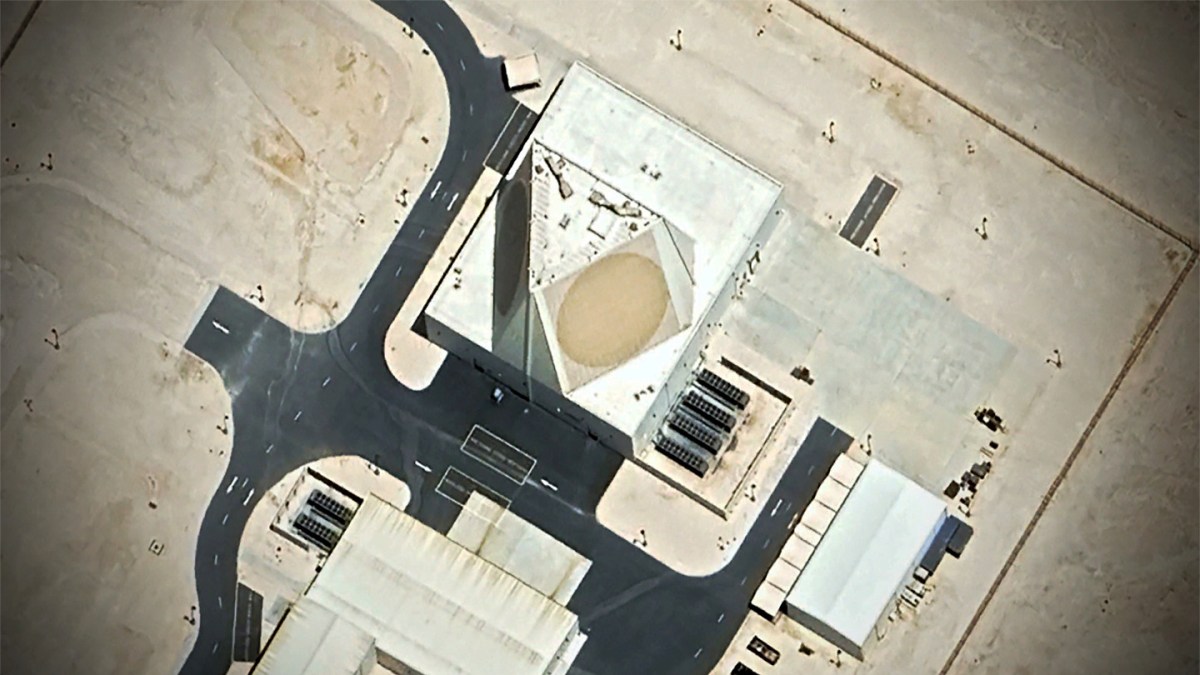
Iran's military campaign has achieved what many defense analysts considered a low-probability outcome: the successful targeting and apparent destruction of at least one AN/TPY-2 missile defense radar, one of the most sophisticated and expensive sensor systems in the American military arsenal. Satellite imagery and reports confirm that a radar at Muwaffaq Salti Air Base in Jordan was damaged or destroyed by an Iranian strike, with additional THAAD radar systems in the UAE potentially affected as well.
The AN/TPY-2 is the ground-based radar component of the Terminal High Altitude Area Defense system, one of the Pentagon's premier ballistic missile defense capabilities. Each radar costs hundreds of millions of dollars, takes years to manufacture, and requires specialized crews to operate. The loss of even one represents a significant degradation of regional missile defense coverage.
Why These Radars Matter
The AN/TPY-2 radar is the eyes of the THAAD missile defense system. Without it, the interceptor missiles that THAAD launches are effectively blind. The radar detects incoming ballistic missiles, tracks their trajectories, and guides interceptors to destroy them before they reach their targets. It operates in the X-band frequency range, which provides the high resolution needed to distinguish real warheads from decoys and debris.
Beyond its role in THAAD, the AN/TPY-2 also contributes to broader missile defense architectures. In its forward-based mode, it can detect and track missiles shortly after launch, providing early warning data to other defense systems including Aegis ships and Patriot batteries. Losing these radars does not just affect THAAD; it degrades the entire layered missile defense network.
Muwaffaq Salti Air Base is particularly significant because it hosts the largest concentration of U.S. tactical aircraft in the region. The AN/TPY-2 there was providing a critical defensive shield for these aircraft and the base infrastructure. With that shield degraded, the base and its aircraft become substantially more vulnerable to follow-on missile attacks.
How Iran Achieved the Strikes
The strikes on the radars appear to have involved a combination of ballistic missiles and drones, a mixed-threat approach that has become an Iranian hallmark. By launching salvos of different weapon types simultaneously, Iran forces defenders to prioritize targets and allocate limited interceptors across multiple threat categories.
There is an inherent irony in the situation: missile defense radars were struck by the very missiles they were designed to detect and help defeat. This suggests either that the volume of the Iranian attack overwhelmed the defense, that the radars were targeted by weapons flying trajectories that made interception difficult, or that gaps existed in the defensive coverage around the radar sites themselves.
Defense analysts have noted that missile defense radars are inherently vulnerable because they broadcast powerful electromagnetic signals that can be detected and geolocated by an adversary. In effect, the radars announce their own positions. While this vulnerability has been understood theoretically, Iran's successful targeting demonstrates it practically under combat conditions.
Implications for Global Missile Defense
The successful strikes on AN/TPY-2 radars carry implications far beyond the current conflict. Nations around the world that rely on American missile defense systems, including Japan, South Korea, Saudi Arabia, and NATO allies in Europe, are now confronting the demonstrated vulnerability of their most critical sensor assets.
The strikes validate a concern that defense planners have debated for years: that fixed or semi-fixed radar installations are becoming increasingly vulnerable as adversaries develop more capable and numerous precision strike weapons. The traditional approach of placing expensive, high-capability radars at known locations may need to give way to more distributed, mobile, and resilient sensor architectures.
Some analysts argue this is precisely why the U.S. military has been investing in space-based sensor layers and proliferated low-earth orbit satellite constellations for missile tracking. Space-based sensors cannot be struck by conventional weapons and provide global coverage, though they come with their own limitations in resolution and latency.
Replacement Challenges
The Wall Street Journal reported that the U.S. military is rushing to replace the damaged AN/TPY-2 at Muwaffaq Salti, but replacement is not a simple matter. The radar is manufactured by Raytheon in limited quantities, and production timelines are measured in years rather than months. The global inventory of AN/TPY-2 radars is finite, meaning that deploying a replacement to Jordan likely means pulling one from another location, creating a coverage gap elsewhere.
This highlights a structural problem in American missile defense: the systems are expensive, few in number, and slow to produce. An adversary that can destroy or degrade these systems faster than they can be replaced gains a significant asymmetric advantage, even if the weapons used in the attack cost a fraction of the radar's price.
The current conflict is providing a real-world stress test of missile defense concepts and capabilities that have been developed over decades. The results so far suggest that significant rethinking of how these systems are deployed, protected, and networked will be necessary to maintain credible missile defense in an era of increasingly capable adversaries.
This article is based on reporting by twz.com. Read the original article.
Originally published on twz.com