CCA test aircraft is back in the air after an April mishap
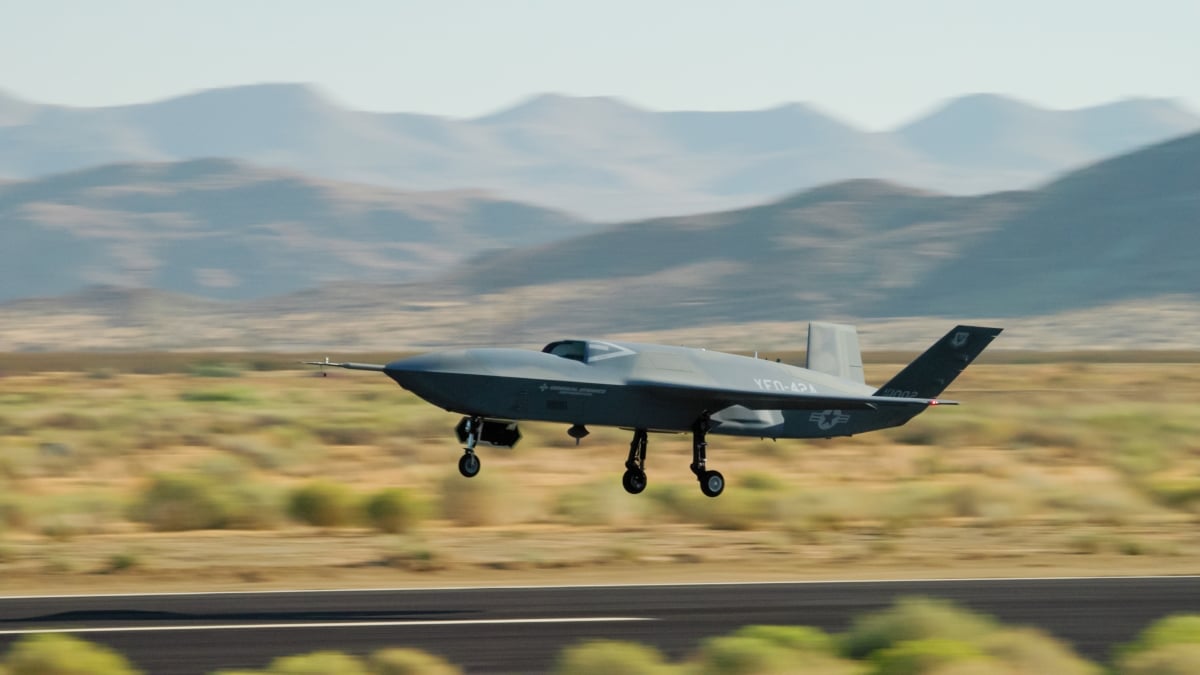
General Atomics says its Collaborative Combat Aircraft test drone has returned to flight testing roughly a month after crashing shortly after takeoff in the California desert. According to the company, the aircraft resumed flying after safety reviews and software enhancements, a quick turnaround that both the manufacturer and the Air Force are portraying as evidence that the program can absorb test failures without losing momentum.
The aircraft is being developed for the US Air Force’s Collaborative Combat Aircraft program, a high-profile effort to field autonomous or semi-autonomous wingmen that can operate alongside crewed fighters. In that context, the return to flight matters beyond a single test article. It offers an early demonstration of how the Air Force intends to manage development risk in a program built around speed and iteration.
What caused the crash
General Atomics said the April 6 crash stemmed from an autopilot miscalculation involving the aircraft’s weight and center of gravity. The company described the remedy as a software remediation, followed by additional safety reviews. No one was injured.
The source material refers to the aircraft as the YFQ-44A, while Air Force comments cited in the same report refer to the YFQ-42A. What is clear from the supplied text is that the General Atomics CCA test vehicle involved in the April mishap has been cleared to resume flight testing after software changes.
Why the Air Force sees the episode as validation
Col. Timothy Helfrich, the Air Force acquisition official overseeing the effort, argued that the mishap actually supports the CCA program’s development model. His framing is blunt: the program is designed to learn, including through what he called “failing forward.” In his view, the response to the crash validated an approach that accepts acquisition and test risk so operational forces do not carry that same risk later.
That is a consequential position. Instead of treating a crash as proof that the schedule must slow down, the Air Force is using the event to reinforce the idea that rapid testing is supposed to expose weaknesses early. The value, under that logic, lies in finding failure modes before a system reaches the field, then using the data to improve the design and move on.
Helfrich said the program “pushed the envelope,” identified a risk and learned from the data. Just as important, he said the crash did not set the broader CCA effort back. That statement suggests the Air Force sees the architecture of the program, not the perfect performance of any single test, as the real measure of progress.
A competition still in motion
General Atomics is competing alongside Anduril for a production award under the CCA program, while Northrop Grumman is described in the source text as a dark-horse contender. That competitive setting raises the stakes for every visible milestone. A return to flight does not settle the competition, but it does help General Atomics show that it can diagnose a problem quickly, implement corrections and continue testing without a prolonged disruption.
For the Air Force, the episode highlights a broader procurement question: whether the service can build a faster development culture for advanced combat systems without losing control of technical risk. The official line from the program office is that this is exactly the kind of learning cycle CCA was designed to produce.
What comes next
The report does not provide a fresh test schedule or a new set of performance data. What it does provide is a narrower but still meaningful update: the aircraft is flying again, the immediate cause identified by the company was software-related, and the Air Force leadership involved is publicly standing by the program’s risk-tolerant approach.
That combination matters because CCA is expected to shape how the Air Force adds mass, flexibility and potentially lower-cost combat capability to future air operations. Programs built around novel autonomy and new operating concepts will not move forward without test setbacks. The more important question is how quickly those setbacks can be turned into usable engineering lessons.
In this case, General Atomics and the Air Force are signaling that the answer was fast enough to keep confidence intact. A month after the crash, the drone is back in flight test, and the service is using the incident to make a larger argument about how next-generation military aviation should be developed.
This article is based on reporting by Breaking Defense. Read the original article.
Originally published on breakingdefense.com