An Unusual Window Into Operational Medicine
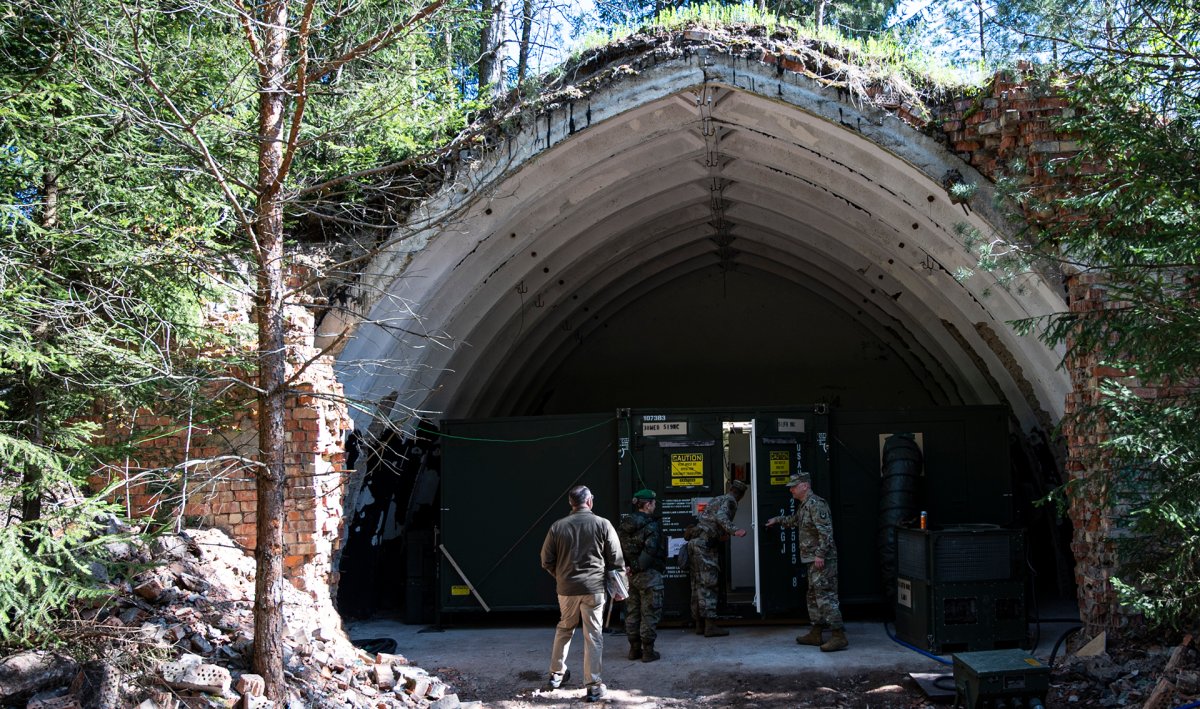
The War Zone’s weekend discussion post was not itself a hard-news dispatch, but the supplied source text attached to it contained a revealing image caption from Exercise Dynamic Employment of Forces to Europe for NATO Deterrence and Enhanced Readiness, or DEFENDER 25. The caption described a field medical laboratory belonging to the 512th Field Hospital positioned inside an old Soviet-era bunker at the Vepriai Rocket Base in Lithuania on May 12, 2025.
That detail matters because it points to a side of military readiness that often receives less attention than aircraft, missiles, and armor: the ability to diagnose, treat, and protect forces in austere or high-risk conditions.
What the Caption Shows
According to the supplied text, the Defense Health Agency’s Force Health Protection team was supporting US Army medical providers assigned to the 512th Field Hospital, the 519th Hospital Center, the 30th Medical Brigade, and the 68th Theater Medical Command during Swift Response, the initial phase of DEFENDER 25.
The description goes further. It says the Force Health Protection effort works with combatant commands and regulatory experts to rapidly provide treatment, diagnostic, or preventive medical countermeasures against high-consequence threats when no Food and Drug Administration-approved product is available.
That is a dense but important mission statement. It suggests a medical support structure designed not just for routine care, but for edge cases in which standard approved tools may not exist, arrive in time, or fit the operational problem at hand.
Why the Setting Matters
The image of a field medical laboratory inside a former Soviet-era bunker is striking for obvious symbolic reasons, but it also underscores the practical conditions under which military medicine may need to operate. Exercises such as DEFENDER are meant to test readiness under dispersed, expeditionary, and alliance-integrated conditions. In that context, medical capability is not auxiliary. It is part of what makes sustained operations possible.
A force that can move quickly but cannot protect personnel from disease, exposure, or other high-consequence threats is not fully ready. The caption supplied here offers a compact illustration of how militaries think about that problem: forward placement, coordinated health protection, and contingency use of countermeasures where ordinary approvals may not cover the threat environment.
Readiness Beyond Firepower
Military reporting often centers on the visible hardware of deterrence. This caption points somewhere quieter but essential. A bunker laboratory in Lithuania does not make headlines the way missile batteries do, yet it represents a different kind of preparedness: keeping forces medically viable when conditions are uncertain and approved options may be limited.
That is what makes the supplied detail worth pulling out of an otherwise open discussion post. It is a reminder that military effectiveness depends on more than weapons and maneuvers. It also depends on whether troops can be protected, diagnosed, and treated wherever the mission places them.
This article is based on reporting by twz.com. Read the original article.
Originally published on twz.com