Australia raises the scale of its defense commitment
Australia has set out a plan to lift defense spending to 3 percent of gross domestic product in the coming years, pairing that increase with a blunt warning about a more dangerous strategic environment. According to the supplied report, the country’s newly released National Defence Strategy and Integrated Investment Plan outline spending of 96.6 billion Australian dollars by 2033 on NATO methodology, with a longer-range target of 113 billion Australian dollars by 2036.
The announcement is notable not only for the size of the investment, but for the framing around it. Australian officials are linking higher spending to a deteriorating regional balance, elevated geopolitical risk, and an Indo-Pacific environment shaped above all by China’s growing power and military capability.
The strategic message is explicit
The report says Australia’s defense documents warn that the global rules-based order that underpinned its prosperity and security is under strain, and that the coming decade will be difficult to predict. This is stronger language than routine budget justification. It casts defense spending as a response to structural instability rather than to a single immediate trigger.
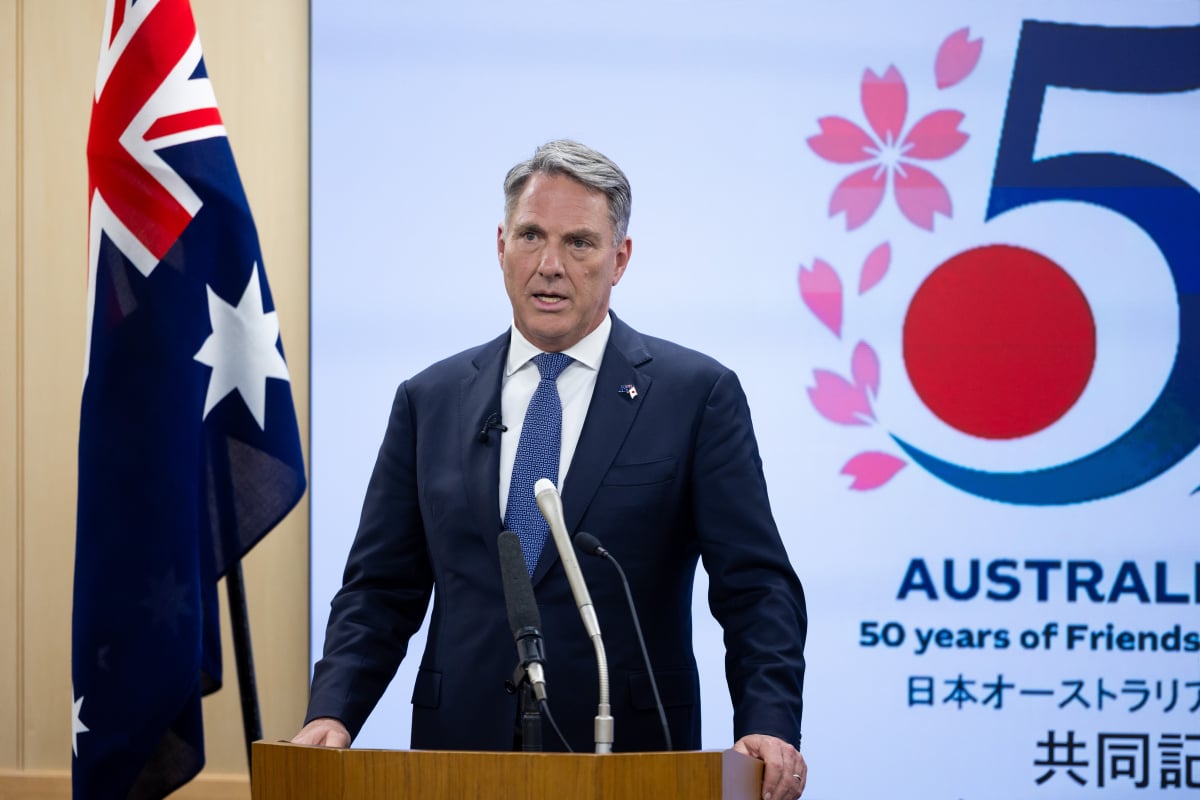
At the same time, Canberra has reaffirmed that the United States remains its closest ally and principal strategic partner. Defense Minister Richard Marles emphasized that continued US presence in the Indo-Pacific is central to maintaining an effective balance of power. That means the new spending plan is not a move toward strategic detachment. It is a signal that Australia intends to contribute more heavily within an alliance-centered framework.
Where the money is headed
The supplied material highlights industrial and munitions capacity as a major focus. Australia plans to deepen collaboration with the United States through AUKUS and through its Guided Weapons and Explosive Ordnance enterprise. The Integrated Investment Plan projects up to 36 billion Australian dollars in planned investment for manufacturing and sustaining guided missiles and other precision munitions domestically.
That emphasis matters. Modern deterrence depends not just on platforms, but on stockpiles, sustainment, and industrial depth. Recent conflicts and alliance planning have underscored how quickly advanced munitions can be consumed and how difficult it can be to replenish them if industrial capacity is thin.
By stressing guided weapons production and larger stocks of systems such as the AGM-88G Advanced Anti-Radiation Guided Missile, Australia is aligning itself with a wider allied recognition that military readiness requires stronger domestic industrial foundations.
What 3 percent of GDP represents
The 3 percent target is politically and strategically significant because it moves Australia into a higher tier of defense effort among advanced US partners. The report notes that the United States has been urging allies and partners to invest more and contribute more to collective defense. Canberra is now responding in a manner that is measurable, long-range, and tied to a public strategic narrative.
The use of NATO methodology also matters because it broadens what counts toward the percentage, including some defense-related categories beyond core departmental outlays. Even so, the overall direction is unmistakable: Australia is planning a larger defense burden and presenting it as necessary for a more coercive regional environment.
That environment, as described in the report, is defined by force projection risks and by the possibility of military coercion at levels Australia says it has not faced since the Second World War. Whether every external observer would use equally stark language, Canberra clearly wants its own bureaucracy, industry, and allies to internalize that urgency.
An alliance policy with industrial consequences
This is not just a budget story. It is also a supply-chain and industrial-policy story. Increased spending on missiles, ordnance, and defense collaboration with the United States can reshape domestic manufacturing priorities, workforce planning, and procurement timelines. In other words, the defense plan will have downstream effects well beyond military headquarters.
That is especially true under AUKUS and related initiatives, where technology-sharing, industrial interoperability, and long-term procurement commitments are intended to bind allied capabilities together more tightly. Australia’s plan suggests it wants to be not merely a buyer of allied systems, but a more active producer and sustainment partner.
The tension, of course, is execution. Long-range defense plans often look strongest at the announcement stage. The real test is whether governments can translate budget trajectories into delivered capabilities on schedule and with enough industrial resilience to matter in a crisis.
Why this shift matters beyond Australia
For the broader Indo-Pacific, Australia’s move is another sign that middle powers are hardening their strategic assumptions. Instead of treating instability as temporary, they are budgeting for a world in which military pressure, supply disruption, and great-power competition are persistent conditions.
That should be understood as a policy shift, not just a spending increase. The investment numbers are large, but the more important change may be conceptual: Australia is organizing its future defense posture around a long-duration period of elevated risk, closer alliance integration, and stronger domestic weapons production.
For Developments Today, the core takeaway is straightforward. Australia is not merely spending more because it can. It is spending more because it believes the regional order is deteriorating, and because it wants both allies and adversaries to understand that it is preparing for a harder strategic decade.
This article is based on reporting by Breaking Defense. Read the original article.
Originally published on breakingdefense.com