A New Kind of Military Competition
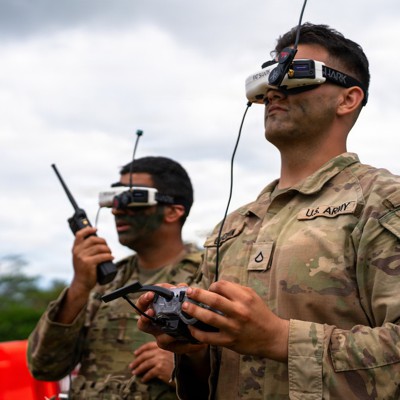
The United States Army is looking for its best drone pilots, and it is planning to find them the same way it has identified top performers in other specialties for decades: through intense, high-profile competition. A new event being organized in Huntsville, Alabama, will pit unmanned systems operators against each other in a series of challenges designed to test their skills in reconnaissance, navigation, precision maneuvering, and tactical decision-making. The competition is being explicitly modeled on the Army's legendary Best Ranger Competition, which has been testing the physical and mental limits of elite soldiers since 1982.
But this is not merely about bragging rights. Army leadership has signaled that the competition will serve a deeper purpose, generating data and insights that will inform how the service selects, trains, and organizes its unmanned systems operators as drones become an increasingly central element of ground combat. The lessons learned from watching the best pilots perform under pressure will feed directly into the development of training programs, qualification standards, and organizational structures for the Army's growing drone force.
Why Drone Pilots Need Their Own Showcase
The proliferation of drones on the modern battlefield has been one of the defining military developments of the past several years. The war in Ukraine has demonstrated conclusively that small unmanned aerial systems can be decisive weapons, capable of destroying armored vehicles, disrupting logistics operations, and providing real-time intelligence that changes the tempo of combat. Every major military in the world is now racing to integrate drones into its force structure, and the U.S. Army is no exception.
But fielding drones is only half the challenge. The other half is developing the human operators who control them. Drone piloting in a military context is a demanding skill that combines spatial awareness, tactical judgment, technical proficiency, and the ability to operate under extreme stress. A skilled drone pilot can extract dramatically more value from the same piece of hardware than an average one, and the gap between good and great operators can be the difference between mission success and failure.
The Army currently lacks a standardized framework for identifying and developing top drone talent. Different units have different approaches to training, and there is no centralized mechanism for recognizing excellence in unmanned operations or for sharing best practices across the force. The Huntsville competition is designed to begin filling that gap.
Competition Structure and Goals
While the full details of the competition format are still being developed, organizers have outlined several categories of challenges that participants will face:
- Reconnaissance and surveillance: Pilots will be tasked with locating and identifying targets in complex terrain, testing their ability to operate sensors, manage flight paths, and process information under time pressure.
- Precision navigation: Challenges will require pilots to fly through confined spaces, navigate obstacles, and maintain control in degraded conditions such as high winds or GPS interference.
- Tactical employment: Scenarios will test pilots' ability to integrate drone operations with ground force maneuver, requiring them to provide support to simulated infantry and armor units in realistic tactical situations.
- Technical troubleshooting: Competitors may face equipment malfunctions or degraded communications that force them to adapt and problem-solve in real time, testing resilience and technical knowledge alongside flying skill.
The competition is expected to draw participants from across the Army, including both active-duty soldiers and National Guard and Reserve personnel. Organizers hope that the event will generate the same kind of prestige and competitive energy that the Best Ranger Competition has sustained for more than four decades.
Shaping Selection and Training
Perhaps the most significant aspect of the competition is its role as a research tool. By observing how top performers approach challenges, the Army hopes to identify the skills, aptitudes, and training methods that produce the best drone operators. This information will be used to refine selection criteria for unmanned systems specialties, update training curricula at the service's drone schools, and develop new qualification standards that better reflect the demands of modern drone warfare.
The data collection aspect of the competition is taken very seriously. Organizers plan to instrument the events extensively, capturing detailed telemetry data from the drones, eye-tracking data from pilots, and after-action interviews that probe decision-making processes. This wealth of information will be analyzed by training and doctrine developers at organizations like the Army Futures Command and the Combined Arms Center.
There is also a recruitment dimension. By creating a high-profile competition that celebrates drone piloting excellence, the Army hopes to attract talented soldiers to unmanned systems specialties that have sometimes been seen as less prestigious than traditional combat arms roles. As drones become more important on the battlefield, the service needs its best and brightest to pursue careers in unmanned operations, and competitive events are a proven tool for raising the profile of military specialties.
The Bigger Picture
The Huntsville drone competition reflects a broader recognition within the U.S. military that the human dimension of unmanned warfare deserves as much attention as the technological dimension. It is tempting to focus on the hardware, the drones themselves, their sensors, their weapons, their range, and their endurance. But the operators who control those systems are the decisive variable, and the Army's investment in identifying and developing top drone talent signals a mature understanding of what it takes to build an effective unmanned fighting force.
As drone warfare continues to evolve, competitions like this one may become as integral to military culture as marksmanship matches and tactical exercises have been for generations. The soldier who can fly a drone with precision and tactical insight may prove to be as valuable on tomorrow's battlefield as the sharpshooter or the skilled infantryman has been on yesterday's.
This article is based on reporting by Defense One. Read the original article.
Originally published on defenseone.com