A new stage for the Collaborative Combat Aircraft effort
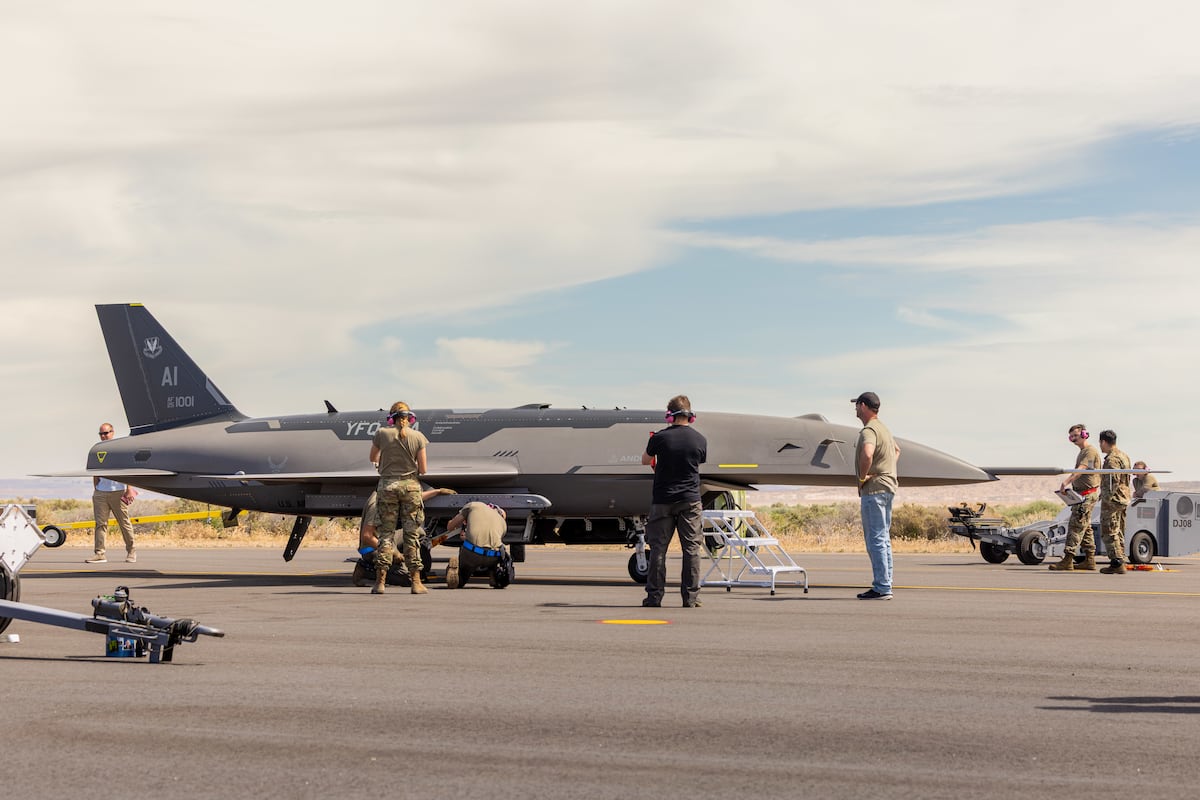
The U.S. Air Force has taken another visible step toward integrating semiautonomous aircraft into frontline operations, this time through hands-on testing of Anduril’s YFQ-44A combat drone by airmen rather than by company specialists alone. According to Defense News and an Air Force release cited in the report, the service’s Experimental Operations Unit recently conducted a series of sorties with the jet-powered aircraft at Edwards Air Force Base in California.
The exercise matters because it moves the conversation around autonomous military aviation away from concept art and toward operational practice. The Air Force’s Collaborative Combat Aircraft, or CCA, program is meant to explore aircraft that could someday fly alongside crewed fighters. But the central question is not simply whether these systems can fly. It is whether military units can launch them, recover them, sustain them, task them in flight, and fit them into expeditionary operations under realistic constraints.
This latest test appears designed to answer exactly those questions.
From pilot substitute to operator workflow
One of the clearest details in the report is what the exercise no longer required. Defense News notes that the earlier concept involved fully human-piloted drones, but Jason Levin, Anduril’s senior vice president of engineering for air dominance and strike, said in a 2025 company release that there is now no hidden operator flying the aircraft with a stick and throttle behind the scenes.
That distinction is significant. It suggests the Air Force is not just evaluating remote piloting under a different label. It is testing an operational model in which personnel define missions, supervise the aircraft, and direct tasks without continuously flying the vehicle in the traditional sense. In practical terms, that changes the human role from constant pilot input to mission-level control and oversight.
The Defense News account gives a detailed picture of that workflow. Experimental Operations Unit personnel reportedly handled launch and recovery, aircraft turns between sorties, pre- and post-flight checks, clearances, weapons loading and unloading, and direct tasking during taxi and flight. They did so using a ruggedized laptop to upload mission plans, initiate autonomous taxi and takeoff, task the aircraft in flight, and manage data after landing.
That matters because the laptop is more than a gadget detail. It symbolizes an effort to reduce dependence on the fixed infrastructure associated with large established bases. If accurate at scale, that could make these aircraft more flexible in dispersed or contested operations.
The Air Force is testing more than the airplane
Military aviation programs are often judged by airframe performance, but this exercise seems equally focused on the support system around the aircraft. Defense News reports that Anduril vice president Mark Shushnar said the YFQ-44A was designed to be easy to maintain with a small crew and that the test demonstrated that premise. After only a couple of days of training, a handful of Experimental Operations Unit maintainers were reportedly able to turn the aircraft between sorties.
If that result holds, it could become one of the aircraft’s most important attributes. Future air combat concepts increasingly assume operations across dispersed locations, under degraded logistics, and with limited manpower. In that environment, ease of maintenance is not a convenience. It is a combat variable.
The report also says the exercise was executed from beginning to end by Experimental Operations Unit airmen working alongside the 412th Test Wing under Air Force Material Command. That arrangement reflects a deliberate institutional choice. Operators are not being brought in at the end to validate a finished procurement product. They are being embedded into the acquisition and experimentation loop earlier.
The “warfighter’s voice” is being moved upstream
The Air Force release, as summarized by Defense News, casts the event as part of a broader “operator-driver experimentation” model tied to the service’s emerging Warfighting Acquisition System. Col. Timothy Helfrich, portfolio acquisition executive for fighters and advanced aircraft, said that embedding operators with acquisition professionals creates a tight feedback loop that allows the service to trade operational risk with acquisition risk in real time.
That phrasing points to the larger institutional goal. The service is not only experimenting with autonomous aircraft. It is experimenting with how to buy and field them faster. Traditional defense procurement has often been criticized for pushing useful feedback too late into development cycles. By placing operators earlier in the loop, the Air Force appears to be trying to compress the distance between concept, test, and field relevance.
The release also said the Experimental Operations Unit’s main objective is to put operators at the center of the process so that the future CCA force is workable in conflict. That emphasis is notable because it frames autonomy not as a technology demonstration but as a warfighting tool that must survive contact with real procedures, real sustainment demands, and real personnel constraints.
Why this test matters now
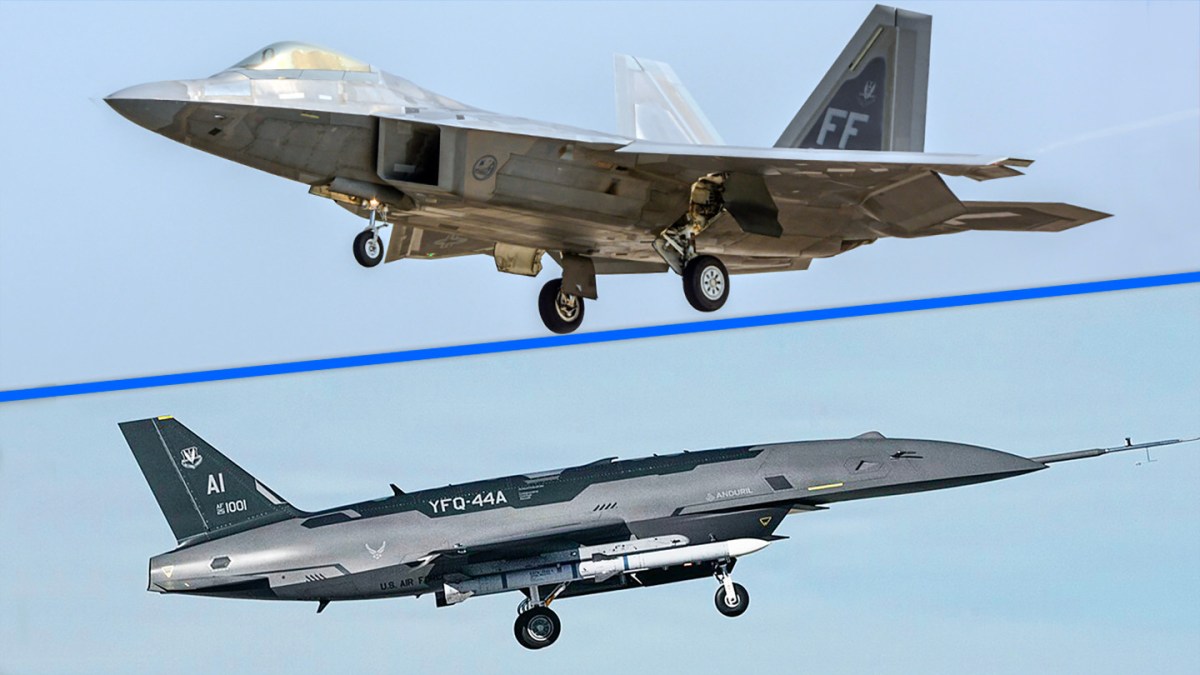
The Air Force’s interest in semiautonomous combat aircraft reflects a wider military push to expand mass, flexibility, and survivability in high-end conflict. Aircraft that can operate with less infrastructure, accept mission-level direction, and be sustained by small crews are attractive on paper. The harder task is proving that operators can use them effectively without a burdensome support tail.
This test does not resolve every question around CCA. It does not establish how these aircraft will perform in contested combat or how they will integrate with crewed formations over time. But it does show that the service is trying to answer operational questions early, with airmen directly involved in launch, control, sustainment, and learning.
That is a meaningful milestone. The path to military autonomy will be decided not only by breakthroughs in software or airframe design, but by whether units can actually employ these systems under field conditions. The YFQ-44A exercise at Edwards suggests the Air Force understands that point and is beginning to build the procedures around it.
For the CCA program, that may be just as important as the aircraft itself. Future combat drones will need to be more than capable. They will need to be usable. This test was a step toward proving that usability is being treated as part of the weapon system, not an afterthought.
This article is based on reporting by Defense News. Read the original article.
Originally published on defensenews.com