The Warthog Over the World's Most Important Waterway
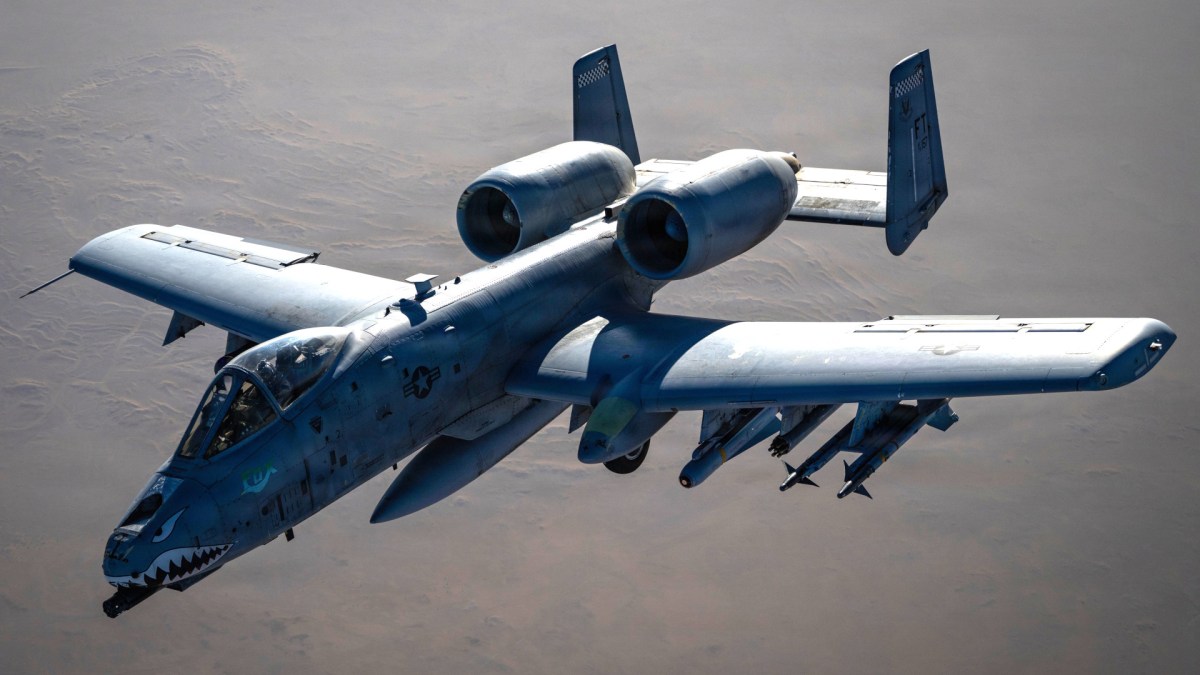
The Strait of Hormuz—the narrow chokepoint through which roughly 20% of global oil flows—has become the latest operational theater for the US Air Force's venerable A-10 Thunderbolt II. American A-10s are conducting patrols over the strait specifically tasked with monitoring and deterring Iranian fast attack craft and naval vessels that have repeatedly confronted commercial shipping and US Navy ships in the waterway.
Why the A-10 for This Mission
The A-10 is not a conventional maritime patrol aircraft. Its design pedigree is antitank—specifically, stopping Soviet armor in a Cold War scenario that never came. Its iconic GAU-8 Avenger rotary cannon, capable of firing 70 depleted uranium rounds per second, was optimized for armored vehicle destruction. So why deploy it against Iranian speedboats?
The answer lies in the A-10's specific performance characteristics. Its low-and-slow operating profile—it can loiter at relatively low speeds and altitudes for extended periods—makes it ideal for visual identification of small surface targets in cluttered coastal environments where distinguishing civilian fishing boats from military fast attack craft requires close inspection. High-speed jets like the F-16 or F/A-18 transit target areas too quickly for this kind of sustained surveillance and are less well-suited to the precise, low-collateral-damage engagement of small surface vessels.
The A-10 also operates effectively without sophisticated radar systems, relying on pilot visual acquisition and targeting pods to identify and engage surface targets. Its armor protection and redundant systems make it survivable in environments where it might face shoulder-fired missiles or small-arms fire from Iranian vessels—a threat profile that fast jets are not specifically designed to absorb.
The Iranian Fast Boat Threat
Iran's Islamic Revolutionary Guard Corps Navy has developed a doctrine of swarm attacks using large numbers of fast, agile small boats equipped with rockets, torpedoes, and mines. The strategy leverages speed, maneuverability, and numbers to overwhelm the defenses of larger but less agile vessels. Iranian fast attack craft have harassed US Navy ships, conducted close-intercept maneuvers with commercial tankers, and in several incidents have been involved in seizures of vessels transiting the strait.
Countering this threat requires persistent surveillance to detect and track fast boat formations before they can execute coordinated attacks, and engagement options precise enough to avoid collateral damage to commercial shipping. The A-10's combination of loiter capability, precision guided munitions, and cannon makes it a credible deterrent against massed fast boat formations in the confined waters of the strait.
Broader Military Context in 2026
The A-10 deployment comes amid a period of elevated US-Iran tension involving a series of confrontations in the strait and Persian Gulf. A second US amphibious assault ship is also heading to the Middle East region, joining existing carrier strike group and Marine assets in a show of force designed to deter Iranian escalation while preserving US response options. Former CENTCOM commanders have publicly assessed the situation in the strait as the most dangerous it has been in years, with both sides operating under risk of miscalculation.
The A-10's Continued Relevance
The Hormuz deployment adds a new chapter to the A-10's improbable operational longevity. The Air Force has repeatedly sought to retire the aircraft to fund more advanced platforms, and Congress has repeatedly blocked those attempts, citing the aircraft's effectiveness in close air support roles that no other platform fully replicates. The A-10 is now being asked to perform maritime interdiction tasks that its designers never anticipated—and apparently performing them effectively enough to be the platform of choice for this mission. An aircraft designed in the 1970s to fight Soviet tanks continues to find new operational roles in 21st-century conflicts.
This article is based on reporting by twz.com. Read the original article.
Originally published on twz.com