The dispute is about more than one military operation
President Donald Trump’s renewed criticism of NATO over support for U.S. operations connected to Iran has sharpened a broader question about the alliance: what Washington expects from allies when a crisis escalates quickly, and how much consultation still matters when the United States wants speed and surprise.
According to the report, Trump publicly rebuked NATO for what he described as reluctance to support U.S. operations in Iran, one day after a tense private meeting at the White House with NATO Secretary General Mark Rutte. The disagreement centers on the alliance response to a de facto blockade of the Strait of Hormuz, a waterway that the report says typically carries about a quarter of the world’s oil and gas.
The near-closure of the strait has prevented roughly 10 million barrels of crude oil a day from reaching global markets, underscoring why the issue has become more than a narrow military matter. It is also a test of alliance coordination under strategic and economic pressure.
Rutte’s defense is that allies were not consulted
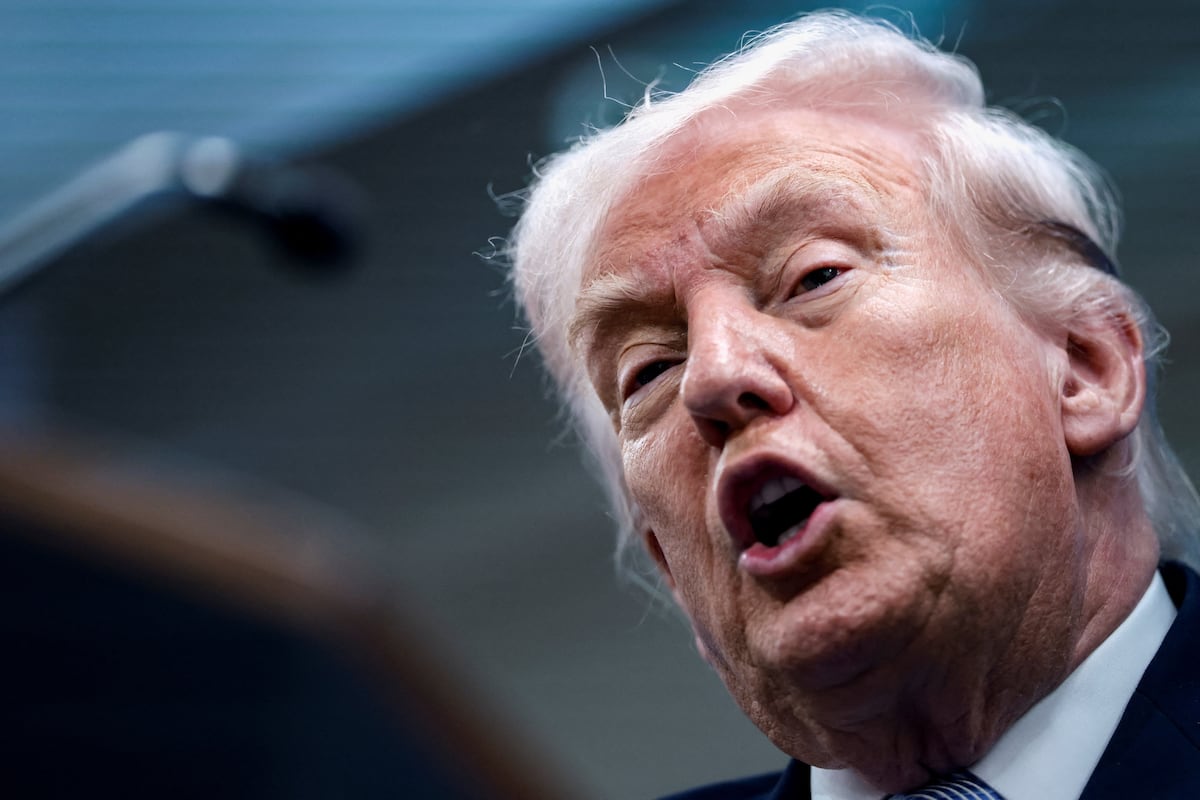
Trump’s criticism was blunt. He wrote on social media that NATO was not there when the United States needed it and would not be there if needed again. He followed that with another public message calling the response “very disappointing.”
Rutte did not deny the discord. Instead, he argued that Europe’s initial reluctance to become involved was shaped by the fact that allies were not informed beforehand about the launch of Operation Epic Fury, described in the report as a joint U.S.-Israeli assault against Iran. Rutte said the decision was made to preserve surprise and that other member nations were consequently slower to respond.
That explanation matters because it reframes the dispute. Rather than showing simple refusal by allies, it suggests a familiar alliance problem: Washington wanting operational secrecy and then demanding immediate political solidarity from partners who were excluded from the planning stage.
NATO says support exists, but in a narrower form
Rutte’s public remarks emphasized that European allies are now providing substantial backing, including basing, logistics, and other measures to help the U.S. military effort aimed at denying Iran a nuclear weapon and degrading its ability to project instability. In other words, the support may be real, but not necessarily in the form or on the timeline Trump wanted.
The secretary general also pointed to a British-led effort, spearheaded by Prime Minister Keir Starmer, to organize the military, political, and economic tools needed to ensure free passage through the Strait of Hormuz as hostilities ease. That suggests NATO governments are trying to show practical engagement even while managing their political distance from how the conflict began.
This is a classic alliance-management distinction. One side measures commitment by immediate alignment with U.S. action. The other measures it by the support ultimately provided once consultation, legitimacy, and domestic politics catch up.
The relationship may face a formal review
The stakes are not limited to rhetoric. The report says the Trump administration has asserted it will reassess its relationship with NATO once the war with Iran concludes. Officials have said that review could include moving American forces away from allies judged unhelpful. Trump has also weighed the possibility of withdrawing the United States from the alliance altogether.
That threat amplifies the pressure on NATO members, but it also introduces uncertainty into the alliance’s deterrence posture. If European capitals believe U.S. force posture and treaty commitments are contingent on political deference in a fast-moving crisis, alliance planning becomes more unstable.
The article also notes that Trump linked deteriorating relations to Greenland in remarks earlier in the week. That detail broadens the dispute even further. It suggests the administration’s frustrations with allies are not confined to one theater or one mission, but are instead feeding into a wider reassessment of the alliance relationship.
Hormuz has become both a military and political chokepoint
The Strait of Hormuz is strategically valuable because of the share of global oil and gas moving through it. That gives the crisis a built-in economic dimension. Any prolonged disruption affects energy markets, shipping security, and the credibility of Western efforts to guarantee free passage through vital trade routes.
But the political chokepoint may be just as important as the geographic one. NATO is again facing the question of whether it is an alliance built around formal consultation and collective legitimacy, or one expected to endorse U.S. action after the fact if the stakes are high enough.
Rutte’s comments indicate an effort to preserve both the relationship and the alliance narrative by stressing current support rather than dwelling solely on the initial rupture. Trump’s comments indicate the opposite impulse: measure alliance value by reflexive backing in the moment.
An episode with consequences beyond Iran
The practical outcome of this dispute may depend on how the Hormuz crisis evolves and whether allied support deepens. But the strategic lesson is already visible. If the United States wants allied speed after unilateral surprise, and allies want prior consultation before committing themselves, then the alliance is operating with mismatched assumptions.
That mismatch is now exposed in public. Whether it turns into a temporary quarrel or a lasting structural break will shape more than the Iran file. It will shape how NATO members judge the reliability, demands, and political costs of alignment with Washington in future crises.
This article is based on reporting by Defense News. Read the original article.
Originally published on defensenews.com