A Border Incident With Wider Strategic Weight
Romania says a Russian drone struck an apartment block in the city of Galati during an overnight attack on neighboring Ukraine, injuring a woman and a child and sharply raising tensions on NATO’s eastern flank. NATO Secretary General Mark Rutte responded by saying the alliance stands ready to defend every inch of allied territory, framing the incident as part of a broader pattern of dangerous Russian behavior.
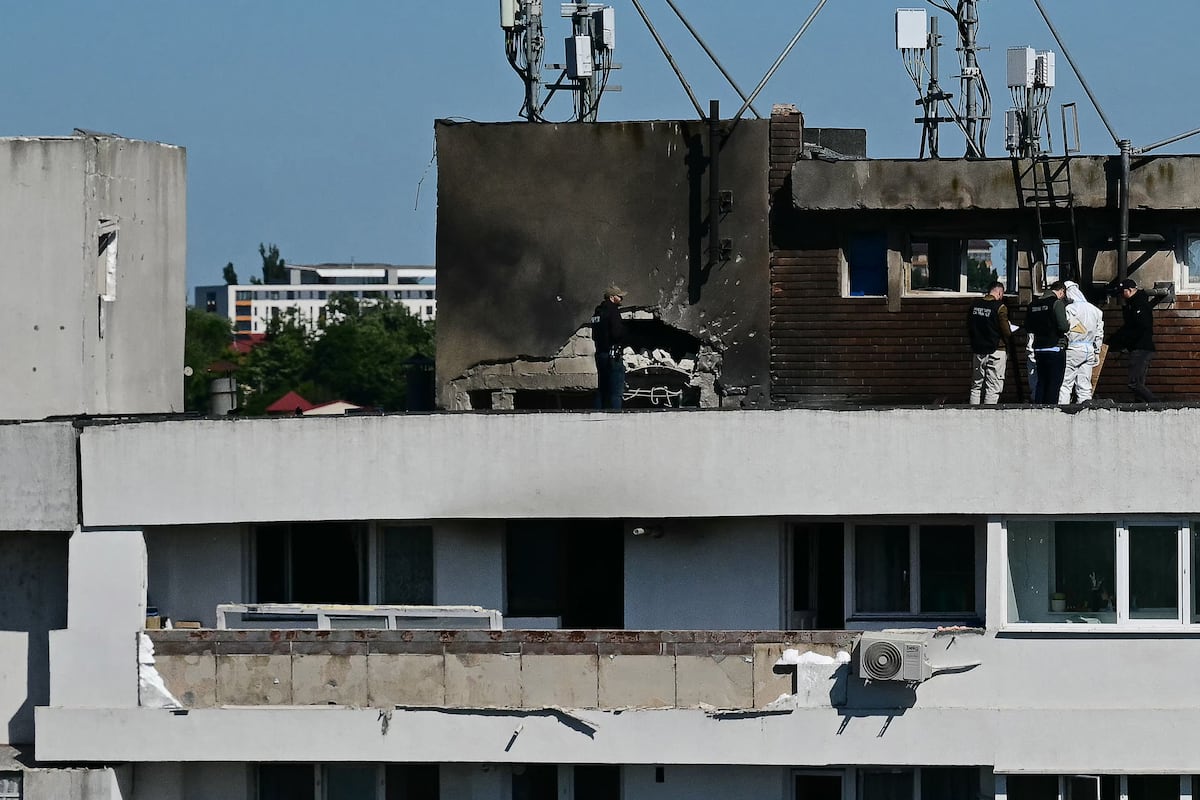
According to Romania’s defense ministry, radar tracked a Russian drone entering Romanian airspace before the impact. Authorities said the drone exploded on contact with the 10-story apartment block, damaging the roof and tearing through a top-floor flat. Photos from the scene, as described in the source text, showed charred and damaged brickwork.
The reported injuries were minor, but the political implications are larger. Defense News notes that this was the first time a densely populated area in a NATO country had been hit in a way that caused injuries during Russia’s war in Ukraine. That gives the event significance beyond the immediate damage. It turns a pattern of airspace incursions into a more direct test of alliance resolve.
NATO’s Message Stops Short of Article 5
Rutte’s statement was forceful but measured. After speaking by phone with Romanian President Nicusor Dan, he said Russia’s reckless behavior is a danger to everyone and reaffirmed NATO’s readiness to defend allied territory. At the same time, he did not mention triggering NATO’s mutual defense clause. That omission matters. It signals seriousness without indicating that the alliance is treating the incident as the start of a broader military response.
Romania moved quickly on the diplomatic front. Dan said the Russian consulate in Constanta would be closed and the consul expelled. Moscow signaled it would respond, with Russian Foreign Ministry spokeswoman Maria Zakharova saying Bucharest’s decision would draw a swift answer.
The exchange underscores a familiar pattern in the war’s regional spillover: military incidents create immediate security anxiety, followed by calibrated diplomatic retaliation and alliance signaling. What makes this case different is the presence of injuries in a civilian residential building inside a NATO member state.
A Repeated Pattern Along the Danube Frontier
Romania shares a 650-kilometer land border with Ukraine and has repeatedly reported problems tied to Russian attacks on Ukrainian port infrastructure across the Danube River. The source text says Romania has recorded 28 breaches of its airspace by Russian drones since Moscow began those attacks in 2022.
That history shapes how this latest incident is likely to be read in Bucharest and across the alliance. A single incursion can be dismissed as a dangerous accident. A long chain of incursions becomes harder to separate from either chronic negligence or deliberate pressure-testing. One resident quoted in the report argued that this could not simply be accidental after so many similar events.
For NATO planners, the challenge is not only defending airspace but also maintaining credibility without overreacting to every cross-border event. Drones complicate that balance. They are comparatively cheap, hard to track in real time, and capable of creating real political crisis even when their military effect is limited.
Why This Incident Matters Now
The alliance’s eastern members have long worried about the Ukraine war spilling across borders. This strike will intensify those fears. It also comes at a time when European governments are already reassessing readiness, air defense, and escalation management in light of prolonged war on the continent.
Rutte’s phrasing was therefore aimed at more than Moscow. It was also intended for allies and populations inside them. Reassurance matters after an incident that visibly crossed into civilian life. Saying NATO will defend every inch of allied territory is both deterrent language and political stabilization.
The immediate facts remain limited to one strike, minor injuries, and visible damage. But the strategic meaning is clearer: what had been a recurring border risk has now produced civilian casualties inside alliance territory. That alone ensures the incident will echo well beyond Galati.
This article is based on reporting by Defense News. Read the original article.
Originally published on defensenews.com