The Army is stress-testing how bases hold up under coordinated disruption
The U.S. Army used its first Defense Critical Infrastructure Summit to examine a problem that has become increasingly central to military readiness: what happens when an adversary does not strike a deployed force first, but instead attacks the systems that allow that force to move.
At Fort Bragg, units from the Army’s XVIII Airborne Corps joined 14 external partners, including federal agencies, local leaders, and utility companies, for a tabletop exercise built around a coordinated attack on the installation and surrounding region. The scenario was designed to test how quickly a deployment could unravel if infrastructure failures, cyber incidents, and physical attacks hit at once.
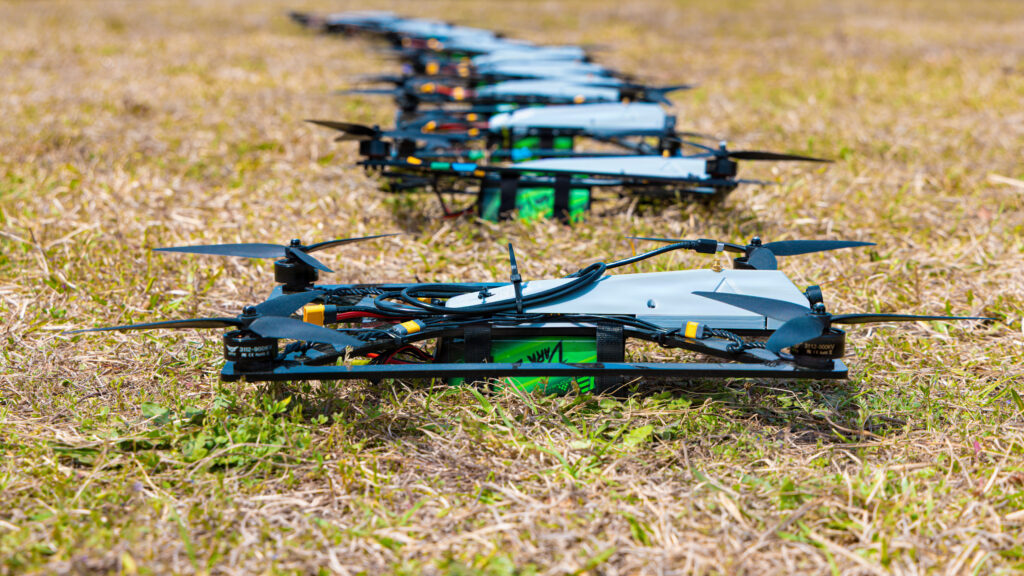
The exercise was not a live field drill. No physical assets were used. But the scenario itself was deliberately severe. According to the Army’s description, participants had to work through cyberattacks on supervisory control and data acquisition systems that triggered an E. coli outbreak, drone attacks on commercial electric stations located on post, and an accidental strike on a fiberoptic line that degraded command and control. All of it unfolded while a major unit needed to deploy rapidly in response to a threat.
The strategic problem is older than the technologies involved
The concern behind the exercise is familiar to defense planners. Adversaries have long tried to find ways to disrupt the movement of U.S. forces before they reach the battlefield, an issue often described as getting from the fort, to the port, to the fight. What is changing is the mix of targets and the extent to which key systems are outside direct military control.
Power, water, telecommunications, and other critical services are often owned or operated by private companies. That complicates planning, because the military cannot secure readiness simply by hardening what sits inside a fence line. Its ability to deploy on time may depend on civilian infrastructure, municipal coordination, and private-sector resilience.
That is why the Fort Bragg event brought in external partners rather than treating the problem as a purely military one. The exercise appears to have been structured around the idea that disruption at home station is a shared operating environment, not a standalone military emergency. If cyber failures, utility outages, and communications interruptions happen together, response timelines and authorities quickly become entangled across organizations.
Fort Bragg was a logical first test case
The Army selected XVIII Airborne Corps for the inaugural exercise because its units are expected to move with little or no notice. The 82nd Airborne Division, one of the formations associated with the corps, is widely regarded as a rapid-response force. That makes the installation a useful place to examine how infrastructure stress translates directly into operational delay.
From the Army’s perspective, the exercise was about more than awareness. Brandon Pugh, principal cyber advisor to the secretary of the Army, framed the issue in terms of speed and continuity under crisis. The objective, he said, is to ensure that forces and equipment can get where they need to go without disruption in a time of conflict or urgent need.
The scenario chosen for the summit reflects the growing overlap between physical protection and cyber defense. A drone strike on electrical infrastructure, a cyber event affecting water-related systems, and a communications break caused by damage to fiber all create different problems, but they share a common operational effect: they can delay decisions, constrain movement, and force commanders to manage domestic infrastructure breakdown at the same time they are trying to project combat power outward.
From exercise to repeatable guidance
The Army’s stated goal is to turn lessons from the summit into a playbook that local commanders can use. That may prove to be the most important outcome. Bases differ in their infrastructure dependencies, civilian relationships, and exposure to regional hazards, but commanders still need practical guidance they can apply without being specialists in cyber defense or infrastructure protection.
Pugh described that challenge directly. The question, in his framing, is how to turn the best practices and lessons learned into something a garrison commander can use across camps, posts, and stations. He did not give a timeline for when such a playbook might emerge, but he described it as a major task for his office and said it should be developed in coordination with interagency partners.
That emphasis matters because a useful playbook would have to do more than list threats. It would need to define roles, decision pathways, private-sector touchpoints, and escalation triggers for incidents that span multiple domains at once. It would also have to reflect the reality that many of the first calls in an infrastructure crisis do not stay inside military channels.
Why this matters beyond one installation
The summit signals a broader shift in how military readiness is being discussed. Instead of treating domestic infrastructure as background support, the Army is elevating it to an operational variable. That aligns with the wider recognition that resilience is no longer just about hardened facilities or redundant hardware. It is also about coordination, governance, and the ability to act across institutional boundaries under time pressure.
The Fort Bragg exercise does not resolve those issues, and tabletop scenarios have obvious limits. But it does show the Army moving toward a model in which readiness includes the ability to anticipate synchronized disruptions to power, water, communications, and public health systems at the very moment a force is supposed to leave home.
If the promised playbook eventually materializes, its value will depend on whether it turns that insight into operational habits. The real test is not whether leaders can imagine a compound attack on a base and its surrounding community. It is whether they can standardize a response before such a scenario becomes more than a planning exercise.
This article is based on reporting by Breaking Defense. Read the original article.
Originally published on breakingdefense.com