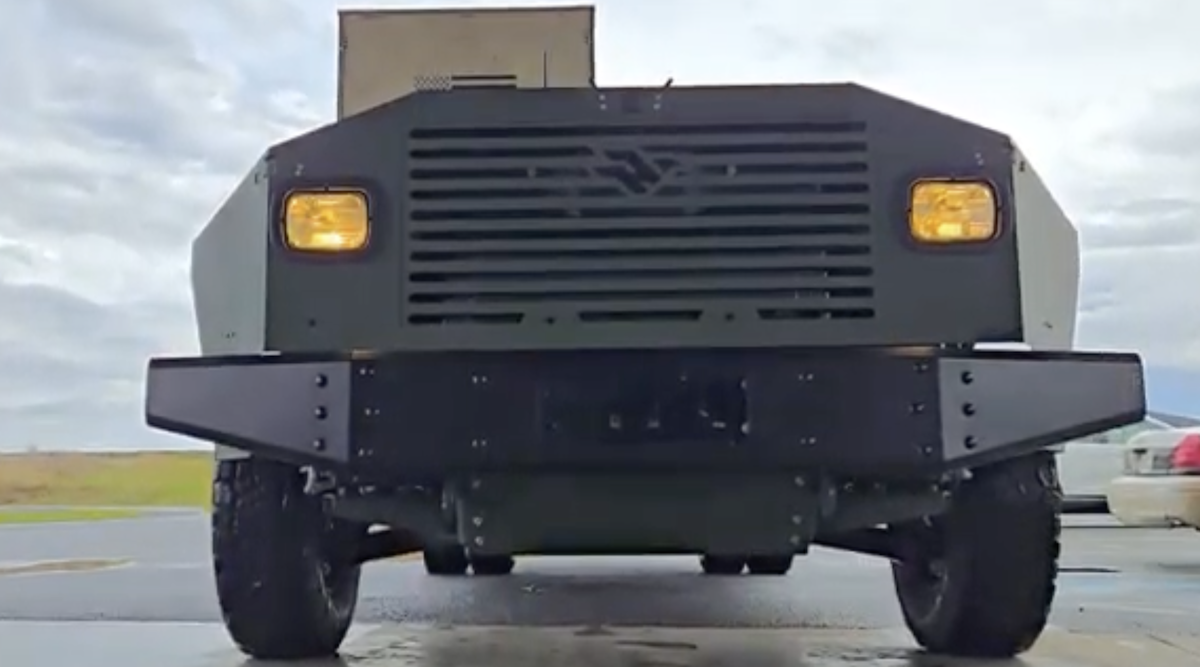
The Army may not be embracing EVs outright, but the aperture is widening
A new CleanTechnica analysis argues that the U.S. Army’s slow approach to vehicle electrification may still evolve into something more consequential, especially if range extenders and onboard power systems continue to gain traction. The core idea is pragmatic rather than ideological: the military does not need to leap directly into pure battery-electric fleets for electrification to matter operationally.
Instead, the article points to a progression that starts with anti-idling kits, moves toward integrated power kits capable of delivering high-voltage direct current, and potentially opens the door to extended-range electric vehicle concepts. That sequence is important because it aligns with how defense organizations usually adopt new propulsion and power technologies: through mission utility first, full platform replacement later.
Why range extenders fit military logic
The analysis frames range extenders as a familiar concept in the civilian EV market. An electric drivetrain is paired with a gas tank that runs a generator when needed, offering a buffer against range anxiety while preserving the core benefits of electric drive. The article notes that this concept has re-emerged in consumer markets as extended-range electric vehicles, or EREVs.
For the Army, however, the rationale is different. The issue is not primarily driver psychology. It is mission endurance, fuel logistics, auxiliary power demand, and the ability to operate equipment without running noisy engines at idle. Those are distinctly military concerns, and they make hybridized or range-extended systems easier to justify even when full electrification remains a harder sell.

Anti-idling kits are the practical starting point
The strongest near-term example in the source text is the Army’s work on anti-idling kits for medium-class tactical vehicles. According to the article, these battery packs can power auxiliary systems so operators can shut down diesel engines instead of leaving them in idle mode. The reported fuel savings are 10% to 20%.
That is not a trivial gain. Fuel use shapes military logistics, and logistics in turn shapes force endurance and vulnerability. A technology that reduces idling while maintaining mission support can therefore matter well before the military commits to a fully electrified platform strategy.
Integrated power may be the bigger story
The article also points to what could be a more transformative step: integrated power kits capable of supplying high-voltage DC power for applications such as onboard missile defense, mobile command posts, directed-energy weapons, and vehicle-centric microgrids. This framing shifts the conversation away from cars and trucks in the civilian sense and toward vehicles as mobile power nodes.
That is where electrification often becomes more compelling in defense settings. A platform that can quietly store, manage, and distribute power has value beyond movement. It can support sensors, weapons, communications, and command systems in ways that conventional drivetrains were not built to optimize.
What the source supports, and what it does not
The supplied text supports a measured conclusion. The Army has been exploring vehicle electrification since the early 2000s, has tested anti-idling kits on tactical vehicles, and is preparing for broader integrated power systems. The article argues that these developments could keep electrification alive despite a less supportive federal energy policy environment.
It does not support a claim that the Army has committed to mass EV adoption, nor that range-extended military platforms are imminent procurement realities. The correct reading is narrower: operational needs are creating openings for electrified subsystems and hybrid architectures, even where institutional enthusiasm for full EV transitions remains limited.
Why this matters for defense technology
The defense significance lies in the convergence of mobility and power management. Modern military vehicles increasingly need to do more than move personnel or cargo. They must feed sensors, communications equipment, defensive systems, and sometimes energy-intensive payloads. That shifts the value proposition of electrification. The question becomes less about replacing diesel for environmental reasons and more about whether a platform can provide the right power profile for emerging mission systems.
In that context, anti-idling systems and integrated power kits are not side notes. They are enabling technologies that can change how vehicle architectures are designed and how battlefield energy is managed.
The likely path forward
If the analysis is right, the Army’s electrification future will not begin with a dramatic fleetwide pivot. It will begin with power kits, fuel-saving auxiliary systems, and selective hybridization where mission needs justify the added complexity. That is a slower path than some advocates might want, but it is consistent with how defense procurement tends to absorb risk.
The significance is that the door remains open. Electrification in military vehicles may still advance not because the Army wants consumer-style EVs, but because modern operations increasingly demand quieter, smarter, and more flexible power systems. That is a different argument, and potentially a more durable one.
This article is based on reporting by CleanTechnica. Read the original article.
Originally published on cleantechnica.com




