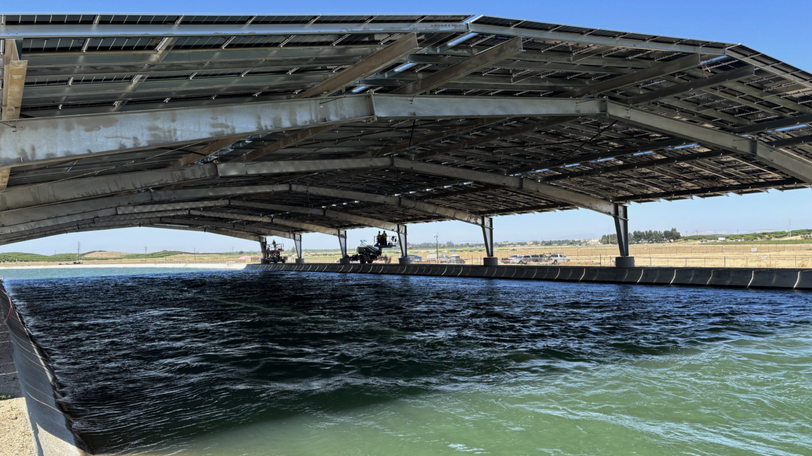
水路上太陽光という概念が、理論から現場データへ
クリーンエネルギーインフラをめぐる繰り返しの論点の一つは、新たな電力を土地や水の競合を激化させずに建設できるのかということだ。カリフォルニアの実証試験は、その答えの一つが、すでに存在する送水システムの真上に直接建設することかもしれないことを示す新たな証拠を提供している。
Turlock Irrigation District が管理する灌漑用水路上で2025年9月に完成した1.6MWのNexusプロジェクトは、水路の上に設置した太陽光パネルが水の蒸発を70%減らし、藻類の増殖を85%抑制できることを示したと、pv magazineが報じている。この設備は、California Department of Water Resources、Turlock Irrigation District、Solar AquaGrid、University of California, Merced による官民連携で開発された。
なぜ水路上太陽光が注目されるのか
この概念の魅力は、インフラの二重利用にある。新たに大規模太陽光発電用の土地を転用する代わりに、開発者は稼働中の水路の上に太陽光発電設備を設置し、同じ面積で発電しながら水面を日陰にする。カリフォルニアのセントラルバレーのような水不足の農業地域では、この組み合わせが重要だ。
暑く乾燥した条件を通る水路システムでは、蒸発は些細な問題ではない。こうした損失を減らせば、農場や地域社会に届く前に失われるはずだった水を守ることができる。日陰はまた、水路の状態を変化させ、藻類の増殖を抑える方向に働く可能性があり、水管理者が日常的に直面する運用上の悩みの一つを軽減する。
Nexus の実証試験は、こうした利点が概念研究だけでなく実際の運用条件でも成り立つのかを検証するため、2022年に開始された。報告された結果を見る限り、その答えは肯定的だ。

実証試験で何を測定したか
元記事によれば、このプロジェクトは、発電量、蒸発損失、水質、水生環境への影響、運用効率を含む幅広い指標を追跡した。見出しとなる成果は蒸発と藻類の数値だが、より重要なのは、稼働中の灌漑インフラ上で技術的・運用的な実現可能性を実証するための経験的テストとして設計された点にある。
この違いは重要だ。多くのエネルギー構想は紙の上では有望に見えても、保守要件、既存の公益事業運用、環境制約に直面すると苦戦する。水路上太陽光は、流れる水、点検の必要性、支持構造、灌漑スケジュールの現実と共存しなければならない。実地の実証試験は、モデルだけよりも拡大判断のための強い基盤を与える。
土地利用と系統価値
水路上太陽光は、エネルギー転換における典型的な摩擦点である立地問題にも対応する。大規模太陽光プロジェクトは、農地、生息地、その他の地域課題と競合するため、遅延や反対に直面しがちだ。既存の水路回廊を使えば、こうした土地利用圧力を下げながら、発電設備を地方負荷の近くに置ける。
灌漑地区や農業地域にとって、その近さは節水と同じくらい重要かもしれない。地元での発電は揚水などのエネルギー消費の大きい作業を支えられ、しかも一部の新規開発で問題となる送電や立地の複雑さを伴わずに済む。したがってこの試験は、単一の政策分野にきれいに収まるというより、エネルギー、水管理、農業のレジリエンスが交差する地点にある。
なぜカリフォルニアが理想的な試験地なのか
カリフォルニアの水路網と繰り返される干ばつ圧力は、このモデルを大規模に試すうえで最も現実的な場所の一つにしている。同州には大きな太陽光の野心、広範な灌漑インフラ、蒸発損失を減らす強い動機がある。この組み合わせにより、水路上方式は単なる工学上の目新しさではない。同州経済の中核にある現実的制約のもとで評価されている。
セントラルバレーの文脈が特に重要なのは、水需要と土地利用への敏感さの両方が集中しているからだ。もし太陽光がそこで水を守りながら、追加の土地転用を避けつつ意味のある出力を実現できれば、このモデルは経済的にも政治的にも正当化しやすくなる。
今後の展開
この実証試験だけで、すべての水路が太陽光カバーに適していることが証明されるわけではない。コスト、構造要件、保守アクセス、地域の環境条件などが、どこで最も適するかを左右する。しかし今回の結果は、水路上太陽光が一つの資源問題を別の問題に置き換えるのではなく、複数の運用上の便益を同時に生み出せるという主張を強めている。
それが Nexus の成果の広い意味だ。多くのインフラ提案は相乗効果を約束するが、投資や政策に資する定量的証拠を生み出すものは比較的少ない。ここでは、議論を前に進めるのに必要な、まさにその種の現場データが得られたようだ。
資源制約地域に向けた実用的モデル
エネルギー計画担当者が摩擦の少ない導入モデルを探すなかで、水路太陽光は実用的な物語を提供する。既存の回廊を使い、再生可能電力を生み、水を節約し、水路の状態を改善するのだ。蒸発が70%減り、藻類の増殖が85%減ったという報告は、このアイデアをニッチな実験として片付けにくくしている。
気候適応と電力拡大の両立を図る地域にとっての教訓は、インフラが必ずしも別々の層として建設される必要はないということかもしれない。ときに最も価値のあるプロジェクトは、一つの公共インフラに複数の役割を担わせるものだ。
この記事は PV Magazine の報道に基づいています。 元記事を読む。
Originally published on pv-magazine.com




