A new industrial humanoid enters the field
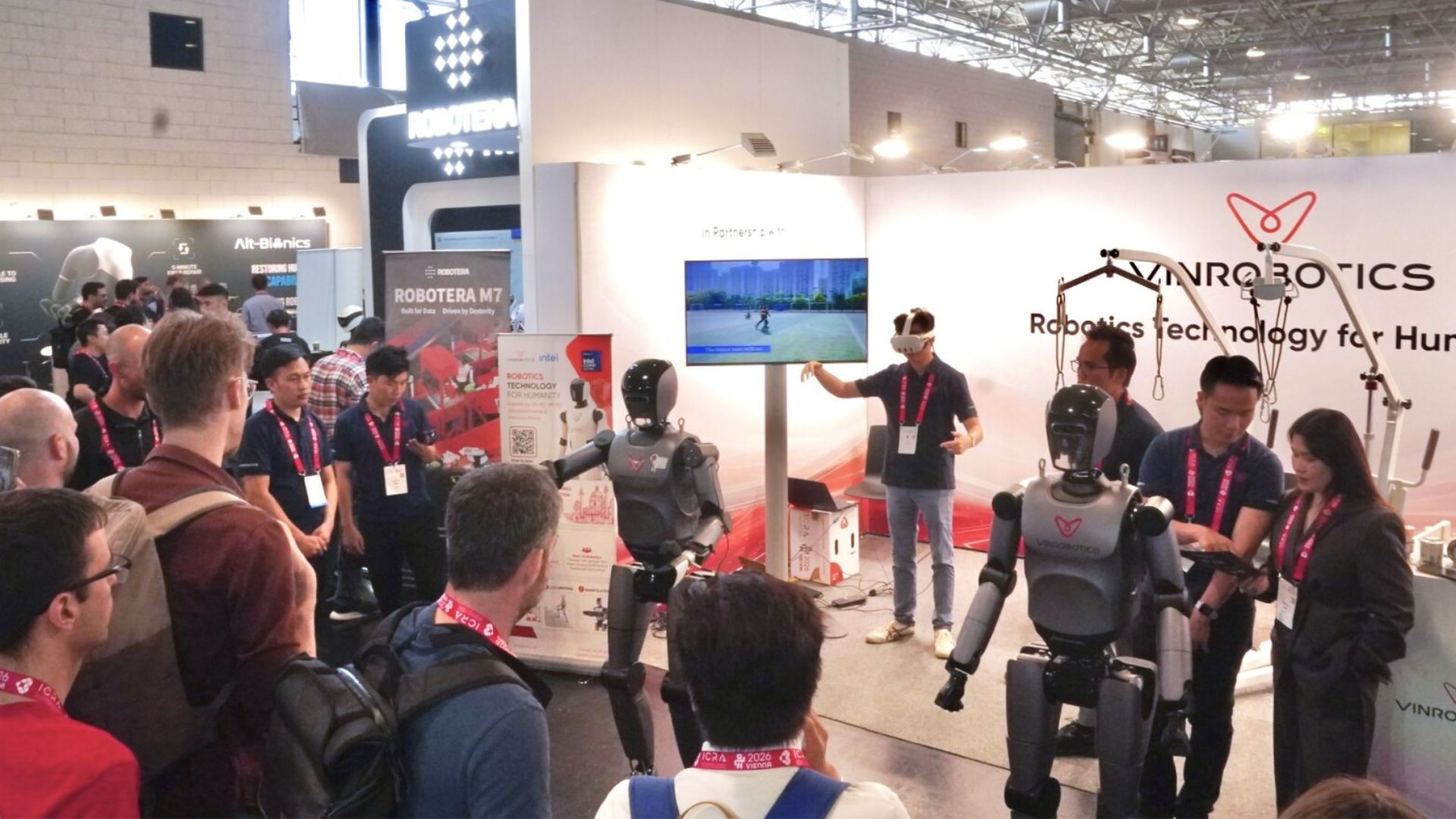
A Vietnamese technology company has unveiled a new humanoid robot called the VR-H3, presenting it as an industrial-grade machine built around advanced perception and manipulation. The company introduced the robot at an IEEE event, according to the candidate material, placing the launch squarely in the context of serious engineering and robotics discussion rather than consumer spectacle.
Even from the limited details available, the emphasis is clear. The VR-H3 is not being framed as a novelty robot or a household assistant. It is being pitched for industrial environments, where the quality of perception and the precision of manipulation are the two capabilities that most often determine whether a humanoid platform can do useful work.
Why perception and manipulation matter
Industrial robotics has long been strong in fixed, repetitive tasks. What remains harder is building machines that can interpret changing environments and handle objects with enough dexterity to operate in spaces designed for people. That is why “advanced perception and manipulation” is a meaningful description, even if the launch material does not provide a full technical breakdown.
Perception refers to a robot’s ability to sense and interpret the world around it, including position, movement and object context. Manipulation refers to how effectively it can grasp, move and work with physical items. In factories, warehouses and mixed-use industrial sites, those two systems must work together if a humanoid robot is going to be more than a demonstration platform.
The VR-H3 announcement therefore fits a broader industry shift toward robots that can operate in human-shaped workspaces without requiring those environments to be completely redesigned. That remains one of the strongest arguments for humanoid form factors in industrial settings.

The significance of an industrial framing
The industrial label matters because it sets a different bar for credibility. Consumer-facing robot announcements can rely on novelty, design or long-term promise. Industrial systems are judged more directly on reliability, safety, task execution and the economics of deployment.
By positioning the VR-H3 as an industrial robot, the company is effectively signaling that it wants to compete in the part of robotics where customers care most about measurable utility. That does not prove the robot is ready for scaled deployment, but it does clarify the ambition behind the launch.
It also highlights how global the humanoid robotics race has become. High-profile development is no longer confined to a handful of U.S., European, Chinese or Japanese players. The appearance of a new Vietnamese entrant adds to the evidence that advanced robotics is broadening geographically as more countries seek a foothold in intelligent manufacturing systems.
What remains unknown
The available source material does not provide specifications, task demonstrations, performance metrics or commercial timelines. That means any assessment has to remain narrow. What can be said confidently is that the robot has been publicly unveiled, that it is called VR-H3, and that its positioning centers on advanced perception and manipulation for industrial use.
Those are not trivial details. In today’s robotics market, launches are often defined by the problem a machine is supposed to solve. Here, the message is that the VR-H3 is meant to address real-world industrial work rather than serve as a general AI showcase.
The next question for any platform in this category is execution: whether the robot can translate its announced capabilities into repeatable performance in demanding environments. For now, the unveiling establishes intent. The test of significance will come when industrial users see how far that perception-and-manipulation promise goes in practice.
This article is based on reporting by Interesting Engineering. Read the original article.
Originally published on interestingengineering.com