Breakthrough in Nuclear Battery Technology
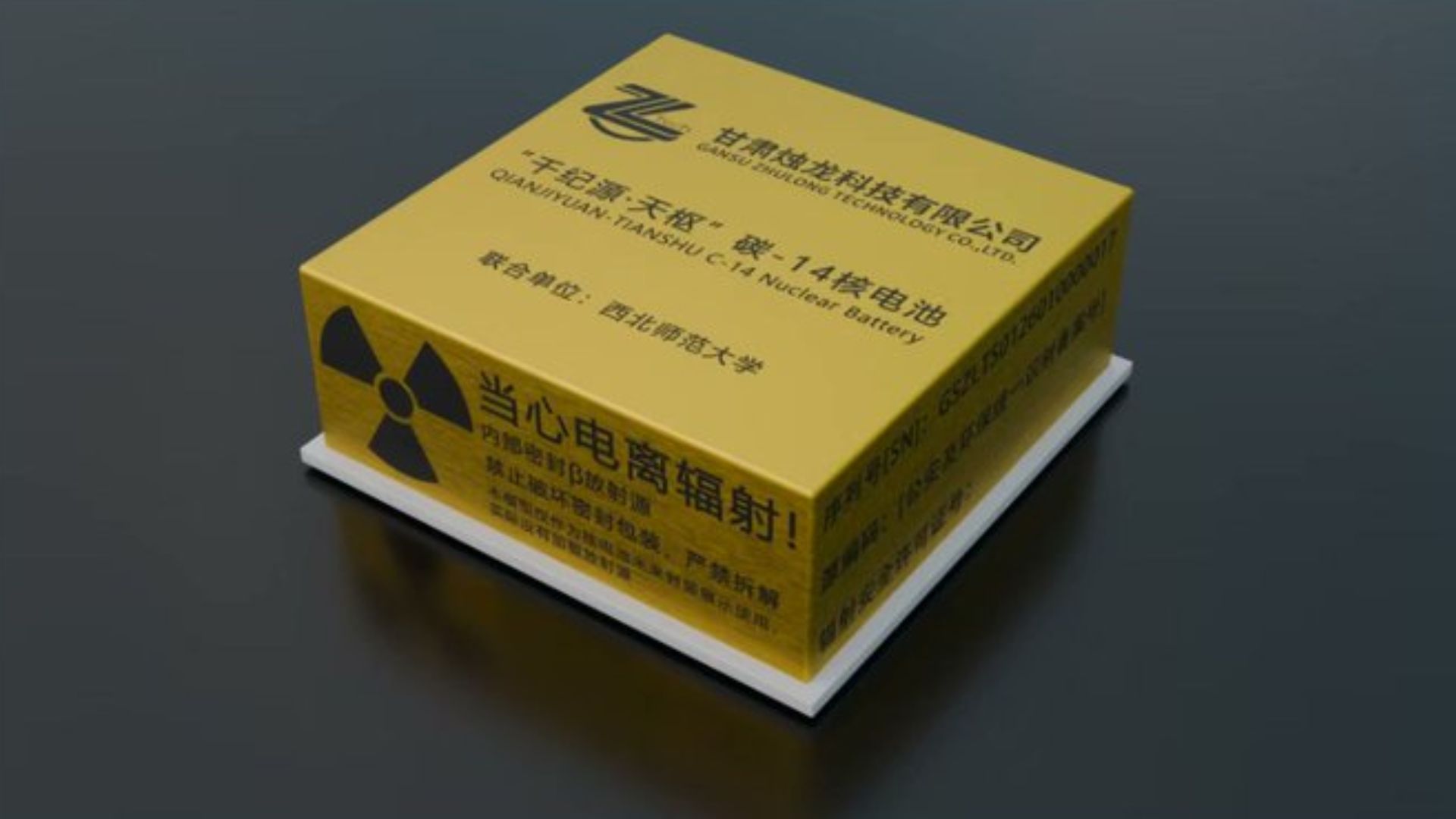
Chinese scientists have achieved a major breakthrough in energy storage with the development of a nuclear battery that can last for thousands of years. The device, created by researchers at Northwest Normal University in collaboration with Gansu Zhulong Technology, harnesses the decay of carbon-14 isotopes to generate electricity. This innovation promises to revolutionize industries where long-lasting, maintenance-free power is critical.
How the Nuclear Battery Works
The battery converts the beta radiation emitted by carbon-14 into electrical energy using a diamond semiconductor. Carbon-14, a radioactive isotope with a half-life of 5,730 years, is encased in a synthetic diamond layer that acts as both a protective shield and an energy converter. When beta particles strike the diamond, they create electron-hole pairs, generating a continuous electric current. The diamond’s hardness and thermal conductivity ensure durability and safety, preventing radiation leakage.

Advantages Over Conventional Batteries
Traditional batteries degrade over time due to chemical reactions, limiting their lifespan to a few years or decades. In contrast, this nuclear battery can operate for thousands of years without recharging or replacement. It is also highly reliable in extreme environments, such as deep space, underwater, or remote sensors, where changing batteries is impractical. The battery’s solid-state design eliminates the risk of leakage or combustion, making it safer than lithium-ion alternatives.
Potential Applications
The technology could transform various sectors. In space exploration, nuclear batteries could power satellites, rovers, and probes for decades, reducing the need for radioisotope thermoelectric generators. Medical implants like pacemakers or neural stimulators could benefit from a lifetime power source, eliminating surgical replacements. Additionally, remote monitoring systems for pipelines, bridges, or environmental sensors could operate autonomously for centuries.

Challenges and Next Steps
Despite its promise, the battery currently produces low power output, suitable only for microelectronics. Scaling up power density while maintaining safety is a key challenge. The researchers are exploring ways to increase efficiency by optimizing the diamond layer and using multiple carbon-14 layers. Commercialization is still years away, but the team is confident that with further development, the battery could enter production within a decade.
Global Context and Competition
Other countries, including the US and Russia, have also developed nuclear batteries, but China’s approach using carbon-14 and diamond stands out for its potential longevity and safety. This innovation aligns with China’s push for self-reliance in critical technologies and could reduce dependence on rare earth materials used in conventional batteries.
Conclusion
The nuclear battery represents a paradigm shift in energy storage, offering virtually unlimited power for low-drain devices. While challenges remain, the collaboration between Northwest Normal University and Gansu Zhulong Technology marks a significant step toward a future where batteries outlast the devices they power.
This article is based on reporting by Interesting Engineering. Read the original article.
Originally published on interestingengineering.com