A short test flight with outsized significance
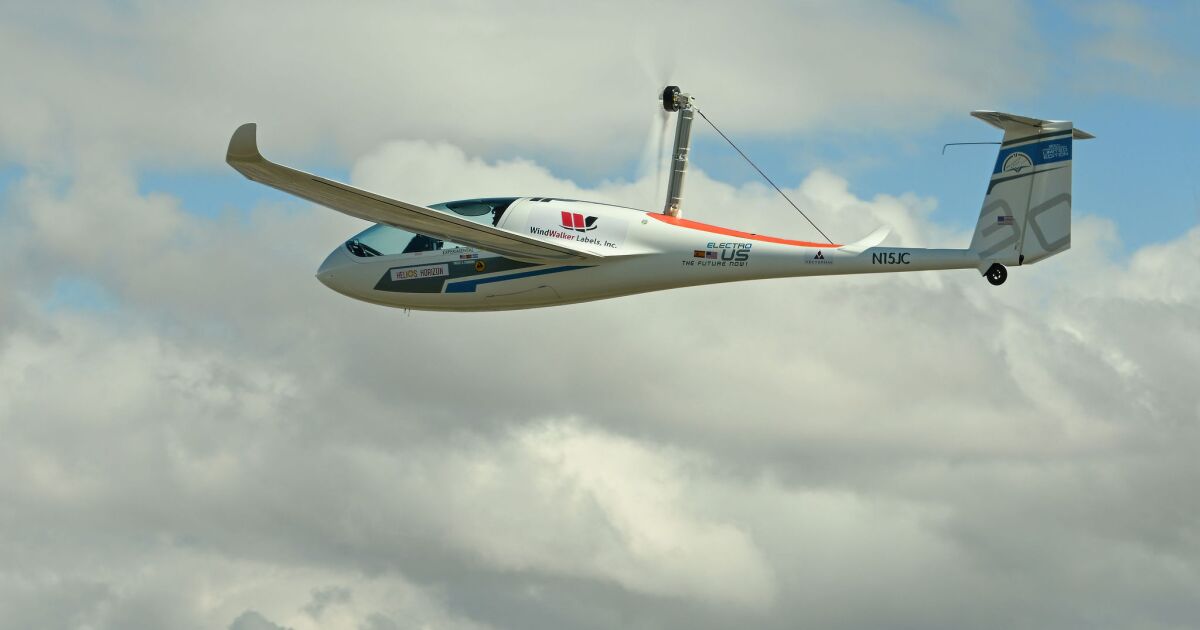
A test flight in Florida has delivered a milestone electric aviation has been chasing for years. According to the supplied source text, the Helios Horizon became the first crewed fixed-wing aircraft to fly on solid-state batteries during a series of validation flights on June 5 at Zephyrhills Municipal Airport.
The flight was modest in scope. It was not a long-range demonstration or a commercial service preview. Instead, the tests were designed to validate weight and balance after installation of a new battery pack. But firsts in aviation do not have to be dramatic to matter. This one is significant because it moves solid-state propulsion from promise to lived flight in a crewed aircraft.
For electric aviation, that matters more than the distance covered. The central bottleneck has always been energy density: how much energy a battery can store for a given weight. Aviation is far less forgiving than ground transport on that front, and improvements that look incremental in road vehicles can become decisive in the air.
Why solid-state batteries matter to aircraft
The supplied source text describes the core advantage clearly. Conventional lithium-ion batteries use a liquid electrolyte and, in aviation terms, do not store enough energy per kilogram to make broadly useful electric flights realistic. Solid-state batteries replace that liquid with solid materials, improving resistance to impact, puncture, and heat while also raising energy density.
In the Helios Horizon, the shift appears substantial. The aircraft’s previous lithium-ion battery pack delivered 260 watt-hours per kilogram. The new solid-state cells are described as reaching 410 watt-hours per kilogram, a roughly 60 percent increase. Company founder and chief test pilot Miguel Iturmendi said he expects that figure to rise by another 40 percent within two years.
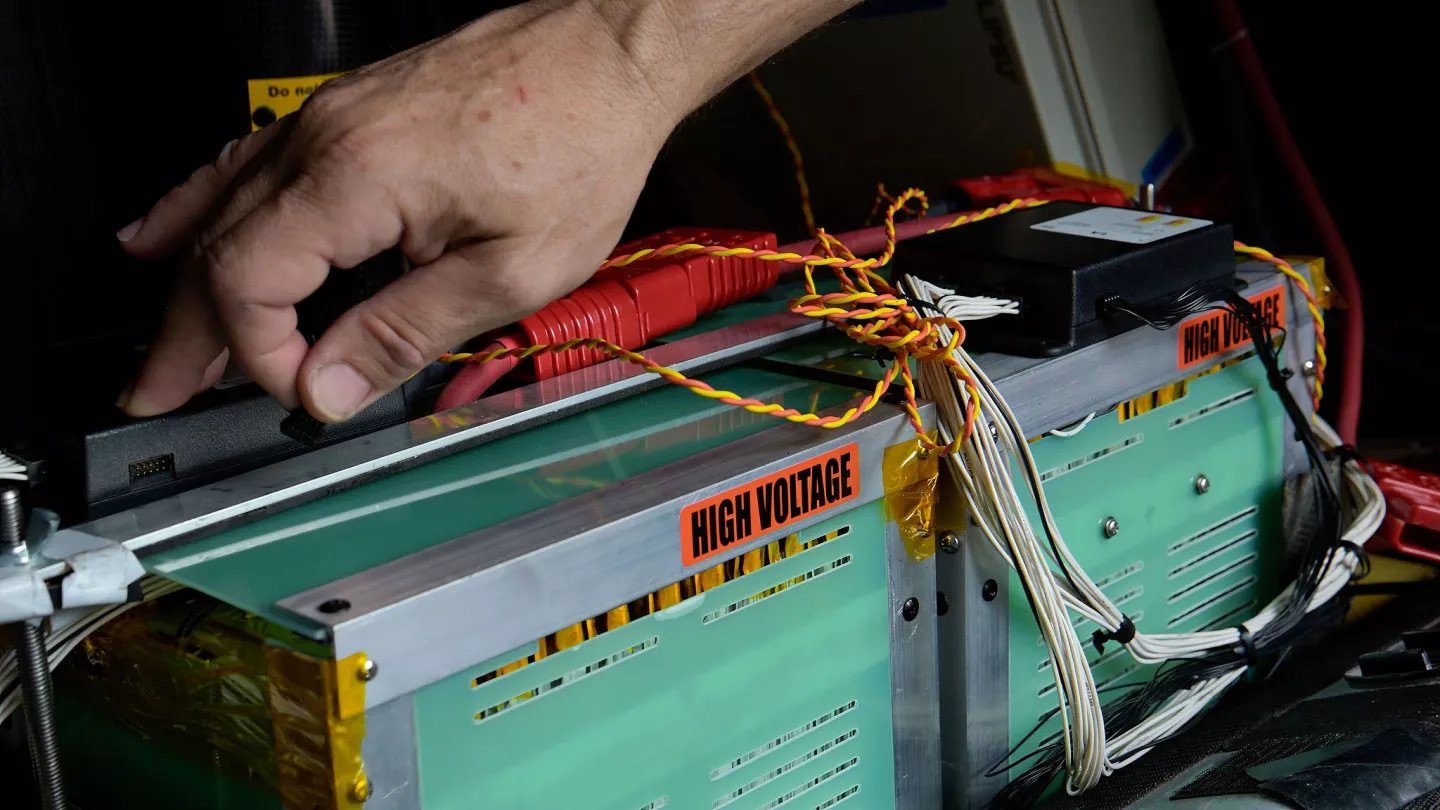
If those improvements continue, they would directly affect one of the toughest equations in electric aviation: how to extend range and mission usefulness without letting battery weight overwhelm the aircraft. Every gain in energy density potentially opens more room for payload, duration, or safety margin.

The aircraft and the system around it
The Helios Horizon itself began life as a Pipistrel Taurus motorized glider, according to the source text. Iturmendi’s team then added proprietary battery management, a custom propulsion stack, thermodynamic controls, and solar panel wing extensions. The result is less a factory-standard plane than a testbed assembled to prove a new propulsion package in real flight conditions.
The source also notes two additional features that widen the concept beyond the battery chemistry alone. The pack can be charged from a standard AC outlet, while also supporting fast charging to 80 percent in under 15 minutes. And the aircraft is described as recovering energy in flight through wing-mounted solar panels and a regenerative system that spins the propeller as a wind turbine during glides and descents.
Those features should not be mistaken for a complete answer to aviation’s energy problem, but they show how electric aircraft development is becoming a systems challenge rather than a single-component challenge. Battery chemistry, charging behavior, thermal management, and energy recovery all interact.
What this changes, and what it does not
It would be premature to interpret this flight as proof that commercially useful electric aviation has arrived. The source text explicitly says the demonstration was a series of short tests, and no claim is made that the aircraft suddenly solves the range or economics questions that still constrain the sector.
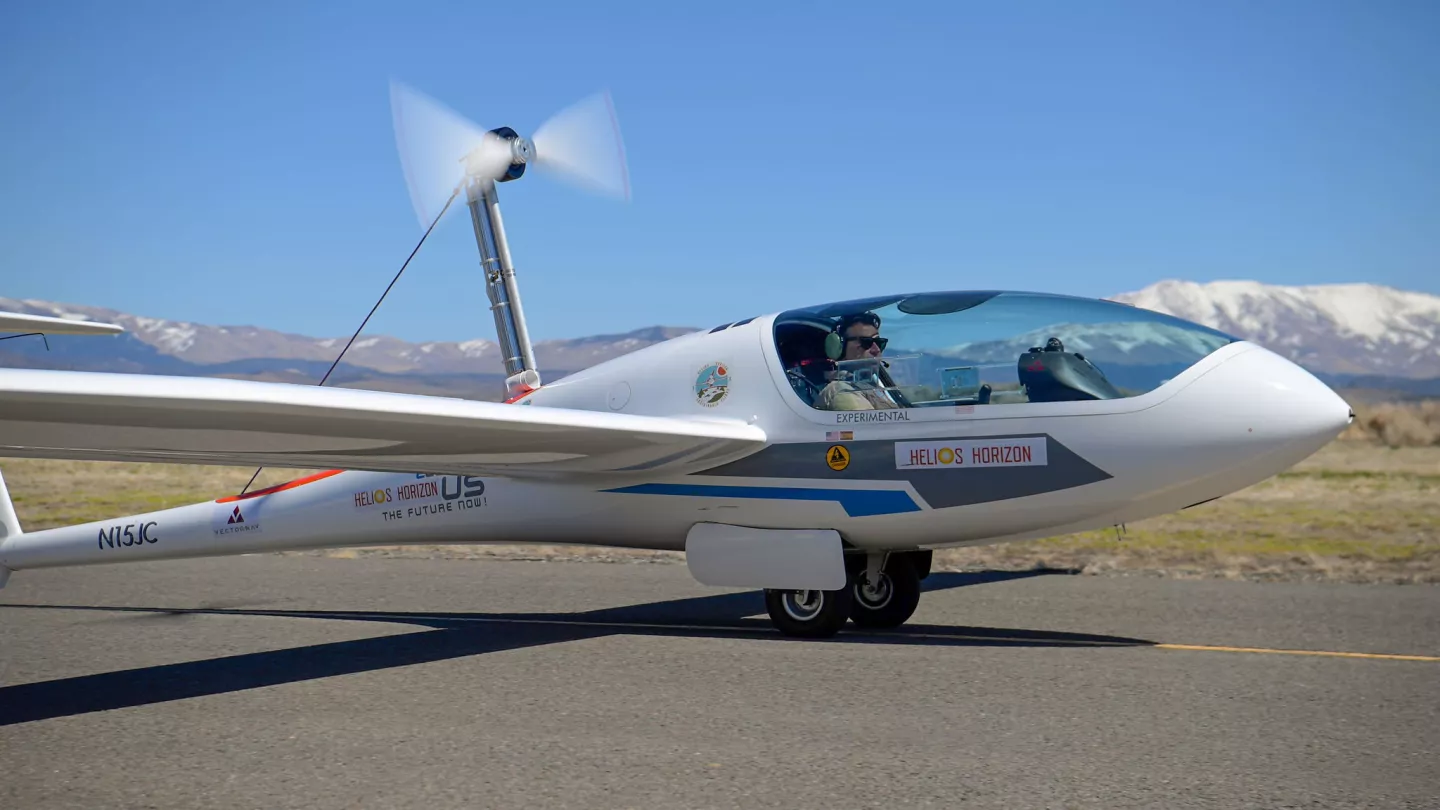
But that caution should not obscure the achievement. New battery technologies are often discussed in ground-transport language, where scaling timelines can feel abstract. A crewed flight gives the technology a different kind of credibility. It demonstrates that the cells can be integrated, balanced, managed, and trusted enough to carry a pilot into the air.
That is especially relevant because electric aviation depends on confidence as much as on chemistry. Aircraft certification, operator adoption, and public acceptance all move slowly. Milestones that show real-world hardware functioning in an aviation environment help turn speculative advances into engineering programs.

Aviation’s next battery contest
The supplied source text frames the Helios Horizon flight as a first, and firsts matter because they define the start of competitive follow-through. Once one team proves a concept in crewed operation, the pressure shifts to how quickly the performance can improve and whether the approach can scale beyond a highly tailored demonstrator.
That next phase will be harder than the initial milestone. Higher energy density must be matched by reliability, manufacturability, and repeatability. Thermal behavior has to remain predictable. Charging claims need to hold up in routine use. And the performance benefits must justify the extra complexity introduced by new materials and management systems.
Still, the direction of travel is clear. Electric aviation has been waiting for a battery step change large enough to feel meaningful in airframes rather than just in lab metrics. With the Helios Horizon’s solid-state test flights, that step change has at least moved off the page and into the sky.
- The Helios Horizon completed what the supplied text describes as the first crewed fixed-wing flight using solid-state batteries.
- The new cells are reported at 410 Wh/kg versus 260 Wh/kg for the aircraft’s previous lithium-ion pack.
- The test campaign focused on validating weight and balance after battery installation.
- The aircraft also incorporates fast charging, solar support, and regenerative energy recovery in flight.
This article is based on reporting by New Atlas. Read the original article.
Originally published on newatlas.com



