Rivian Delivers on Price Promise
Electric vehicle maker Rivian has officially announced pricing for its highly anticipated R2 SUV, confirming a $45,000 starting price that matches the target the company set when it unveiled the vehicle in 2024. The R2 represents Rivian's push into the mainstream market, positioned well below the company's existing R1S SUV that starts above $70,000.
However, the $45,000 base model will not be the first version available to customers. Rivian will begin deliveries with higher-trimmed variants in spring 2026, with the entry-level model arriving toward the end of 2027. This staggered approach is common in the automotive industry, where manufacturers typically launch with more profitable configurations before expanding to lower-priced versions.
Specifications and Range
The R2 is built on Rivian's next-generation platform, designed from the ground up to be more cost-efficient to manufacture than the platform underpinning the R1 vehicles. The SUV offers up to 330 miles of range on a full charge, placing it competitively against established rivals including the Tesla Model Y, Ford Mustang Mach-E, and Hyundai Ioniq 5.
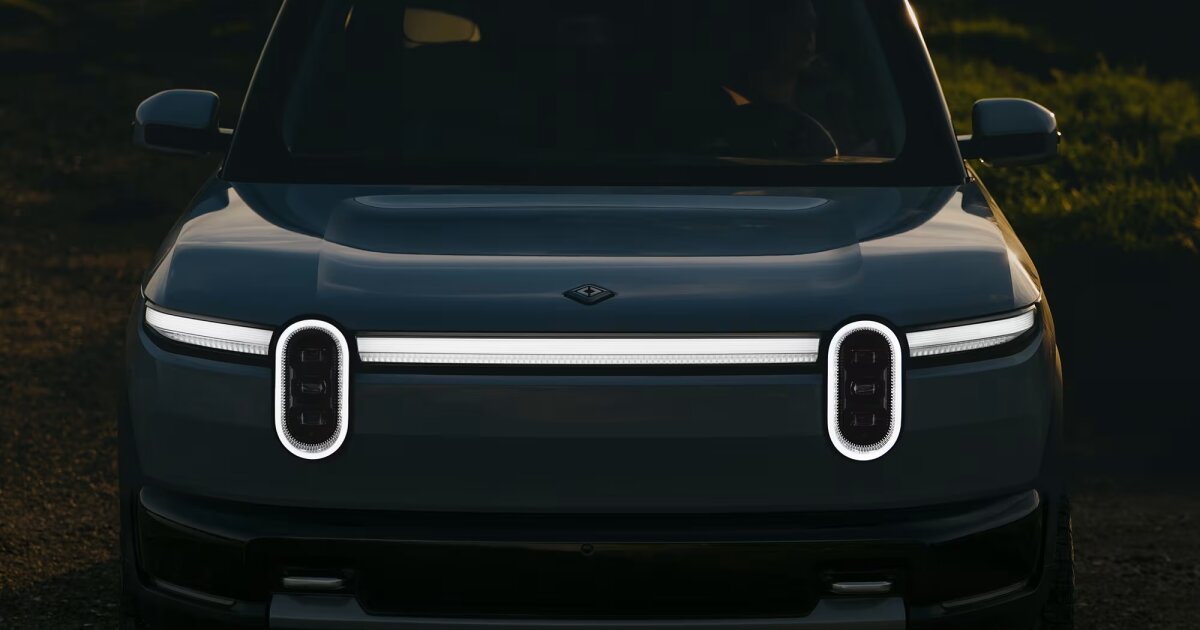
The vehicle features a compact SUV form factor that is significantly smaller than the R1S, making it more practical for urban environments while still offering the outdoor adventure capability that has defined Rivian's brand identity. The design retains the distinctive front-end lighting signature and rugged styling cues that Rivian customers have embraced.
The R2 will be manufactured at Rivian's new production facility in Georgia, which the company has been constructing with significant assistance from state and local incentives. The Georgia plant represents a major expansion of Rivian's manufacturing capacity beyond its original factory in Normal, Illinois, and has been designed specifically for the higher production volumes that the R2's lower price point demands.
Market Positioning
At $45,000, the R2 enters the most competitive segment of the electric vehicle market. Tesla's Model Y, the world's best-selling vehicle in several recent quarters, starts at a similar price point and has established strong consumer awareness and an extensive charging network. Ford, Hyundai, Kia, and Chevrolet all offer compelling electric SUVs in this range.
Rivian's differentiation strategy centers on its brand identity as an adventure-oriented vehicle maker. The company has cultivated a loyal following among outdoor enthusiasts and has designed the R2 with features like additional ground clearance, water-fording capability, and integrated cargo solutions that appeal to active lifestyle buyers. This positioning creates some distance from the more urban-focused competitors in the segment.
The company is also banking on its software platform, which provides over-the-air updates and a distinctive user interface, to attract tech-savvy buyers. Rivian's vehicles have generally received positive reviews for their driving experience and build quality, though the company has faced the typical manufacturing scaling challenges common to new automakers.
Financial Stakes
The R2 is critical to Rivian's financial trajectory. The company has been burning through cash as it ramps up production and builds new manufacturing facilities, posting significant losses each quarter. The R1 vehicles, while well-received, are produced in relatively low volumes at price points that limit the addressable market.
The R2's lower price point and higher production volumes are central to Rivian's plan to achieve profitability. The company needs to demonstrate that it can manufacture vehicles at scale and at costs competitive with established automakers, a challenge that has proven difficult for many electric vehicle startups.
Rivian received a significant boost from its partnership with Volkswagen Group, which invested billions in the company and agreed to use Rivian's electrical architecture and software platform in future VW vehicles. This partnership provides both capital and validation of Rivian's technology platform, though it also creates obligations and complexities that the company must manage.
Consumer Considerations
For prospective buyers, the staggered rollout means that early adopters will pay more than the headline $45,000 price. The initial launch models are expected to include premium features and larger battery options that push the price into the $50,000 to $60,000 range. Buyers seeking the entry-level model will need to wait until late 2027, by which time the competitive landscape may have shifted further.
Federal tax credits could reduce the effective purchase price significantly, though eligibility depends on the vehicle's manufacturing location, battery sourcing, and the buyer's income level. Rivian's use of a domestic manufacturing facility for the R2 positions it favorably for federal incentive eligibility under current regulations.
Pre-orders for the R2 have been strong since the vehicle's unveiling, though Rivian has not disclosed specific reservation numbers. The company's ability to convert reservations into deliveries efficiently will be a key test of its manufacturing maturity and customer service capabilities.
This article is based on reporting by New Atlas. Read the original article.
Originally published on newatlas.com