A familiar military logic is reshaping procurement
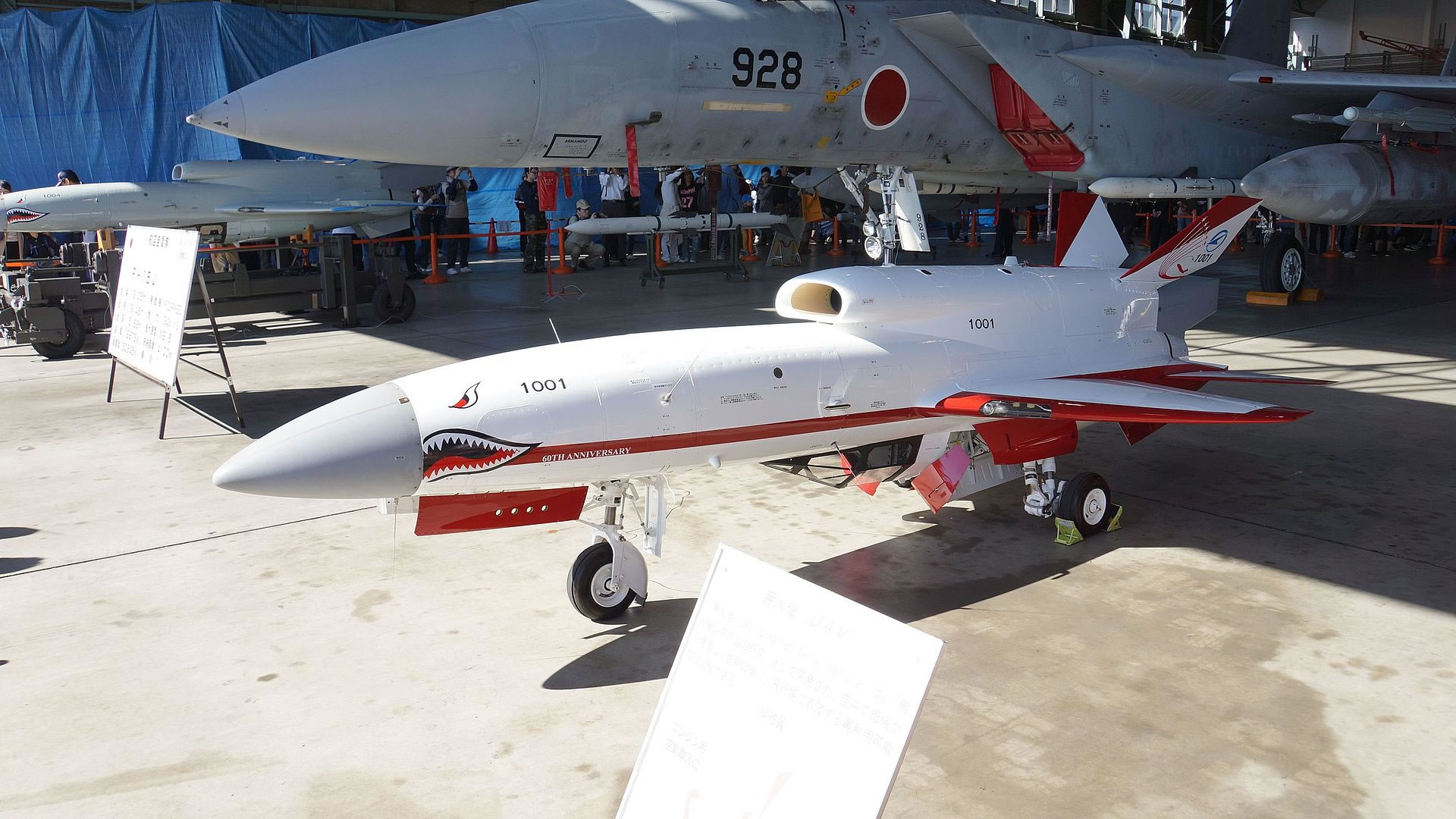
Interesting Engineering reports that Japan has announced plans to field loitering, or kamikaze, drones and low-cost missiles with a reported range of 620 miles. Even in outline form, the announcement says a great deal about where defense planning is heading. Militaries are placing greater value on systems that are cheaper to deploy in volume, harder to exhaust economically, and flexible enough to shape deterrence without relying only on a small number of exquisite platforms.
The significance is not just the weapon classes themselves. It is the combination. Loitering drones and lower-cost missiles sit in the category of systems designed to stretch budgets while multiplying options. They can be used to widen reach, pressure defenses, and create uncertainty for an adversary without making every response dependent on the most expensive assets in inventory.
Range and affordability are becoming strategic together
The 620-mile figure attached to the missile plan is notable because range changes how a country thinks about denial and response. Long-reach systems alter geography. They can expand the area a military seeks to influence and complicate an opponent’s planning even before a shot is fired.
But range alone is no longer enough. The other half of the equation is cost. Low-cost missiles and one-way drones are attractive because they promise scale. A force built entirely around high-end munitions can become expensive to train with, expensive to stockpile, and expensive to replace. A force that adds cheaper standoff options gains a different kind of resilience.
That shift has been visible across modern conflicts and planning debates: the question is not only whether a weapon can hit a target, but whether enough of them can be built, stored, and deployed to matter over time.

Why loitering munitions fit this moment
Loitering drones have become strategically important because they blur categories. They are part munition, part surveillance platform, and part persistence tool. They can wait, search, and strike. For planners, that means they can be used to probe defenses, hold targets at risk, and create constant operational pressure.
For a country modernizing its force posture, these systems offer a way to diversify beyond traditional aircraft- and ship-centric models. They also support a broader lesson from recent warfare: inexpensive systems can produce outsized tactical and psychological effects when used well and in numbers.
What Japan’s plan appears to emphasize
- More affordable strike options alongside higher-end systems.
- Longer reach that changes how distance factors into deterrence.
- Greater emphasis on stockpiles and scalable deployment.
- A force mix designed for persistence, not only peak capability.
The bigger signal is doctrinal, not just technical
Defense announcements are often interpreted through the lens of hardware, but the more meaningful change is usually doctrinal. A decision to invest in low-cost missiles and loitering drones suggests a military that is thinking in terms of distributed pressure, repeated use, and economic sustainability. It implies that survivability now includes the ability to absorb attrition and keep responding without burning through the most expensive part of the arsenal.
That matters in regional security environments where pacing, signaling, and escalation control are all central. Systems that are cheaper and more numerous can affect planning even if they are less glamorous than top-tier platforms. They widen the set of credible responses available to policymakers.
Interesting Engineering’s report is brief, but the trajectory is clear enough. Japan’s plan points toward a future in which deterrence depends less on singular prestige systems and more on layered, scalable strike options. In that model, the strategic advantage comes not only from what a military can build once, but from what it can afford to sustain.
This article is based on reporting by Interesting Engineering. Read the original article.

Originally published on interestingengineering.com



