The Computational Bottleneck in Hypersonic Development
Scramjet engines—supersonic combustion ramjets that can propel vehicles at speeds above Mach 5—are the propulsion technology at the heart of hypersonic weapons programs being pursued by China, the United States, and Russia. The fundamental challenge in developing these engines is computational: accurately simulating the extraordinarily complex fluid dynamics inside a scramjet combustion chamber at hypersonic speeds requires solving coupled equations for turbulent combustion, shock wave interactions, and high-temperature gas chemistry simultaneously. Until recently, this level of simulation could take years of compute time even on powerful supercomputers. Chinese scientists have now reportedly developed AI-driven simulation software that reduces this timeline to weeks.
Why Scramjet Simulation Is So Computationally Demanding
Inside a scramjet combustion chamber, everything happens at timescales of microseconds under conditions that are among the most extreme in engineering. Air enters the combustion chamber at supersonic speeds—there is no moving intake, and the engine's operation depends on the vehicle itself being at sufficient speed to compress the incoming air to combustion-supporting conditions. Fuel must mix with this high-speed airflow and ignite within milliseconds, and the entire process takes place while the engine structure is subjected to enormous thermal and mechanical stress.
Simulating this environment accurately requires computational fluid dynamics models that resolve phenomena at vastly different length scales simultaneously—from the large-scale shock structures that determine airflow patterns to the small-scale turbulent eddies where fuel-air mixing happens, down to the molecular-scale chemistry of combustion reactions. Bridging these scales in a single simulation is what drives the computational cost to levels that have historically made simulation a multi-year enterprise even for partial models.

The AI Approach
The Chinese system reportedly uses machine learning models trained on large libraries of high-fidelity simulation data to develop fast surrogate models that can predict the behavior of new engine designs without running the full expensive simulation for every parameter variation. This surrogate modeling approach—sometimes called physics-informed machine learning or reduced-order modeling—is not unique to scramjet simulation, but applying it effectively to the extreme physics of scramjet combustion is a notable engineering achievement.
The acceleration factor reported—from years to weeks—suggests that the surrogate models are accurate enough across a wide range of design variations to be useful for engineering design iteration rather than just providing rough estimates. If designers can evaluate hundreds of candidate engine geometries in weeks rather than years, the design cycle for new hypersonic propulsion systems compresses dramatically.
Military Implications
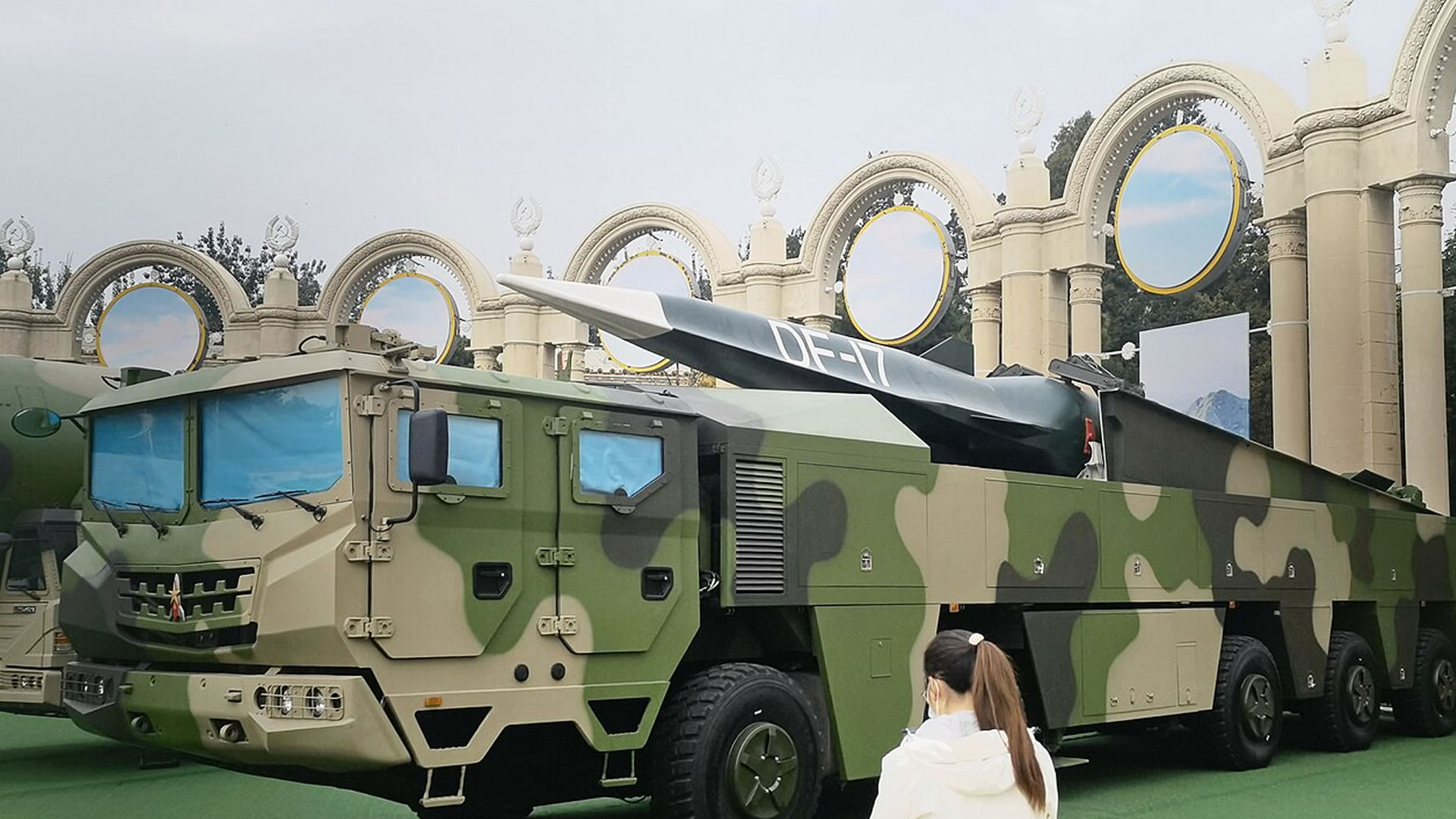
The implications for hypersonic weapons development are direct. China's hypersonic weapons programs have demonstrated operational capability—the DF-ZF hypersonic glide vehicle and various scramjet-propelled systems have been tested at multiple occasions—but continued advancement requires ongoing engine development and refinement. A tool that dramatically accelerates the design cycle for new scramjet configurations gives Chinese engineers a significant productivity advantage in the iterative work of improving hypersonic propulsion performance.
For the United States, which has struggled to match China's pace of hypersonic weapons testing, this kind of simulation acceleration is exactly what accelerated programs need. The US hypersonic development community has been working on similar AI-driven simulation approaches, though the degree of progress is not publicly disclosed. The Chinese breakthrough—if reported capabilities are accurate—represents a meaningful competitive advantage in the technology race that defense planners have identified as one of the defining strategic competitions of the decade.

Broader Technology Implications
Beyond military applications, scramjet technology at lower Mach numbers has potential civilian applications in hypersonic passenger transport and rapid satellite launch systems. The same simulation tools that accelerate military hypersonic weapons development would also benefit civilian scramjet programs if the technology ever reaches civilian markets. Near-term applications of AI-driven hypersonic simulation are military, but the underlying capability has broader engineering value across any domain where extreme fluid dynamics simulation is a bottleneck.
This article is based on reporting by Interesting Engineering. Read the original article.
Originally published on interestingengineering.com