Two fatal crashes have sharpened scrutiny of hands-free driving systems
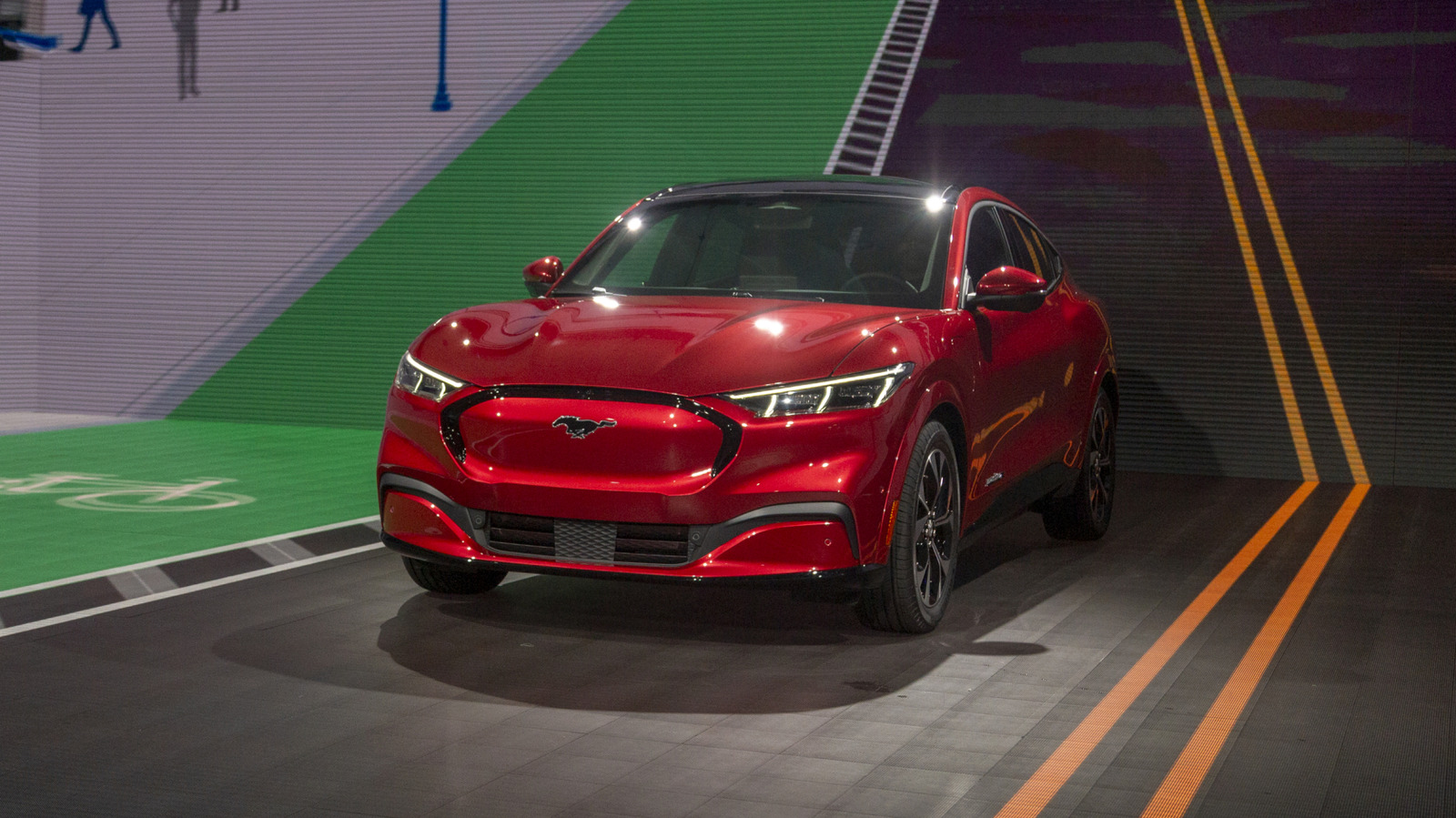
The National Transportation Safety Board has recommended changes to Ford’s BlueCruise system after investigating two fatal 2024 crashes involving a 2022 Mustang Mach-E. The agency concluded that the hands-free system did not do enough to keep drivers attentive and called for changes aimed not only at driver monitoring but also at reducing what it described as excessive speeding.
The core issue is not whether advanced driver assistance systems can make driving easier. It is whether they create a false sense of security when the technology remains limited. In both crashes described in the supplied report, the vehicles struck stationary cars on highways. In neither case did the driver or Ford’s system brake or steer away before impact.
The details are difficult to ignore
The first crash occurred in February 2024 on Interstate 10 in San Antonio. According to the source text, the Ford was traveling in the center lane before colliding at 74 mph with a 1999 Honda CR-V. The Ford driver had been looking at the infotainment display just before the collision. That driver was injured, while the Honda driver was killed.
A month later on Interstate 95 in Philadelphia, another Mach-E using BlueCruise struck a 2012 Hyundai Elantra and a 2006 Toyota Prius, both of which were stationary. In that case, the Ford driver was intoxicated and looking at a phone. The drivers of the Elantra and Prius were both killed.
These are different human failures, but they point to the same systems question: what should a driver-assistance platform be expected to detect, prevent, or discourage when a human driver is clearly not engaged?
What the NTSB wants changed
The NTSB said BlueCruise was not doing an adequate job of maintaining driver attention. Investigators also highlighted the danger of pairing hands-free capability with settings that allow high speeds. The supplied article notes that drivers can set adaptive cruise control to run 20 mph over the speed limit and can disable Ford’s automatic emergency braking while using the system.
That combination raises an obvious concern. If a system makes it easier for a disengaged driver to remain in motion at elevated speed while reducing active safety backstops, the consequences of a missed hazard can become severe very quickly. Stationary vehicles on a highway are exactly the kind of scenario in which the difference between a driver who is alert and one who is distracted can be fatal.
The NTSB also argued that regulators would be better able to investigate these events if federal rules required hands-free driver-assistance systems to record crash data. Better data would not prevent a collision on its own, but it would improve accountability and could help agencies identify recurring design failures across different manufacturers.
A broader warning for the industry
NTSB Chair Jennifer Homendy framed the issue in system-wide terms, saying manufacturers and regulators must ensure that these technologies are designed, monitored, and implemented in ways that keep all road users safe. That message reaches beyond Ford. The investigation exposes a recurring weakness in the current era of driver assistance: marketing and user behavior can outpace the actual limits of the software.
Many drivers hear terms like “hands-free” and infer a level of autonomy that does not exist. The source article is explicit that these systems do not allow a car to truly drive itself. A human still has to be ready to intervene at any moment. But if the monitoring tools are poor at distinguishing true attention from a driver glancing at a phone held up in front of the face, the safeguard becomes unreliable.
Why oversight still lags the technology
The BlueCruise investigation also illustrates how regulation has struggled to keep pace. Driver-assistance systems now occupy an ambiguous space between convenience feature and safety-critical operating layer. They are sophisticated enough to change how people behave behind the wheel, but rules governing data collection, performance expectations, and human-factors design remain uneven.
That gap makes crash investigations more important, because they reveal not just what drivers did wrong, but what system assumptions failed under real-world conditions. The two Mach-E cases described by the NTSB are not simply examples of individual negligence. They are evidence that disengaged drivers can remain inside a nominally supervised hands-free mode until it is too late.
The policy challenge ahead
Ford now faces direct pressure to harden BlueCruise against distraction and speed misuse. Regulators face a broader question: whether voluntary changes are enough, or whether baseline federal standards are needed for all hands-free driver-assistance systems.
The answer matters because these platforms are spreading faster than the rules around them. If drivers continue to overtrust them, and if system design continues to tolerate obvious disengagement, more fatal misunderstandings are likely. The NTSB’s recommendations therefore amount to more than a product critique. They are a warning that the human-machine contract in modern driving is still too weakly enforced.
This article is based on reporting by Jalopnik. Read the original article.
Originally published on jalopnik.com