Clinical guidelines do more than summarise science. They set the default behaviour of health systems: which tests get ordered, which doses get prescribed, which patients get referred onward and which are reassured and sent home. A commentary published in Nature Medicine on 23 September 2026 argues that those defaults are incomplete because they rarely account for how sex and gender shape health. The article's position is direct: treatment guidelines should state what is already known about these differences, say openly where evidence is missing, and specify what future trials must report.
The argument in brief
The commentary, carried under the doi 10.1038/s41591-026-04672-4, does not present new trial data. It makes a structural argument about the documents clinicians rely on most. Guidelines are the translation layer between research and practice, and the piece contends that this layer currently handles sex and gender unevenly — sometimes mentioning them in a paragraph on special populations, sometimes ignoring them altogether, and rarely distinguishing between what has been demonstrated and what has merely been assumed.
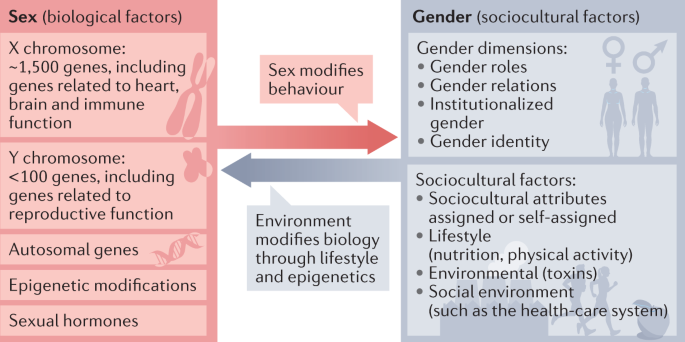
That distinction matters. Sex refers to biological attributes, while gender refers to socially shaped roles, identities and exposures. In a clinical context the two are not interchangeable, and conflating them makes it harder to know whether a difference in outcome stems from physiology, from patterns of care, from diagnostic delay, or from some combination of all three. The commentary's remedy is not a new set of biological claims, but a demand for clarity about which claims are supported and which are not.
Three demands on guideline panels
The piece distils its recommendation into three obligations that authors of clinical guidance should meet whenever they cover a condition with plausible sex or gender differences.
1. State what is already known
Where evidence exists, guidelines should say so explicitly rather than burying it. That means describing differences in presentation, progression, response to treatment or adverse effects in the body of the recommendation, not in a footnote. If a recommendation is expected to apply differently to one group, the guidance should say so plainly, so that a busy clinician does not have to reconstruct the reasoning from primary literature.
2. Mark where the evidence is missing
Equally important is honesty about absence. The commentary argues that guidelines should identify the gaps — the questions that current evidence cannot answer — instead of extrapolating silently from one population to another. Silent extrapolation is the failure mode that matters most here, because it produces confident-looking recommendations that rest on nothing more than assumption. Naming a gap is not an admission of weakness; it is information a clinician can act on, and it tells researchers where the field is thin.
3. Tell future trials what to report
The third demand looks forward. The commentary argues that guidelines should specify what future trials must report, so that the next generation of evidence can actually close the gaps the current one leaves open. If guideline authors spell out the analyses they need, trialists and sponsors have a target to design against, and reviewers have a standard to hold them to. The loop then closes: guidance shapes trial reporting, and trial reporting improves guidance.
Why the gap persists
Guideline development is a conservative process by design. Panels weigh evidence according to predefined hierarchies, and recommendations must be defensible to regulators, payers and clinicians. Findings that cut across a whole study population are easier to convert into a single recommendation than findings that split it. The commentary's point is that this convenience has a cost: uniformity in guidance can mask heterogeneity in the people receiving care.
Trial design reinforces the problem. When studies do not collect or report the relevant variables, or when analyses are pre-specified only for the overall cohort, guideline panels inherit a literature that cannot answer the question even if they want to. That is why the commentary treats guideline writing and trial reporting as one connected problem rather than two separate debates.

A practical checklist for guideline authors
Reduced to operational steps, the commentary's proposal amounts to a set of questions every panel could ask before signing off:
- Does the evidence base include both sexes, and is it reported separately where feasible?
- Are gender-related factors — access to care, diagnostic pathways, social context — considered as potential explanations for observed differences?
- Is each recommendation labelled as evidence-based, extrapolated, or uncertain?
- Are the gaps stated in a way that researchers can act on?
- Do future trials have explicit reporting requirements attached to the recommendation?
- Will the guidance be revisited as new disaggregated evidence appears?
What it means for clinicians and patients
For clinicians, clearer guidance reduces guesswork at the point of care. A recommendation that acknowledges uncertainty lets a professional weigh the decision with the patient rather than applying a rule that may not fit. For patients, visibility in the evidence base is a precondition for being treated accurately, and a guideline that names an evidence gap is more useful than one that implies a certainty nobody has demonstrated.
The commentary also has implications for health systems. Guidelines feed into formularies, quality metrics, training curricula and reimbursement rules. If sex and gender are absent from the source document, they tend to be absent from everything downstream.

Limits and open questions
The proposal is deliberately modest. It does not claim that every condition shows meaningful sex or gender differences, nor that guidelines should invent recommendations where data are thin. Its demand is procedural: describe what is known, flag what is not, and direct future research. How quickly panels adopt such practices, and whether journals and regulators enforce comparable standards in trial reporting, remains to be seen. The commentary's contribution is to name the gap and to propose where the fix belongs — inside the guideline itself.
This article is based on reporting by Nature Medicine. Read the original article.
Originally published on nature.com