Reproductive medicine has long treated two of its most consequential technologies as separate subjects: altering the DNA of an early embryo, and choosing which embryo to transfer based on its genetic profile. A commentary published in Nature Medicine on 23 September 2026 argues that this separation is now a liability, and that embryo editing and embryo selection need to be governed together.
The argument rests on a simple observation about how the field is moving. Editing and selection are not rival approaches competing for the same clinical niche. They are complementary tools that increasingly operate on the same decision, at the same moment, inside the same laboratory — and they are currently subject to oversight regimes that were designed without reference to one another.
Two Tracks, One Blind Spot
Embryo selection, in its conventional form, is as old as assisted reproduction itself. Clinicians have always had to decide which embryo to transfer, and over time that decision has been informed by increasingly detailed genetic information, from chromosome counts to targeted tests for single-gene disorders. What has changed is the resolution of the data. Screening can now generate broad genomic profiles, and the interpretive layer built on top of them — often described as polygenic scoring — attempts to translate those profiles into probabilistic statements about traits and disease risk.
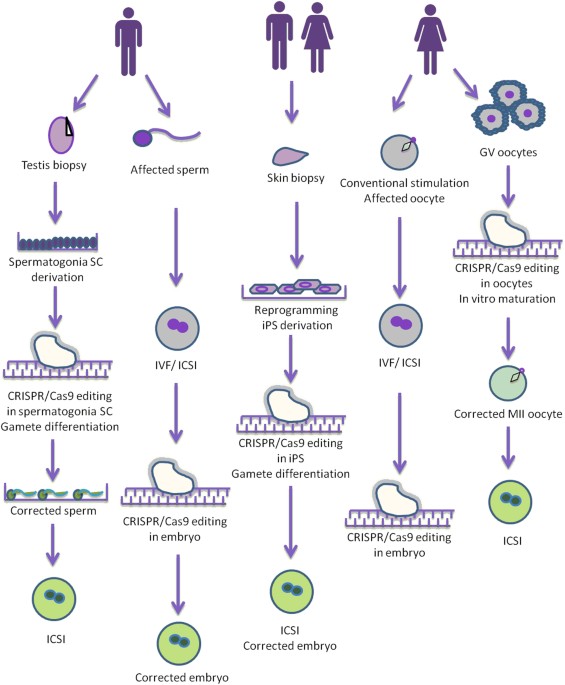
Embryo editing belongs to a different regulatory tradition. Because it modifies the genome rather than merely reading it, it has attracted intense scrutiny from safety bodies, scientific academies and international summits. The result is a landscape where one practice is governed largely as a matter of laboratory safety and research ethics, and the other largely as a matter of clinical practice and patient consent.
The commentary's central claim is that this division no longer reflects how the technologies are used. A prospective parent weighing an edited embryo against a selected one is making a single decision about the kind of child they hope to have. Governance that splits that decision across two unconnected rulebooks leaves a gap precisely where the stakes are highest.
Why the Convergence Matters
Reading and writing the genome are converging
Selection depends on interpretation; editing depends on intervention. But both rest on the same underlying genomic knowledge, and both end in the same place — a choice about which embryo becomes a pregnancy. As screening panels widen, the line between "choosing the best available embryo" and "specifying the desired embryo" becomes harder to draw in practice, even if it remains clear in principle.
Accountability is split
When oversight is fragmented, responsibility is too. A clinic that offers extensive screening, a laboratory that performs editing research, a company that supplies a scoring algorithm and a regulator that licenses a technique may each be operating within the rules that apply to them, while no single body has visibility over the combined outcome. Joint governance is, at minimum, a way of ensuring someone can see the whole picture.
Public trust is shared
Controversies in this field rarely stay contained. A dispute over the ethics of editing tends to shape public attitudes toward selection as well, and vice versa. Treating them as one policy domain would make that reality explicit rather than leaving it to be discovered after the fact.
What a Joint Framework Would Require
The commentary does not present governance as a single instrument. A workable approach would need to combine several elements:
- Shared definitions. Terms such as "serious genetic disease," "enhancement" and "clinical utility" need consistent meanings across editing and selection rules, or the two regimes can be played against each other.
- Coordinated oversight bodies. Regulators reviewing editing protocols and those overseeing reproductive screening should have formal channels to compare decisions and emerging practice.
- Common evidence standards. Claims about the predictive value of genomic information should face the same evidentiary bar whether they are used to rank embryos or to justify a modification.
- Transparency about limits. Patients and the public need clear statements about what these technologies cannot reliably do, not only what they promise.
- International alignment. Because patients, gametes and data cross borders, purely national rules risk displacing activity rather than governing it.

The Clinical and Social Stakes
For families facing a heritable disease, both editing and selection can represent a genuine expansion of options — and the commentary's concern is not that these tools exist, but that the rules surrounding them are not keeping pace with how they are combined. Poorly coordinated governance has costs that fall unevenly: on patients who receive inconsistent counselling, on clinicians who must interpret conflicting guidance, and on researchers whose work is constrained by uncertainty rather than by considered policy.
There are broader questions too. The more that reproductive decisions are mediated by probabilistic genomic scores, the more pressure those scores can place on individual choices, and the more consequential the standards behind them become. Editing raises a parallel set of questions about safety, consent and heritability that selection does not, while selection raises questions about interpretation, equity and disability that editing alone does not. A joint framework would not dissolve those differences — it would make them visible in one place.
What Comes Next
The commentary's contribution is less a detailed blueprint than a reframing. It asks regulators, professional societies and researchers to stop treating embryo editing and embryo selection as unrelated policy problems, and to begin building the shared vocabulary, evidence standards and oversight structures that a converging field demands. Whether or not that reframing is adopted, the underlying dynamic is difficult to reverse: the technologies are moving together, and the governance of them will eventually have to follow.
This article is based on reporting by Nature Medicine. Read the original article.

Originally published on nature.com