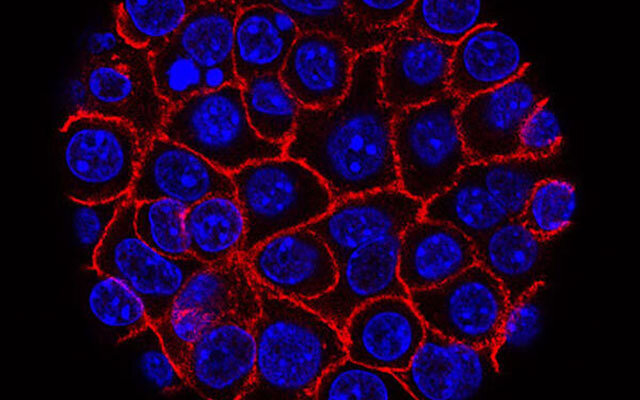
Pancreatic tumors are not static collections of cancer cells. A new study from researchers at NYU Langone Health and its Perlmutter Cancer Center describes them as evolving ecosystems in which distinct cell populations continually change their genetic makeup—changes that can help the disease resist treatment and spread.
The research, published online October 13 in Nature Genetics, examined pancreatic ductal adenocarcinoma, a particularly difficult-to-treat form of pancreatic cancer. The team analyzed nearly half a million individual cells from tumors collected from dozens of patients, giving the researchers a far more detailed view than approaches that study tumor tissue in bulk.
A changing landscape inside each tumor
Past research often sorted pancreatic cancer cells into two broad groups: a classical subtype considered less aggressive and a basal subtype considered more aggressive. That distinction was useful, but it did not fully explain how cells within the same tumor could shift between those states or why some parts of a tumor became especially resistant to therapy.
The new analysis found multiple clones, or clusters of tumor cells with similar genetic makeup, within tumors. These clones did not behave identically. Some developed features associated with resistance to treatment, while others acquired an enhanced capacity to spread. The researchers conclude that continuing genetic reconfiguration inside a tumor helps drive both therapy resistance and metastasis.
That finding reframes pancreatic cancer progression as an ongoing process rather than a fixed property assigned at diagnosis. A tumor may contain cell populations on different evolutionary paths at the same time, with some cells becoming more aggressive as their DNA changes.

Why single-cell analysis matters
Bulk tumor analyses combine signals from many cells. That can reveal common features of a cancer, but it can also obscure rarer or emerging subpopulations that may be important for treatment failure. By examining cells individually, the NYU-led team was able to identify diversity among clones and connect genetic changes with differences in behavior.
The study’s source material included tumors from dozens of patients and nearly 500,000 cells in total. Its findings indicate that the classical and basal labels are not simply permanent categories. Instead, genetic changes within a tumor can enable cells to move between these states.
This matters because pancreatic ductal adenocarcinoma is associated with a severe prognosis. The researchers note that it kills nearly 85% of people within five years of diagnosis. More than half a dozen genes have previously been implicated in the disease, but the single-cell work offers a more granular account of how genetically distinct populations coexist and change over time.
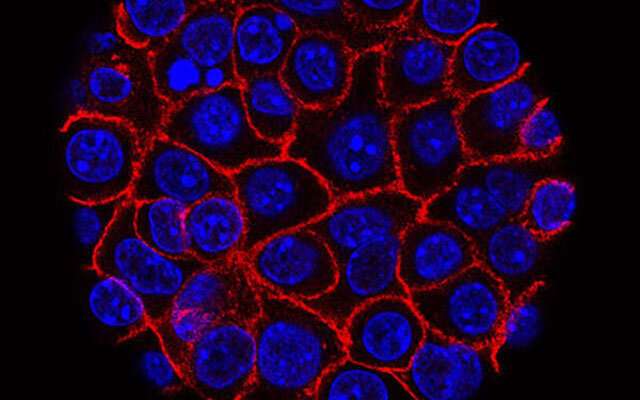
MYC emerged in aggressive cell populations
Among the changes observed during tumor evolution was increased activity of the MYC gene in aggressive tumor cell populations. The research team then tested what happened when MYC activity was blocked in pancreatic basal tumor cells.
In those experiments, blocking MYC shifted the cells back toward the less aggressive classical form. The cells also became exposed to more immune cells, a change that could potentially make them more vulnerable to immune attack.
The result does not establish a new treatment by itself. It does, however, point to MYC activity as an important feature of the aggressive state observed in the study and suggests a possible route for further investigation. A strategy that alters the state of aggressive cancer cells could be relevant to efforts to make tumors more responsive to immune-based approaches.

From a tumor snapshot to an evolutionary view
The central implication is that treatment decisions may need to account for the changing internal composition of a tumor. If cancer cell populations continually reshape themselves, a therapy that targets one state may leave other populations able to persist, adapt, or seed further disease.
The study also highlights why resistance and spread can be difficult to predict from a broad average of a tumor’s biology. A bulk sample may identify a dominant subtype while missing smaller clones that are already moving toward more aggressive behavior. Single-cell analysis makes those differences more visible.
For researchers, the next challenge is to determine how these cellular shifts unfold during treatment and which of them can be safely interrupted. The MYC experiments offer one early clue: changing activity in a gene associated with aggressive populations changed the cells’ behavior and their relationship with immune cells.
For patients and clinicians, the immediate importance is scientific rather than clinical. The work provides a detailed map of how pancreatic cancer cells can diversify within tumors, resist therapy, and gain the ability to spread. That map could help guide future studies aimed at intercepting the disease before its most aggressive cell populations take hold.
This article is based on reporting by Medical Xpress. Read the original article.
Originally published on medicalxpress.com