Introduction
Pancreatic cancer remains one of the most challenging malignancies, with a five-year survival rate of just 12%. The recent approval of RAS inhibitors, such as daraxonrasib, has brought new hope for patients with KRAS-mutant tumors, which account for over 90% of pancreatic cancers. However, as with all targeted therapies, resistance inevitably emerges, limiting long-term benefit. A new study published in Nature Medicine sheds light on the mechanisms of acquired genetic resistance to daraxonrasib, offering critical insights that could guide rational combination strategies to overcome this hurdle.
The Promise of RAS Inhibitors
RAS inhibitors have transformed the therapeutic landscape for pancreatic cancer. Daraxonrasib, a selective inhibitor of the KRAS G12D mutation, has shown remarkable efficacy in early-phase trials, with response rates exceeding 40% in heavily pretreated patients. These results have been hailed as a breakthrough, as pancreatic cancer has historically been resistant to targeted therapies. However, the durability of these responses is limited, with most patients progressing within a year. Understanding the mechanisms of resistance is now a top priority for researchers and clinicians alike.

Mechanisms of Acquired Resistance
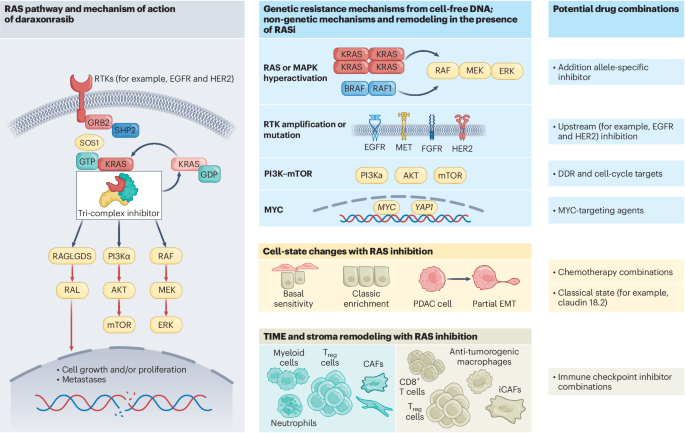
The new study, led by investigators at the Princess Margaret Cancer Centre and Vall d'Hebron Institute of Oncology, analyzed tumor biopsies from patients who progressed on daraxonrasib. Using whole-genome and targeted sequencing, they identified a spectrum of acquired genetic alterations that drive resistance. These include secondary mutations in KRAS itself, amplification of the RAS gene, and alterations in downstream signaling pathways such as MAPK and PI3K. Notably, the study also found that some patients developed mutations in genes involved in epithelial-to-mesenchymal transition (EMT), suggesting that resistance can also arise through phenotypic plasticity.
Implications for Combination Strategies
These findings have immediate implications for the design of rational combination therapies. For instance, the presence of MAPK pathway alterations suggests that combining daraxonrasib with MEK inhibitors could be beneficial. Similarly, the identification of PI3K pathway activation points to the potential of combining RAS inhibitors with PI3K inhibitors. The study also highlights the importance of monitoring resistance mechanisms through liquid biopsies, which could allow for timely adjustments in treatment.

Challenges and Future Directions
While these results are promising, several challenges remain. The heterogeneity of resistance mechanisms among patients means that a one-size-fits-all approach is unlikely to succeed. Moreover, the toxicity of combination regimens must be carefully managed, especially in a patient population that is often frail. Future studies will need to validate these combination strategies in clinical trials and identify biomarkers that can predict which patients are most likely to benefit.
Conclusion
The study provides a comprehensive overview of the genetic mechanisms underlying acquired resistance to daraxonrasib in pancreatic cancer. By highlighting potential combination approaches, it offers a roadmap for the next generation of clinical trials aimed at extending the duration of response and improving survival. As our understanding of resistance evolves, so too will our ability to outsmart this deadly disease.
This article is based on reporting by Nature Medicine. Read the original article.

Originally published on nature.com