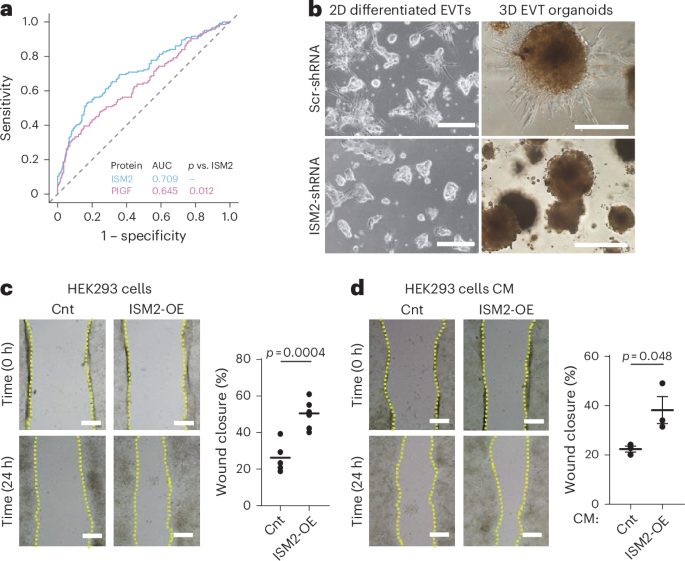
Preeclampsia and fetal growth restriction are among the most consequential complications of pregnancy, and a new study published online in Nature Medicine on September 2, 2026, suggests that a protein named Isthmin 2 might hold a key to their earliest roots. The research, titled "Isthmin 2 could determine the early origins of preeclampsia and fetal growth restriction," spotlights a molecular pathway that may act well before clinical symptoms emerge. For clinicians and researchers who have long sought to detect risks earlier in gestation, the finding opens a promising new line of investigation that could eventually reshape how these conditions are predicted, monitored, and potentially prevented.
The Clinical Puzzle of Preeclampsia and FGR
Preeclampsia and fetal growth restriction are distinct diagnoses, but they frequently share an underlying placental etiology. In preeclampsia, the maternal blood pressure rises dangerously after 20 weeks of gestation, often accompanied by protein in the urine and signs of damage to organs such as the liver or kidneys. Fetal growth restriction describes a fetus that fails to reach its genetic growth potential, leading to low birth weight and a host of short- and long-term risks. Globally, both conditions are major causes of fetal morbidity and mortality, as the study's abstract notes.
Despite decades of research, the earliest biological events that trigger these disorders remain frustratingly obscure. Many cases are detected only when symptoms appear—frequently in the third trimester—which limits the opportunity for early intervention. The hope is that molecules such as Isthmin 2 could serve as early biomarkers, revealing signs of trouble months before the clinical syndrome unfolds. The new paper, though published as an advance online article with limited details available, adds weight to the theory that the causal cascade begins very early in pregnancy, possibly during the period of placental invasion and remodeling of maternal blood vessels.

What Is Isthmin 2?
Isthmin 2 is a secreted protein that has been studied in diverse physiological contexts, including glucose metabolism, immune regulation, and the development of certain tissues. Its precise functions in pregnancy are not yet fully mapped, but the new study positions this molecule as a possible determinant of the earliest origins of preeclampsia and fetal growth restriction. Rather than being a downstream consequence of an already damaged placenta, Isthmin 2 may act as an upstream signal—one that could be measured in the maternal circulation or in placental tissue early in gestation to assess the probability of later complications.
The word "determine" in the title is striking. It implies that Isthmin 2 levels or activity might not merely correlate with disease, but could play a causal role in setting the stage for preeclampsia or growth restriction. If that proves true, the protein could become a therapeutic target as well as a diagnostic marker. For example, drugs or other interventions that normalize Isthmin 2 signaling during the first or second trimester might conceivably prevent the molecular cascade that culminates in hypertensive crisis or fetal undernutrition.
A Biomarker That Points to Early Origins
Why is the idea of "early origins" so important? In much of obstetrics, risk assessment for preeclampsia and fetal growth restriction currently depends on a combination of maternal characteristics, medical history, blood-pressure measurements, and, in some settings, ultrasound markers of placental blood flow. Doppler studies can identify absent or reversed end-diastolic flow in the uterine artery, and algorithms combining these data can classify some women as high-risk. However, these approaches often detect the problem only after the pathophysiological process is already well underway. By contrast, a molecular marker like Isthmin 2 might provide a much earlier warning.
The new study suggests that Isthmin 2 could help determine the early origins of these conditions, implying that its detection may be possible long before traditional signs appear. If validated, this could lead to a blood test in early pregnancy that flags patients most likely to develop preeclampsia or fetal growth restriction, allowing intensified fetal surveillance and preventive strategies such as low-dose aspirin, which is already used for high-risk women. More ambitious, perhaps, would be the development of therapies that restore normal Isthmin 2 function and thereby interrupt the disease process at its inception.

Shared Pathways Between Preeclampsia and Fetal Growth Restriction
Preeclampsia and fetal growth restriction have long been regarded as two ends of a spectrum of placental insufficiency. In some cases, they occur together; in others, a woman may develop severe preeclampsia without obvious fetal growth restriction, or she may deliver a profoundly growth-restricted baby without significant maternal hypertension. Yet both disorders involve inadequate remodeling of the spiral arteries, which supply oxygen and nutrients to the placenta. When these arteries fail to widen properly, blood flow becomes turbulent and restricted, leading to hypoxia, oxidative stress, and the release of anti-angiogenic factors into the maternal bloodstream.
The identification of Isthmin 2 in this context could help unify these seemingly disparate presentations by revealing a common molecular switch early in development. If Isthmin 2 influences the invasion of trophoblast cells, the placental cells that remodel the spiral arteries, then perturbed activity might lead to the downstream signs of preeclampsia, fetal growth restriction, or both. The exact mechanism remains to be clarified, but the title's language points to a determining role—not merely an association. This is a major reason why the paper is likely to attract attention from scientists studying placental biology and pregnancy complications.
Implications for Screening and Prevention
From a clinical perspective, the most exciting implication is the potential for earlier and more accurate risk stratification. Current predictive models are imperfect, especially for first-time mothers who have no prior obstetric history. A biological marker that reflects placental dysfunction at a molecular level could be particularly valuable in this group, allowing providers to tailor the frequency of prenatal visits, ultrasonography, and laboratory testing. Women identified as high-risk could be monitored more closely for early signs of preeclampsia, and induction or cesarean timing could be optimized to reduce fetal and maternal harm.
If Isthmin 2 is indeed a determinant, it might also be possible to design interventions that target the protein directly, perhaps using neutralizing antibodies, small-molecule inhibitors, or gene-based approaches to restore normal signaling. Preclinical studies would be needed first, but the promise of precision prevention is compelling. Instead of waiting to treat preeclampsia once the syndrome has developed—a scenario often limited to antihypertensives, magnesium sulfate for seizure prophylaxis, and delivery—clinicians might one day intervene months earlier to preserve normal placental function.

Context Within the Broader Research Landscape
Isthmin 2 is just one of many candidate molecules being explored in the search for pregnancy biomarkers. Researchers have examined placental growth factor (PlGF), soluble fms-like tyrosine kinase-1 (sFlt-1), soluble endoglin, and various microRNAs, among others. Some of these are already used in clinical practice—for example, the sFlt-1/PlGF ratio is used in some countries to help rule out preeclampsia in women presenting with suspected symptoms. Adding a molecule like Isthmin 2 to that toolkit could potentially increase prognostic accuracy at earlier time points.
Another important dimension is the long-term health of the child. Fetal growth restriction is not just a problem of size at birth; it is associated with altered developmental programming and increased risks of cardiovascular disease, hypertension, and type 2 diabetes later in life. Understanding how a molecule like Isthmin 2 influences fetal programming could therefore have implications that extend far beyond the delivery ward. If researchers can unravel these connections, they may uncover preventative opportunities that improve health over the full life course.
What the Study Does Not Yet Tell Us
Because the full text of the Nature Medicine paper was not available in our source material, many specifics—including study design, patient cohorts, sample sizes, and statistical significance—could not be independently reviewed. Press materials and abstracts often highlight the most compelling findings, and the actual evidence underlying the title may be more nuanced. Observational studies, for instance, can identify associations but cannot by themselves prove causation, and the term "determine" might be used as a strong hypothesis rather than a demonstrated mechanism. Readers should therefore await the complete manuscript and any accompanying editorial commentary to gain a fuller picture of how confidently Isthmin 2 can be assigned a determining role.
Additionally, a biomarker's journey from discovery to clinical utility is notoriously long and littered with disappointments. Many markers perform well in retrospective samples but falter when tested prospectively in diverse populations. The reproducibility of the Isthmin 2 finding, its stability across gestational ages, and its performance relative to existing biomarkers will be key questions in subsequent validation studies. It is also unclear whether the molecule operates the same way in all populations, including those with different racial or ethnic backgrounds, body mass indices, or underlying medical conditions.
Looking Ahead
If the findings hold, Isthmin 2 could become an integral part of future efforts to unravel the early origins of preeclampsia and fetal growth restriction. The clinical objective is not simply to add another entry to the growing list of associated proteins; the larger goal is to change the timeline of care. By identifying at-risk pregnancies in the first trimester—or perhaps even before conception—clinicians could personalize management strategies that are proactive rather than reactive.
Research funding agencies and philanthropic organizations have increasingly prioritized investigations into the biology of pregnancy, recognizing that maternal and fetal health are foundational to public health. A discovery that points to a single molecular player in two major obstetric syndromes would be a step toward unraveling a complex, multifactorial network. For now, the study serves as both a reminder of how much remains unknown and a hopeful signal that new technologies and scientific approaches are bringing us closer to preventing the oldest and most devastating complications of pregnancy.
In the immediate future, independent groups will likely attempt to replicate the findings in their own cohorts. If they succeed, the next phase might involve mechanistic studies in animal models, followed by first-in-human trials of any candidate therapies. The road from observation to application is long, but the journey is exactly where the scientific momentum matters. The publication of this study in a high-impact journal like Nature Medicine ensures that Isthmin 2 will be scrutinized and debated, accelerating the pace of discovery. For the millions of families worldwide who have been touched by preeclampsia or fetal growth restriction, that attention cannot come soon enough.
This article is based on reporting by Nature Medicine. Read the original article.
Originally published on nature.com