Aging Brain Mysteries Unraveled
As the global population ages, understanding the biological underpinnings of cognitive decline has never been more critical. Age-related memory loss and diminished executive function affect millions, yet the cellular mechanisms driving these changes remain incompletely understood. A landmark study published in Nature Medicine sheds new light on this process by identifying a surprising contributor: oligodendrocytes, the brain's myelin-producing cells.
The research, conducted using a vast repository of human brain tissue coupled with detailed cognitive assessments from donors across the lifespan, offers compelling evidence that altered oligodendrocyte function plays a central role in the cognitive aging process. While much prior research has focused on neurons and synapses, this study shifts attention to the supportive cells that are essential for rapid neural communication.
The Role of Oligodendrocytes
Oligodendrocytes are a type of glial cell in the central nervous system. Their primary function is to produce myelin, a fatty substance that wraps around axons, the long projections of neurons. Myelin acts as an insulating layer, allowing electrical signals to travel quickly and efficiently. This process, known as myelination, is fundamental to normal brain function, enabling the rapid, synchronized communication between different brain regions that underlies cognition.
Beyond insulation, oligodendrocytes provide metabolic support to neurons, helping to sustain the high energy demands of active brain circuits. They also participate in activity-dependent myelination, where experiences and learning can modify myelin structure, a form of plasticity that is crucial for memory and skill acquisition.
Given these vital roles, it is not surprising that oligodendrocyte dysfunction could have profound consequences for cognitive health. In conditions like multiple sclerosis, where myelin is destroyed, cognitive impairment is a well-known symptom. However, the gradual, age-related changes in oligodendrocyte function and their links to typical cognitive aging have been less clear. The present study directly addresses this gap.

A Unique Research Approach
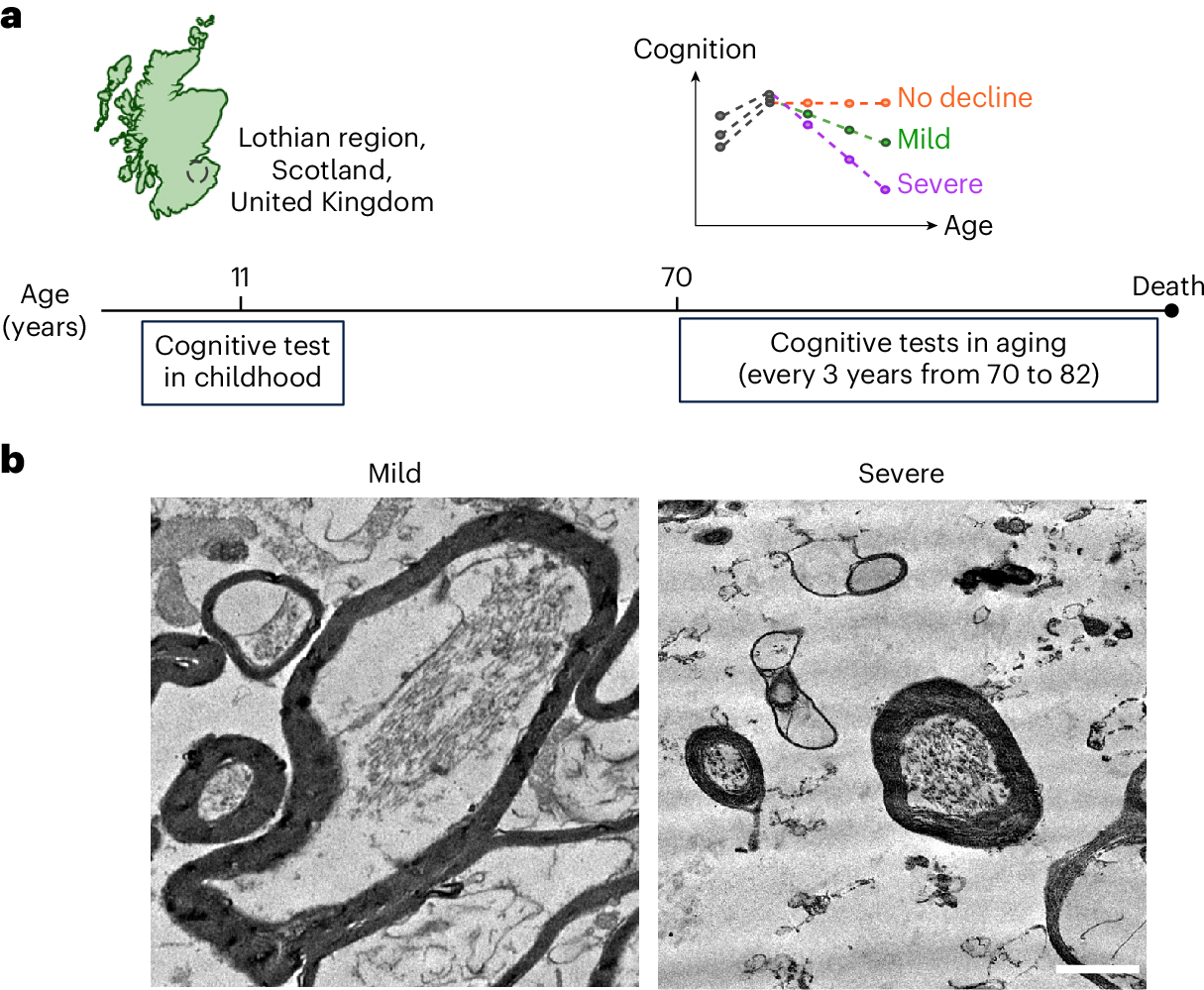
The challenge in studying the aging brain lies in obtaining accurate cognitive data that can be matched with cellular-level tissue analysis. Cognitive tests are typically performed during life, while molecular examination of brain cells requires post-mortem tissue. This disconnect has historically made it difficult to correlate cell function with cognitive outcomes.
The research team overcame this obstacle by leveraging a carefully curated human brain tissue bank that integrates clinical records, longitudinal cognitive assessments, and preserved brain samples. This resource allowed them to look at cognitive trajectories from across the entire human lifespan, from young adulthood to old age, and to associate those patterns with the condition of oligodendrocytes within the brain tissue.
By analyzing gene expression and cellular markers, the investigators could identify specific alterations in oligodendrocyte activity that correlated with cognitive performance. The design offers a powerful link between cellular changes and functional outcomes, a methodology that could become a model for future brain aging research.
From Tissue to Insight
The brain bank approach enables a more direct view of the aging process than animal models, which often fail to recapitulate the complexity of human cognition. Human tissue analysis can reveal subtle changes in gene transcription and protein production that occur over decades, providing a detailed molecular portrait of the aging brain.
The study's authors leveraged this approach to explore not just whether oligodendrocytes change with age, but how those changes relate to differences in cognitive status. By examining tissue from individuals with varying degrees of cognitive performance, they were able to distinguish processes that may be part of normal aging from those that are specifically detrimental.
Key Findings: Linking Oligodendrocytes and Cognition
The results of the study, as outlined in the published abstract, point to a clear association between altered oligodendrocyte function and cognitive decline. While the abstract text is truncated, the title itself asserts a promotional role for oligodendrocytes in age-related cognitive loss, suggesting that these cells are not just passive bystanders but active contributors to the aging phenotype.
Though the specific molecular details are not fully available in the public notice, the implication is that oligodendrocytes undergo functional changes that impair their ability to maintain healthy myelin or support neurons. This could lead to slower neural conduction, reduced circuit integrity, and ultimately cognitive deficits.
Potential Mechanisms
Several pathways could be implicated in this dysfunction. Age-related oxidative stress, inflammation, or metabolic decline may disrupt oligodendrocyte homeostasis. Additionally, changes in the expression of myelin-related genes could alter the composition or stability of the myelin sheath.
There is also emerging evidence that oligodendrocyte precursor cells, which are responsible for generating new oligodendrocytes throughout life, may fail to differentiate or mature properly in the aging brain. This would impair remyelination and plasticity, leaving existing myelin vulnerable to damage.
The present study likely adds valuable data to this conversation by pinpointing which of these processes are most influential in human cognitive aging. The integration of cognitive data means that the molecular changes observed are directly linked to how well the brain actually functions, increasing the clinical relevance of the findings.

Implications for Diagnostics and Therapy
These findings open new avenues for potential interventions aimed at preserving cognitive function in old age. If oligodendrocyte health is indeed central to maintaining cognitive abilities, then therapies that boost oligodendrocyte function or protect them from age-related damage could help stave off decline.
Lifestyle factors such as exercise, mental stimulation, and diet have already been shown to influence myelin plasticity and glial cell health. The new research may provide a molecular framework for why these interventions work, and could lead to targeted drug therapies that mimic their benefits.
From a diagnostic standpoint, markers of oligodendrocyte health in the blood or cerebrospinal fluid could eventually serve as biomarkers for early detection of cognitive decline. This would allow earlier intervention and better monitoring of disease progression in clinical trials.
Precision Medicine of the Aging Brain
The study also highlights the value of using human-derived data to guide research. By focusing on cell types that have often been overlooked in favor of neurons, the field of brain aging research is broadening its scope. Understanding the interplay between various brain cells will be essential to developing comprehensive treatments.
As we continue to dissect the mechanisms of cognitive aging, studies like this one remind us that the brain is an ecosystem of interacting cells. Oligodendrocytes are rising in prominence as key players in that ecosystem. With further research, we may one day be able to manipulate their function to promote healthier cognitive aging for all.
Conclusion
The investigation into oligodendrocyte function and cognitive decline marks an important step forward in our understanding of the aging brain. By leveraging a human brain tissue bank with rich cognitive data, the researchers have forged a path that connects molecular biology to real-world mental acuity.
As the search for longevity and healthy aging continues, insights into the fundamental role of glial cells will be indispensable. This study, with its focus on oligodendrocytes, reinforces the idea that maintaining the brain's infrastructure is just as crucial as protecting its signaling elements. With continued research in this vein, we move closer to strategies that might one day allow us all to retain our cognitive sharpness well into our later years.
This article is based on reporting by Nature Medicine. Read the original article.

Originally published on nature.com


