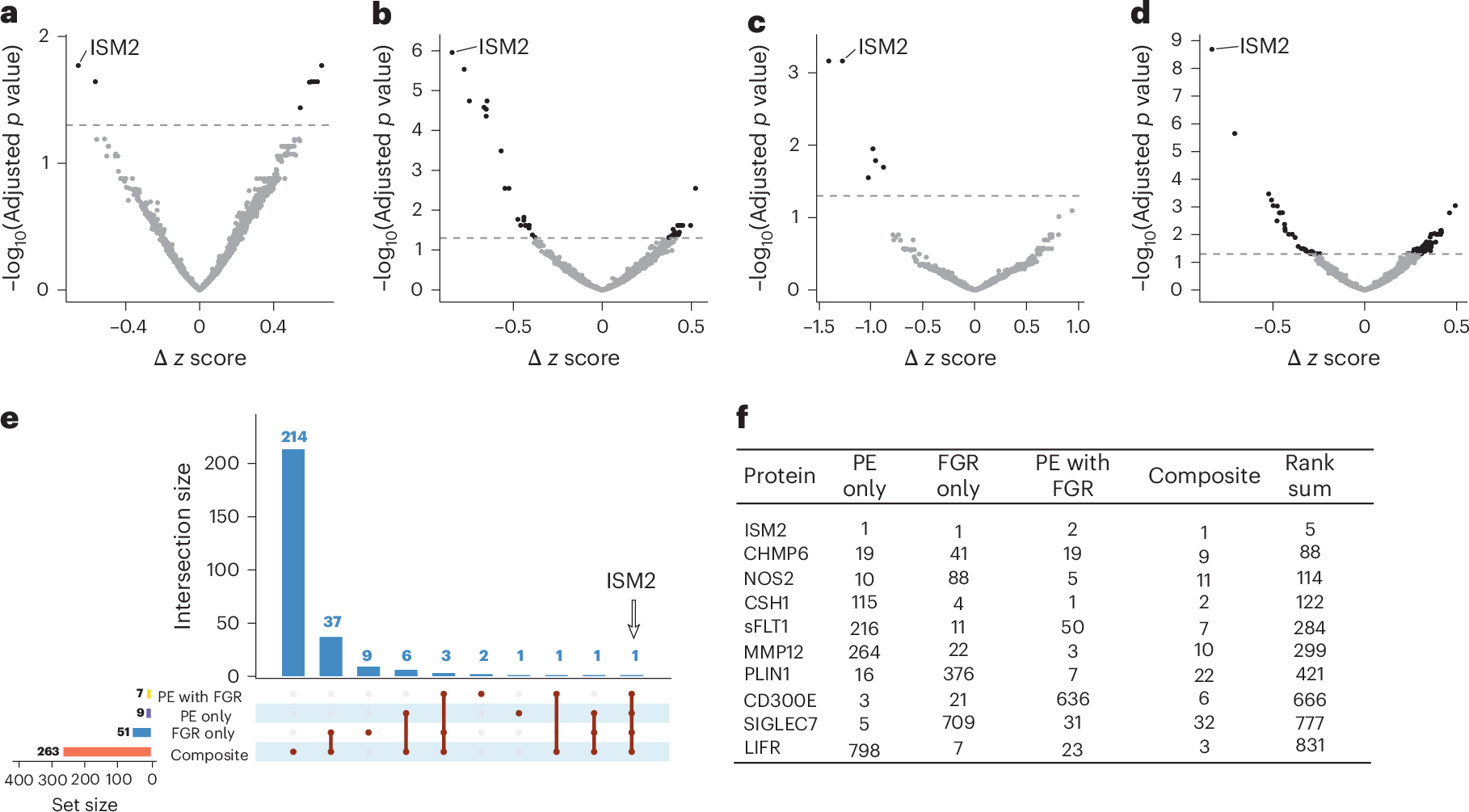
Preeclampsia and fetal growth restriction (FGR) are among the most feared complications in obstetrics, affecting millions of pregnancies worldwide and contributing significantly to maternal and neonatal morbidity and mortality. Early detection has long been a clinical priority, yet reliable screening tools for the first trimester have remained elusive. Now, a study published in Nature Medicine by Miao et al. presents compelling evidence that the protein Isthmin-2 (ISM2) may serve as an early predictor for both conditions, offering a potential breakthrough in prenatal care.
The research capitalizes on advances in serum proteomics, a technique that profiles the full set of proteins circulating in the blood. Analyzing samples from multiple pregnancy cohorts, the team found that first-trimester ISM2 levels are associated with the subsequent development of preeclampsia and FGR. If validated in broader populations, ISM2 could become a cornerstone of early risk assessment, enabling clinicians to identify high-risk pregnancies long before clinical symptoms appear.
The Clinical Challenge: Silent Onset, Severe Consequences
Preeclampsia is characterized by new-onset hypertension and proteinuria after 20 weeks of gestation, but its origins are thought to lie in the first trimester, when the placenta is establishing its blood supply. The disorder can progress to eclampsia, a life-threatening condition marked by seizures, and is a leading cause of maternal death globally. It also raises the risk of placental abruption, preterm birth, and long-term cardiovascular disease in the mother. Fetal growth restriction, defined as the failure of a fetus to reach its genetic growth potential, often results from placental insufficiency. It is associated with stillbirth, neonatal complications, and developmental issues that can persist into childhood.
These two conditions share a common pathophysiological root: defective placentation. Early in pregnancy, the placenta invades the uterine wall and remodels maternal blood vessels to ensure adequate blood flow. If this process is incomplete, it can lead to hypoxia, oxidative stress, and the release of anti-angiogenic factors into the maternal circulation, ultimately driving preeclampsia and impairing fetal growth. Because these pathological changes begin well before current diagnostic criteria are met, there has been intense interest in identifying first-trimester markers that reflect placental health.

The Study: Towards a First-Trimester Biomarker
The study by Miao and colleagues took a straightforward yet powerful approach: they examined serum proteomes from women in established pregnancy cohorts, linking protein profiles to pregnancy outcomes. This unbiased, hypothesis-free method allows the discovery of novel biomarkers that might be missed by targeted studies. The team focused on ISM2 after observing that its levels varied between women who later developed complications and those who did not.
Isthmin-2 is a relatively understudied protein, but it belongs to a family with known roles in angiogenesis, cell adhesion, and tumor biology. The exact function of ISM2 in pregnancy remains to be fully clarified, but its presence in the first-trimester serum suggests it may be involved in the early placental and maternal adaptations that set the stage for a healthy pregnancy. If ISM2 participates in extravillous trophoblast invasion or vascular remodeling, its altered levels could reflect the same placental dysfunction that leads to preeclampsia and FGR.
The study's design, using multiple independent cohorts, adds strength to the findings. Proteomic discovery studies are prone to overfitting, where signals are found only in the tested sample due to noise. By validating across diverse groups, the researchers have increased confidence that the association between ISM2 and these pregnancy outcomes is real and not a statistical artifact. The identification of a single protein with predictive utility, as opposed to a complex multi-marker panel, could also simplify clinical translation.
Why First-Trimester Prediction Matters
Current obstetric practice offers several screening methods, but they are either not available until the second trimester or are limited in their predictive accuracy. Nuchal translucency, for example, is measured at 11-13 weeks and is primarily used for chromosomal anomaly screening, though algorithms incorporating maternal factors, ultrasound, and serum markers can provide a risk score for preeclampsia. However, these scores often have modest sensitivity and are not universally implemented. Uterine artery Doppler, another tool, is more useful in the second trimester.
A first-trimester blood test based on ISM2 would be a major advance for several reasons. First, it would allow earlier identification and more frequent monitoring of at-risk women. Second, there is growing evidence that early intervention, such as low-dose aspirin, can reduce the incidence and severity of preeclampsia when started before 16 weeks of gestation, but this prophylactic window is frequently missed if risk is only discovered later. Third, knowing that a pregnancy is high-risk for FGR could prompt tailored surveillance for fetal growth, allowing obstetricians to detect problems earlier and make timely decisions about intervention or delivery. The aim is not merely to predict, but to change outcomes by guiding preventive and surveillance strategies.
From a clinical perspective, the potential utility of ISM2 extends to resource-limited settings. Preeclampsia and FGR disproportionately burden low- and middle-income countries, where obstetrical ultrasound is not always available. A simple serological test, performed on the same blood drawn for routine first-trimester laboratory work, could be particularly valuable in these regions.

Implications and Future Research
The findings of Miao et al. open up several avenues for future investigation. The most immediate next step is replication in larger, more diverse and prospective cohorts that reflect the global population. It is crucial to determine whether ISM2 levels are consistent across ethnicities, maternal ages, and body mass indices, and whether they are confounded by other variables such as smoking, parity, or multiple gestation. Researchers will also need to define gestational age-specific reference ranges and to evaluate whether ISM2 adds predictive value beyond existing clinical and biochemical markers.
Beyond predictive ability, questions remain about the biology of ISM2. If the protein is indeed a mediator rather than merely a bystander in placental dysfunction, it might become a therapeutic target. Understanding the pathways through which ISM2 operates could provide deeper insight into preeclampsia and FGR, possibly leading to new treatments. For instance, if ISM2 is found to modulate trophoblast invasion or maternal endothelial function, drug developers might consider whether restoring normal levels could prevent or attenuate these diseases.
The study also highlights the broader promise of serum proteomics in maternal-fetal medicine. The plasma proteome is a dynamic readout of maternal physiology and placental health, and modern high-throughput platforms can quantify thousands of proteins simultaneously. As computing tools and bioinformatics algorithms continue to improve, it is likely that more biomarkers will emerge for a range of pregnancy complications, including preterm birth, gestational diabetes, and placenta accreta.
A Step Toward Better Pregnancy Outcomes
It is important to remember that this study is an incremental, albeit significant, step. The journey from a candidate biomarker to a clinically accepted test is long and rigorous. It requires analytical validation, clinical validation, and ultimately demonstration of clinical utility: that using the test leads to improved health outcomes. Nonetheless, the identification of ISM2 as a first-trimester predictor of both preeclampsia and fetal growth restriction represents a meaningful entry point for further research.
The potential health impact is substantial. Each year, preeclampsia complicates 2-8% of all pregnancies and is responsible for an estimated 70,000 maternal deaths and 500,000 fetal deaths globally. FGR affects roughly 5-10% of pregnancies and is a leading cause of stillbirth and neonatal death, as well as a contributor to the non-communicable disease burden later in life. The ability to predict these conditions in the first trimester would allow scarce resources to be concentrated on those most in need, potentially saving lives and preventing lifelong disability.
As with all scientific advances, cautious optimism is warranted. The Nature Medicine report provides a strong foundation, but larger trials and translational research will determine whether ISM2 enters the clinical arsenal. For now, the work of Miao and colleagues is a reminder that the most routine part of pregnancy—the first-trimester blood draw—may one day offer a far deeper window into the health of both mother and child. The promise of early prediction is now one step closer to reality.
This article is based on reporting by Nature Medicine. Read the original article.

Originally published on nature.com