A blood test strategy for ALS risk is starting to take shape
A new longitudinal study in Nature Medicine reports that changes in blood proteins can signal the approach of clinically manifest amyotrophic lateral sclerosis years before symptoms appear. The work focuses on people who carry ALS-associated pathogenic variants but have not yet developed disease, a group that has been difficult to study because clinicians have lacked reliable ways to estimate who will convert to symptomatic ALS and when.
That limitation matters well beyond diagnosis. Prevention trials depend on knowing which participants are likely to develop disease within a practical study window. Without that, trials become slower, larger and more uncertain. The new research tries to close that gap by using repeated plasma measurements over time instead of relying on a single biological snapshot.
What the researchers analyzed
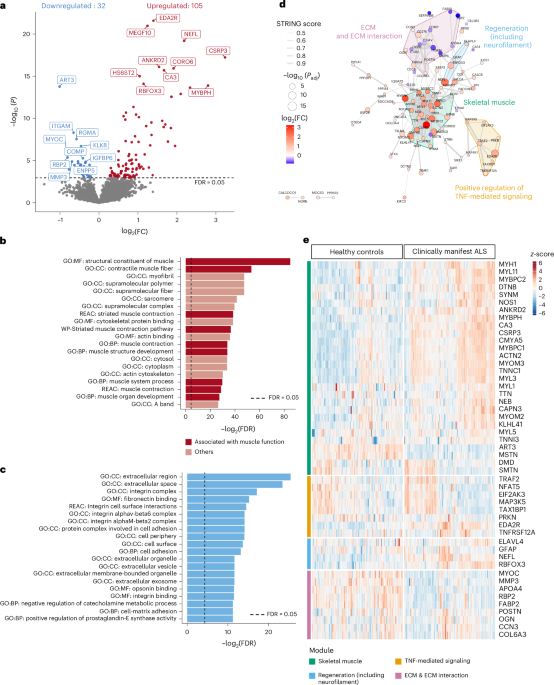
The study included 516 serially collected plasma samples from several groups: 33 people who later phenoconverted to clinically manifest ALS, 35 patients who already had ALS, 10 pre-symptomatic pathogenic variant carriers and 59 controls. Using Olink Explore high-throughput proteomics, the researchers tracked how protein concentrations changed before phenoconversion and asked whether those trajectories could be turned into a predictive tool.
The result was a set of 92 proteins whose levels shifted before disease became clinically apparent. From that broader group, the team identified a core panel of 19 proteins that collectively predicted phenoconversion across time horizons ranging from six months to five years. Reported cross-validated area-under-the-curve values ranged from 0.80 to 0.89, suggesting the model carried meaningful discriminative power across multiple windows rather than only near the point of diagnosis.
The researchers also reported that the panel generated estimates of time to phenoconversion with a mean absolute error of 1.6 years. For a disease area where even rough timing has been difficult to establish before symptoms emerge, that level of performance is notable. It does not mean the field suddenly has a definitive clinical test ready for broad deployment, but it does suggest that a multi-protein approach may be substantially more informative than the narrower biomarker strategies used so far.

Why this matters for ALS research
ALS is usually diagnosed only after symptoms become apparent, by which point motor neuron damage is already underway. Researchers have long searched for biomarkers that could reveal disease biology earlier, both to understand what happens in the pre-symptomatic phase and to create a foundation for prevention-focused intervention. This study contributes to both goals.
First, the work maps biological change during the interval before overt disease. That matters because pre-symptomatic ALS is not simply a blank waiting period; the findings indicate that measurable molecular shifts are already occurring in blood plasma as phenoconversion approaches. Second, the study provides a practical framework for ranking risk and estimating timing, which is the kind of information trial designers need when deciding whom to enroll and when to intervene.
The paper also suggests that ALS risk prediction may need to rely on combinations of markers rather than a single standout protein. That is important because one candidate biomarker, neurofilament light chain, has drawn major interest in neurodegeneration research. Here, the authors reported that the multi-protein panel outperformed neurofilament light chain alone in estimating time to phenoconversion.
Replication adds weight, with limits
The findings were partially replicated using UK Biobank data. According to the paper, that external analysis confirmed pre-symptomatic increases in several proteins, including NEFL, EDA2R and CA3, and supported the broader conclusion that a multi-protein panel can outperform NEFL alone for timing estimates.
Partial replication is not the same as complete validation, and the study itself points to the need for continued follow-up. The cohort sizes for certain subgroups, especially pre-symptomatic carriers who had not yet converted, remain relatively small. That is a persistent challenge in rare-disease biomarker work, particularly when the target population is defined not only by diagnosis but by genotype and disease stage.
Even so, the longitudinal design strengthens the signal. Repeated sampling lets researchers observe trajectories rather than isolated differences between people, which is especially valuable when trying to infer when a clinically silent disease process begins to intensify.

What comes next
The immediate implication is not that routine ALS screening is around the corner. Instead, the study offers a better research instrument: a way to identify biological risk earlier and more precisely in people already known to carry ALS-associated pathogenic variants. That could sharpen prevention-trial design, help stratify participants by likely conversion window and improve the field’s understanding of the earliest disease phase.
Longer term, the work supports a broader shift in neurology toward preclinical detection using composite blood-based markers. If future studies validate and refine this panel across larger and more diverse populations, the approach could become central to how ALS researchers test preventive therapies before irreversible loss of function becomes obvious at the bedside.
For now, the paper’s contribution is clear. It moves ALS biomarker research beyond the question of whether pre-symptomatic change exists and toward a more practical question: can those changes be measured well enough to predict who is nearing disease onset and when? This study suggests the answer may increasingly be yes, provided the field continues to build and validate multi-marker models with longitudinal data.
This article is based on reporting by Nature Medicine. Read the original article.
Originally published on nature.com