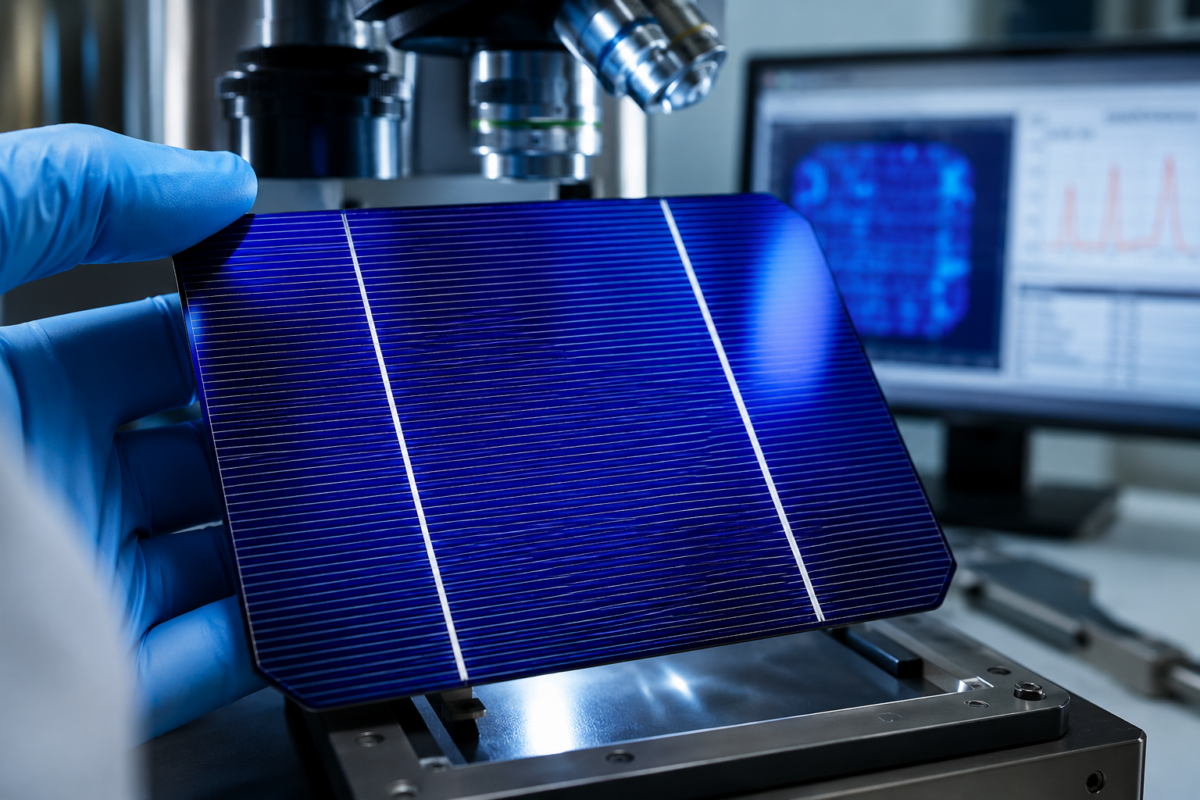
U.S. solar manufacturing may be heading for a breakout year
Investment in domestic photovoltaic manufacturing could rise sharply in 2027, according to a new U.S.-specific analysis reported by pv magazine. The forecast suggests solar manufacturing capital expenditure may reach as much as $7 billion that year, a roughly 150% year-on-year jump. If that materializes, 2027 would mark a major expansion point for the U.S. solar supply chain, particularly for crystalline-silicon production.
The headline number matters not just because it is large, but because of what it implies about industrial direction. For years, U.S. solar policy has aimed to move beyond deployment incentives and into actual manufacturing depth. A multi-billion-dollar capex surge would indicate that domestic production is no longer a marginal adjunct to module demand, but an increasingly central part of the country’s clean-energy buildout.
Crystalline silicon takes the lead
The supplied source text says more than 90% of the projected 2027 spending could go into the crystalline-silicon value chain, compared with roughly 10% attributed to thin-film, represented here by First Solar. That is a striking split because it suggests the U.S. market’s next investment wave is expected to be shaped overwhelmingly by silicon-based manufacturing rather than by a diversified technology mix.
Crystalline silicon already dominates global PV deployment, but domestic manufacturing policy in the United States has often been discussed in broader strategic terms, including resilience, trade exposure, and technology optionality. This forecast instead points to a simpler near-term reality: if major U.S. manufacturing expansion comes quickly, it is likely to be silicon-led.
The article attributes much of the expected jump to large investments from companies including Tesla and Corning. It also says the analysis was built from the ground up by reviewing the investments, effective capacities, and production levels of more than 35 domestic producers, with data reaching back to 2020 and extending by quarter to the end of the forecast horizon. That bottom-up methodology matters because it implies the projection is tied to actual announced and developing capacity plans rather than a purely top-down market estimate.

Why 2027 could matter more than 2026
Clean-energy manufacturing expansion rarely follows a smooth line. Projects move through site selection, financing, equipment procurement, and commissioning on different schedules, while policy clarity can accelerate or delay commitments. The forecasted 150% jump in 2027 suggests the current pipeline may be approaching a release point where multiple projects begin translating from plans into spending in the same period.
If so, 2027 would function as more than a strong year. It would become a test of whether the United States can build manufacturing scale across enough of the solar value chain to matter strategically, not just symbolically. The domestic industry has long been constrained by gaps between module assembly and upstream inputs. A surge in capex could indicate a broader attempt to close some of those gaps.
Industrial policy meets supply-chain strategy
The broader significance is that solar manufacturing is no longer only a climate story. It is also a supply-chain and industrial-policy story. Building more domestic PV capacity can reduce dependence on imports, improve responsiveness to policy goals, and create more predictable sourcing channels for utilities and developers. It can also expose how hard manufacturing localization really is, especially in an industry defined by fierce price competition and global overcapacity in some segments.
The supplied source text frames 2027 as a breakout year for the domestic supply chain. That phrasing is important. It suggests analysts are seeing not just isolated factory announcements, but a more systemic shift in manufacturing ambition. Whether that ambition becomes durable will depend on execution, market conditions, and how far upstream investment really extends.
- The forecast sees U.S. PV manufacturing capex reaching up to $7 billion in 2027.
- That would represent about 150% year-on-year growth.
- More than 90% of projected spending is expected to go to the crystalline-silicon value chain.
- The estimate is based on a bottom-up review of more than 35 domestic producers.
What this would mean if realized
A $7 billion spending year would not by itself guarantee a fully resilient domestic solar industry. But it would mark a decisive shift from policy ambition to industrial buildout. The most important detail in the forecast is not only the size of the number. It is the suggestion that U.S. manufacturers may be moving into a phase where capital spending is becoming concentrated, large-scale, and increasingly aligned around a dominant technology path. If that happens, 2027 may be remembered as the year domestic solar manufacturing stopped looking tentative and started looking like an industry with real momentum.
This article is based on reporting by PV Magazine. Read the original article.
Originally published on pv-magazine.com




