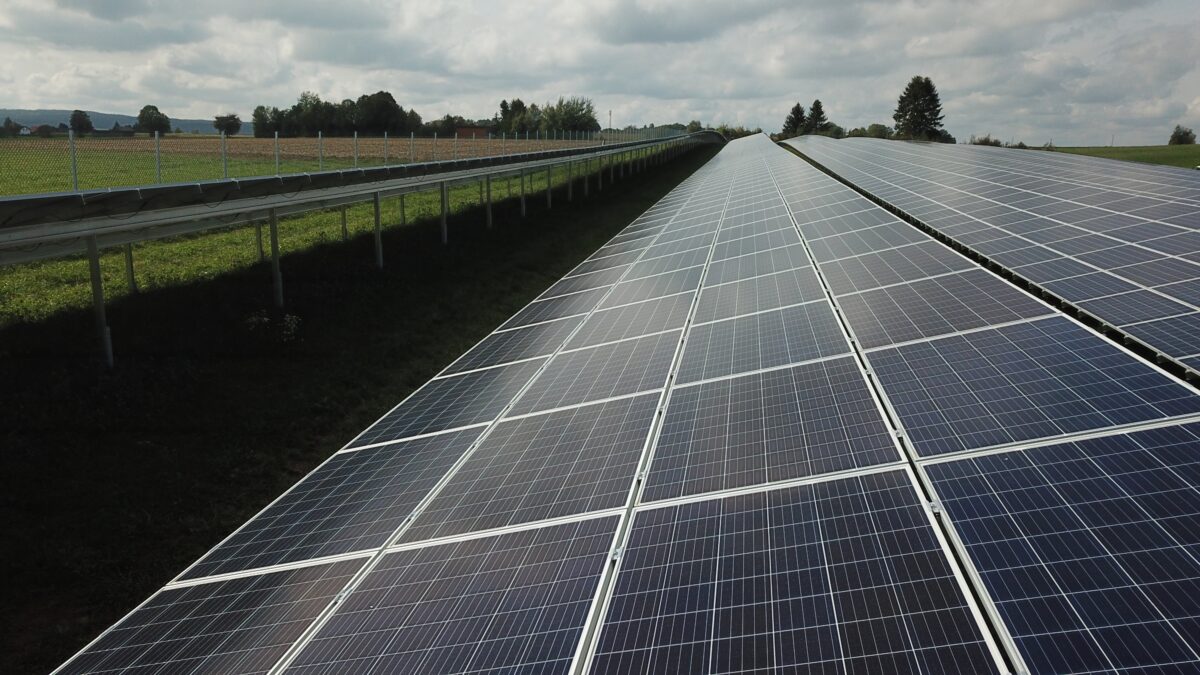
A record buildout with a clear center of gravity
The U.S. grid is on track for a huge year in utility-scale expansion. According to federal data cited by pv magazine, developers plan to add 86 gigawatts of new utility-scale capacity in 2026, with solar and battery storage accounting for nearly 80 percent of those planned additions. That is not just a large number. It is a strong signal about what kind of generation the U.S. power system is choosing to build.
Solar alone is expected to contribute 43.4 gigawatts, a figure pv magazine says would represent a 60 percent increase compared with 2025 installations. Battery storage is also positioned as a major growth engine. Together, the two technologies are carrying most of the expansion story, while fossil fuel capacity continues to decline on a net basis.
This is a meaningful market shift because new-build patterns reveal more than rhetoric. Power systems change when developers, utilities, and financiers repeatedly choose one class of assets over another. The latest data suggests that, at the utility scale, solar and storage are no longer an emerging side story. They are the main event in planned capacity additions.
What the numbers imply for the grid
One reason the data stands out is its mix. Solar capacity by itself is significant, but storage changes the operational picture. A grid adding both at scale is not simply adding more renewable generation. It is adding more flexibility around when that generation can be used and how it can support system balancing.
That matters because one of the long-running criticisms of solar has been that generation peaks do not always align with demand peaks. Batteries do not eliminate that issue, but they help absorb excess generation and shift delivery to more valuable hours. The projected buildout therefore points to a power system investing not only in low-carbon energy production but in the tools needed to make that production more grid-compatible.
pv magazine also notes that renewable generation rose 10.8 percent in the first two months of the year, reaching 26 percent of total U.S. electricity generation. Even on its own, that figure shows renewables occupying a larger share of actual output, not just future plans. Combined with the project pipeline, it suggests momentum that extends beyond one data release.

Texas and the geography of scale
The report says Texas accounts for 40 percent of all new utility-scale solar projects, reinforcing the state’s role as the dominant hub for large-scale solar deployment. That is notable because Texas often functions as both a market signal and a stress test. If utility-scale solar and storage can scale aggressively in a market known for size, competition, and heavy electricity demand, it strengthens the case that the technologies are commercially durable rather than merely policy-dependent.
Geographic concentration also cuts both ways. Leadership from one state can accelerate deployment, supply chains, and operating experience. It can also highlight how uneven the buildout remains across regions. Still, when one state absorbs such a large share of the pipeline, it becomes a central driver of national totals and a leading indicator for industry direction.
Beyond capacity headlines
Capacity numbers are not the same as delivered energy, and planned projects are not identical to completed ones. But they are still one of the clearest windows into how the sector expects the near future to unfold. A projected 86-gigawatt year with solar and batteries comprising nearly four-fifths of additions points to a system investing in a different buildout model than the one that dominated previous decades.
That model has several implications. It favors faster-deploying modular resources. It increases the importance of interconnection and transmission management. It pushes storage from a supporting role toward core infrastructure. And it suggests that future debates over grid reliability will increasingly revolve around how to integrate and manage clean resources at scale, not whether they can attract deployment at all.
The pv magazine summary also places the numbers in the context of net fossil fuel decline. That framing matters because it turns the story from one of mere addition to one of replacement and transition. New clean capacity is not only filling growth. It is increasingly reshaping the composition of the fleet.
For policymakers and investors, the main takeaway is straightforward. Utility-scale solar remains the largest source of planned new capacity, and batteries are moving with it. For the grid, that means the center of gravity in new construction continues to shift toward technologies designed around clean generation and flexible dispatch.
If the 2026 plan holds, this will be remembered as another step in the U.S. power system’s acceleration toward a solar-and-storage buildout era. The scale alone is noteworthy. The composition is the real story.
This article is based on reporting by PV Magazine. Read the original article.

Originally published on pv-magazine.com




