A significant planning decision for UK offshore wind
The UK government has granted development consent for the Dogger Bank South offshore wind projects and the North Falls offshore wind farm, advancing three major schemes in one move. According to Energy Monitor, the approval covers Dogger Bank South West and Dogger Bank South East, two projects being developed as a joint venture between RWE and Masdar, as well as the North Falls project being developed by RWE and SSE Renewables.
The decision matters because offshore wind development depends not only on turbine technology and project finance but on long, detailed planning and permitting processes. Consent does not mean the wind farms are built. It does mean the projects have cleared a major hurdle and can now move into final design, procurement, and later investment decisions with a much stronger footing.
What was approved
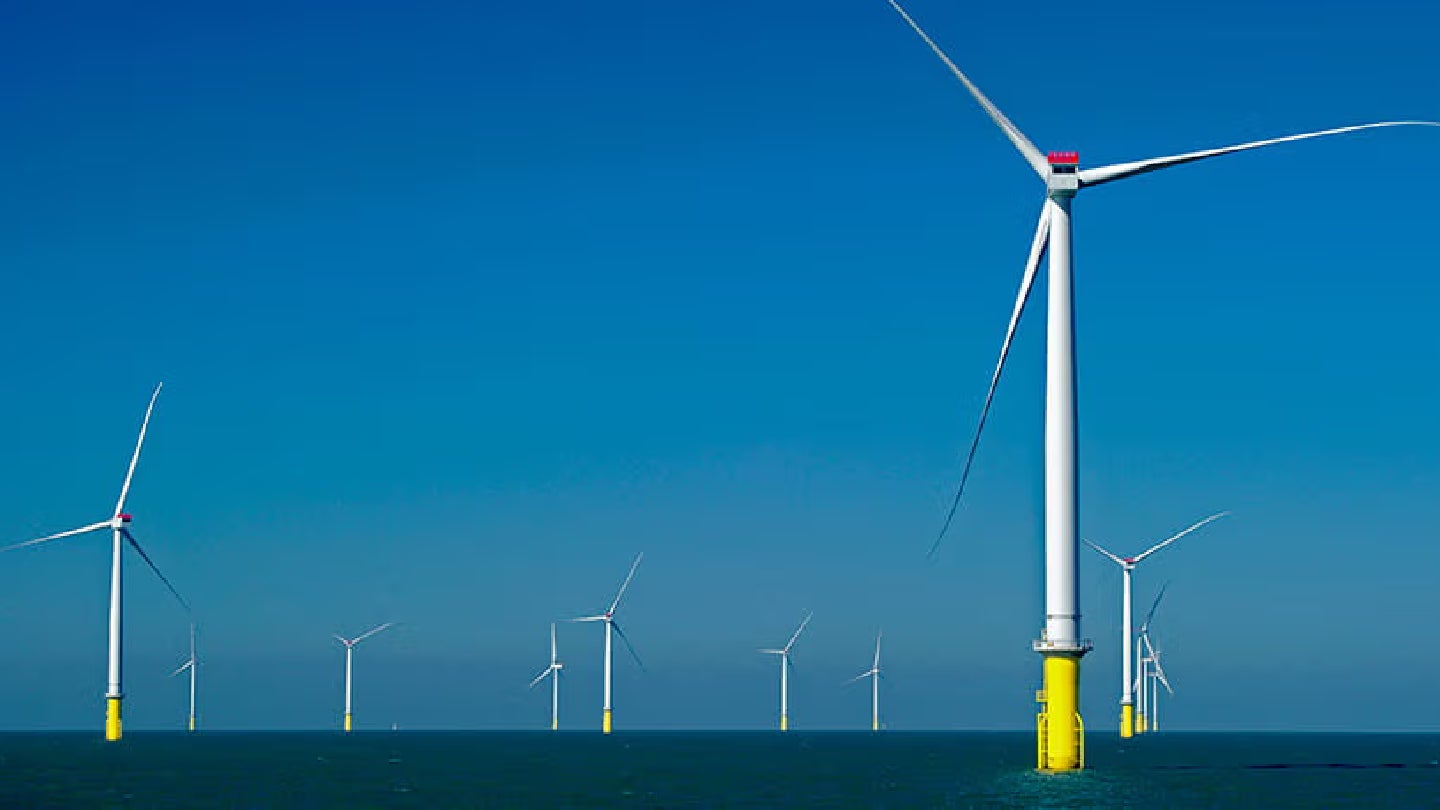
The Dogger Bank South projects each carry 1.5 gigawatts of installed capacity, for a combined 3 gigawatts. Energy Monitor says that level of output could meet the annual electricity needs of roughly three million UK households. The developments are located in the North Sea more than 100 kilometers off England’s northeast coast. The approved plans include as many as 100 turbines at each site, plus subsea export cables, onshore cabling, converter stations, and related construction infrastructure.
North Falls, meanwhile, would sit about 40 kilometers from the East Anglia coast and extend the broader offshore wind footprint associated with the Greater Gabbard area. Together, these approvals underscore how large offshore projects have become both generation assets and major infrastructure systems, linking seabed installations, coastal landfalls, transmission equipment, and grid interfaces into a single coordinated build.
Why policy timing matters
The approval follows a lengthy review process. The source says the Dogger Bank South application was submitted in June 2024, after which the Planning Inspectorate reviewed more than 1,000 documents and held ten online examination hearings before consent was granted on May 14, 2026. That timeline captures a central tension in the energy transition: governments want rapid clean-power expansion, but large projects still move through complex procedures that can stretch across years.
From an industry perspective, this is why development consent is a material event. Investors, contractors, and supply-chain partners need confidence that projects can move from concept to construction. Every major planning milestone reduces uncertainty, even when a final investment decision remains in the future.
The commercial picture
Energy Monitor reports that the Dogger Bank South projects secured contracts for difference through the UK government’s Allocation Round 7 in January 2026. That matters because revenue support frameworks are often as important as physical approval. A wind farm can have a good site and planning consent and still struggle if its long-term economics are weak. With support mechanisms in place and planning approval granted, the projects now look more real in both regulatory and commercial terms.
The developers are targeting a final investment decision in 2027. That means there is still execution risk ahead, from procurement and financing to supply-chain availability and construction timelines. But the direction of travel is clear: the projects are moving out of the purely procedural phase and into the stage where design and delivery decisions become more concrete.
Why this matters beyond the UK
Offshore wind is one of the few renewable technologies capable of delivering very large increments of power from a single project cluster. That makes it strategically important for countries trying to decarbonize electricity systems while maintaining scale and reliability. The UK has long treated offshore wind as a national industrial and climate priority, and decisions like this reinforce that posture.
- Dogger Bank South West and East together account for 3 gigawatts of capacity.
- The projects could supply electricity for roughly three million UK households.
- Developers now aim for final investment decisions in 2027.
The significance of the consent is not that turbines will appear overnight. It is that a major block of future renewable generation has moved materially closer to construction. In a sector where years can be lost to planning friction, that is real progress.
This article is based on reporting by Energy Monitor. Read the original article.
Originally published on energymonitor.ai