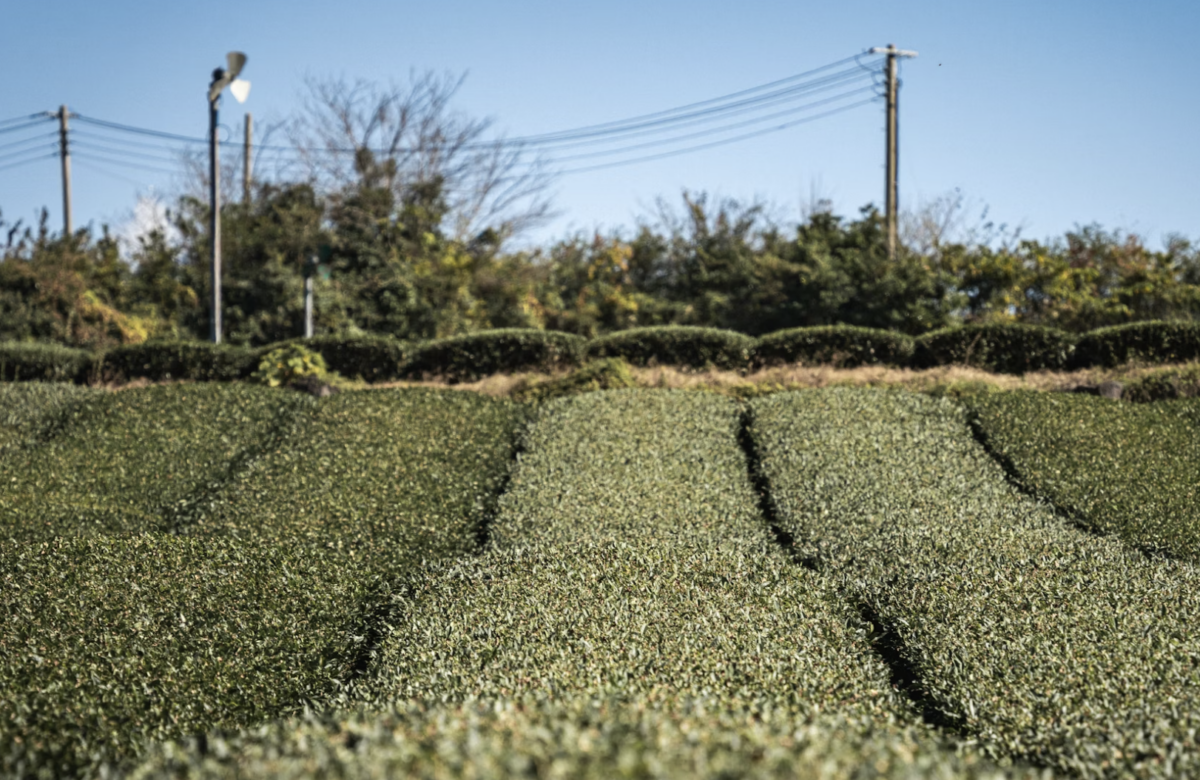
South Korea creates a national framework for agrivoltaics
South Korea’s National Assembly has approved the country’s first dedicated agrivoltaics law, creating a legal framework for projects that combine agricultural production with solar power generation. The legislation is a meaningful policy step for a country with limited available land, but it arrives with an equally important constraint: zones covering nearly half of South Korea’s farmland remain excluded, according to the nonprofit group Solutions for Our Climate.
Reported by pv magazine on May 13, the new measure is formally titled the Act on the Promotion and Support of Agrivoltaics. Its core purpose is to support dual use of agricultural land for food production and solar electricity. That is a significant development in a country where land scarcity shapes energy policy choices.
Why agrivoltaics matters in South Korea
The supplied source text explains the structural challenge clearly. More than 60% of South Korea’s territory is mountainous, while farmland accounts for just 19% of total land area. In that setting, conventional ground-mounted solar expansion can quickly collide with competing land-use demands. Agrivoltaics offers a way to ease that conflict by allowing solar generation and farming to coexist on the same land.
That makes the law more than a niche regulatory change. It is an attempt to widen the country’s renewable energy options without assuming that large tracts of idle, easily developable land are available. In dense or geographically constrained countries, that type of policy can have outsized importance because it changes the boundaries of what counts as usable energy space.
The legislation also appears designed to improve project bankability. According to the source, the act extends land-use permits for agrivoltaic projects from eight years to 23 years. That longer time horizon can provide greater financial certainty for both farmers and developers, making it easier to plan investments around solar infrastructure that must operate for long periods to justify upfront costs.

The major limitation: half of farmland remains excluded
Even so, the law does not open all agricultural land equally. The supplied source says zones covering nearly half of the country’s farmland remain excluded. That caveat is central to evaluating the policy. On one hand, South Korea now has a formal legal basis for agrivoltaics. On the other, some of the land most relevant to large-scale deployment is still unavailable.
This tension is what makes the story important. The law is real progress, but it is not a blanket authorization. Policymakers have moved to legitimize dual-use solar farming in principle while still preserving significant restrictions in practice. That means the eventual impact of the legislation may depend less on its headline intent than on how much viable land remains accessible after exclusion zones are applied.
The source attributes the farmland-limit assessment to Solutions for Our Climate, a Seoul-based nonprofit focused on energy transition. That perspective does not invalidate the law’s significance, but it does indicate that implementation details could substantially affect how transformative the policy becomes.
A balancing act between energy transition and land protection
The politics behind such a law are easy to infer from the structure described in the source, even without additional detail. Agricultural land carries economic, environmental, and social importance. A government cannot simply recategorize farmland for energy use without addressing concerns about food production, rural livelihoods, and long-term land stewardship. Agrivoltaics is attractive precisely because it tries to avoid framing the choice as farming versus solar.
But the exclusions show that compromise has limits. South Korea appears to be endorsing the model while reserving large areas from participation. That may reflect caution about where dual-use development should occur, how agricultural output should be protected, or how rural landscapes should be managed. The source text does not spell out the legal reasoning behind the excluded zones, so stronger conclusions would go beyond the evidence supplied. What can be said is that the law simultaneously opens a new category of renewable development and narrows it.
What longer permits could change
The extension of permits from eight years to 23 years may prove one of the most consequential parts of the legislation. Renewable energy projects often depend on long operating periods to recover capital costs and generate stable returns. A short land-use window can undermine financing or deter participation entirely. A 23-year framework is more aligned with the lifespan expectations of solar assets and could make projects more realistic for a wider range of participants.
For farmers, that can mean stronger predictability around land use and income planning. For developers, it can reduce a major uncertainty in project economics. For lenders or investors, it can make the difference between a concept and a financeable asset. In that sense, the law does not merely authorize agrivoltaics; it reshapes the commercial conditions under which it might scale.
Why this policy shift matters beyond South Korea
Countries with limited open land are increasingly confronting the same question: how can renewable deployment expand without triggering deeper conflict over land use? South Korea’s new law is one answer. It does not eliminate the tension, but it creates a framework for sharing space between agriculture and solar generation.
That makes the measure relevant outside South Korea as well. It shows how governments may try to unlock more renewable capacity by formalizing dual-use models rather than relying only on conventional siting. At the same time, the farmland exclusions are a reminder that these policies are rarely simple. Legal recognition can coexist with strict geographic limits, and implementation details often determine whether a promising framework translates into substantial build-out.
From the supplied source, the clearest conclusion is that South Korea has taken an important first legislative step on agrivoltaics while leaving major constraints in place. The law expands the policy toolkit for solar development, but it does so within boundaries that may still limit how much of the country’s agricultural landscape can participate in the energy transition.
This article is based on reporting by PV Magazine. Read the original article.

Originally published on pv-magazine.com