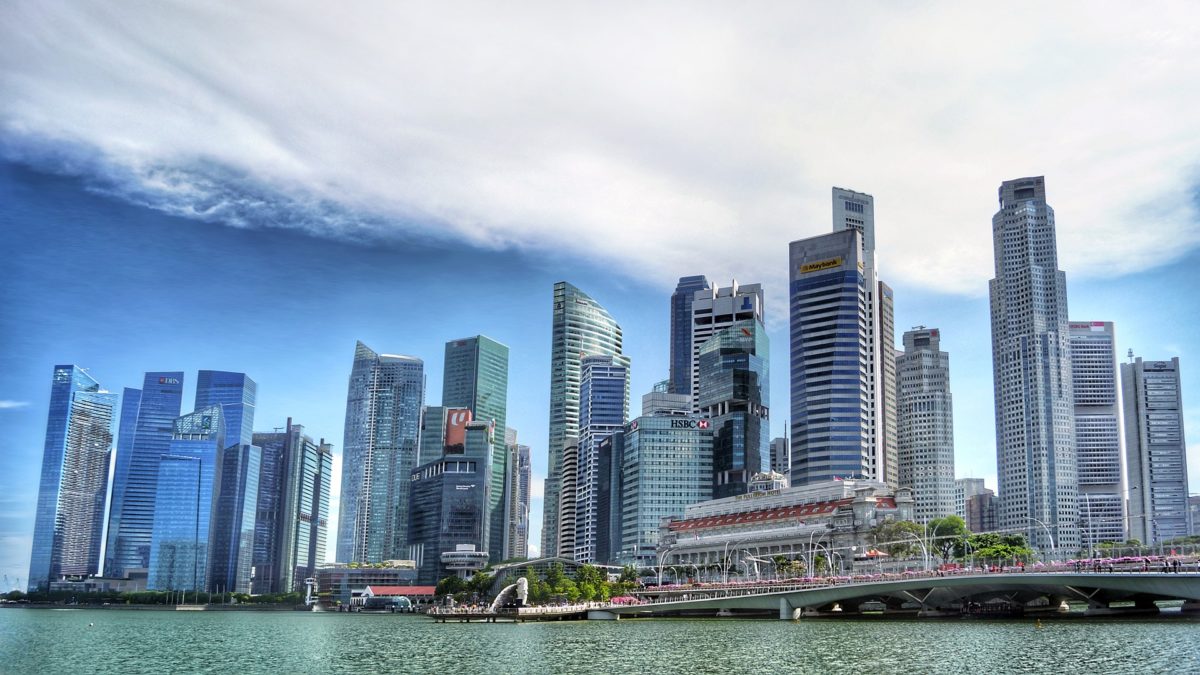
Singapore turns hydrogen readiness into a bid requirement
Singapore has moved hydrogen from a long-term aspiration into a hard procurement rule. In a new request for proposals for at least 600 MW of gas-fired generation capacity, the Energy Market Authority has made hydrogen readiness a mandatory condition rather than a discretionary feature.
The tender calls for the private sector to build, own, and operate one combined cycle gas turbine unit of at least 600 MW by the end of 2031. The framework also includes an option for up to two additional units by early 2032. But the most consequential detail is not the plant size. It is the fuel requirement attached to it: new units must be able to operate with at least 30% hydrogen by volume.
According to the source text, proposals that fail to meet the tender’s cardinal requirements will be disqualified from evaluation. That makes hydrogen readiness part of the minimum threshold for competing, not merely a point-scoring advantage inside the review process.
A policy signal disguised as infrastructure planning
At one level, the move is a conventional capacity procurement. Singapore expects system peak demand to rise at a compound annual growth rate of 2.4% to 4.8% through 2034, with energy-intensive industries including semiconductors and data centers among the drivers. New generation will be needed to support that load.
At another level, however, the tender is a policy statement about what kind of thermal capacity Singapore is willing to add. Gas remains central to the near-term power mix under this structure, but new assets must be positioned for a lower-carbon fuel pathway from the outset. That requirement reduces the risk that plants built to maintain reliability in the 2030s become harder to adapt as emissions standards tighten or fuel strategies evolve.
The tender also sets an emissions intensity limit of 0.355 metric tons of CO2-equivalent per MWh at a 75% plant load factor at net electricity output. The Energy Market Authority has separately published a consultation on proposed emissions standards. Taken together, those measures suggest the regulator is trying to align capacity expansion with a more disciplined emissions framework rather than treating the two as separate tracks.
Why hydrogen readiness matters here
Hydrogen-ready gas plants have become a recurring concept in energy planning, but procurement language varies widely from market to market. Some frameworks encourage optional future conversion. Singapore’s approach is more concrete in the source text: bidders must demonstrate the ability to be at least 30% hydrogen-ready by volume.
That requirement does not mean the plant will run immediately on hydrogen, nor does it guarantee hydrogen supply economics will be favorable when the units enter service. What it does mean is that engineering, equipment selection, and project design must account for a transition path from day one. In practical terms, that can shape turbine configuration, combustion strategy, and long-term retrofit planning.
It also changes how developers assess bid risk. A project that might be financeable as a straightforward gas asset now has to satisfy technical readiness conditions and emissions constraints at the same time. The regulator is effectively asking for dispatchable capacity that is reliable under current needs but less locked into a single-fuel future.
No revenue support, and financing matters
The Energy Market Authority is not just asking for technical compliance. The source text says participants must demonstrate their ability to finance the proposed generation business, and that no revenue support will be provided. That is a significant commercial condition.
Without revenue support, bidders must build their case around the power market and the credibility of long-term plant economics. The hydrogen-readiness requirement therefore sits inside a market design that still expects the private sector to carry substantial commercial responsibility. For developers, the challenge is not only to present compliant technology but also to show that the asset can stand on its own financially.
This combination may narrow the field to players with stronger balance sheets, better access to capital, or more established thermal generation experience. It may also favor bidders who can present a persuasive roadmap on how hydrogen-capable design choices will be managed without undermining bankability.

What the tender says about regional energy strategy
Singapore’s move reflects a broader tension visible across many power systems: the need to add firm capacity without locking in the highest-emitting version of that capacity for decades. In a fast-growing, land-constrained, industry-heavy economy, reliability requirements do not disappear simply because decarbonization targets get sharper. The policy challenge is to procure plants that can support growth while preserving optionality for cleaner fuels later.
The source text does not claim that hydrogen will solve every part of that equation, and it does not say when or how fuel switching would occur at scale. But it does show Singapore embedding hydrogen compatibility into a live procurement decision rather than leaving the issue for future retrofit debates. That makes the tender notable beyond its headline megawatts.
If executed as designed, the project would add at least 600 MW of new gas-fired capacity by the end of 2031, with the possibility of additional units by early 2032. More importantly, it would establish a precedent: in Singapore’s next generation buildout, fuel flexibility and emissions performance are no longer peripheral considerations. They are core entry conditions.
Key takeaways
- Singapore’s new power tender requires one combined cycle gas turbine unit of at least 600 MW by the end of 2031.
- New units must be at least 30% hydrogen-ready by volume, and bids that miss cardinal requirements will be disqualified.
- The tender also sets an emissions intensity limit of 0.355 metric tons of CO2-equivalent per MWh at a 75% load factor.
- No revenue support will be provided, and bidders must demonstrate they can finance the project.
This article is based on reporting by PV Magazine. Read the original article.
Originally published on pv-magazine.com