A permitting deal is now tied to the federal government’s treatment of renewable energy projects
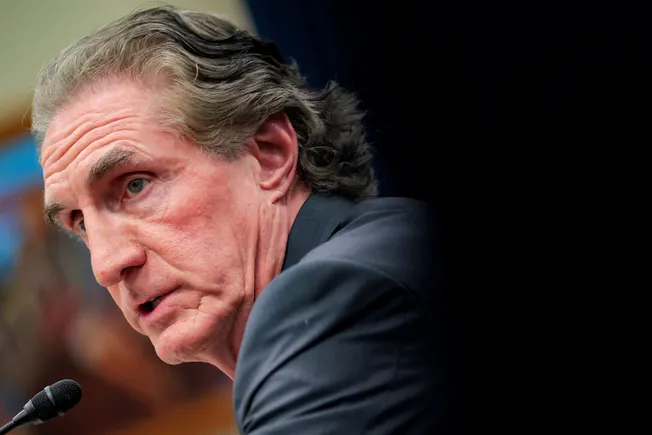
A bipartisan push to overhaul federal permitting rules has hit a sharper political obstacle: Senate Democrats say they will keep blocking a broader reform package unless the Interior Department stops what they describe as the slow-walking of renewable energy permits. The warning, delivered during Interior Secretary Doug Burgum’s appearance before the Senate Energy and Natural Resources Committee, turns a procedural policy debate into a high-stakes dispute over whether the federal government is applying permitting rules evenly across energy technologies.
The dispute matters because permitting reform has often been framed as one of the few areas where lawmakers from both parties might still find common ground. Supporters argue that the United States needs faster approvals for major infrastructure of all kinds, including transmission, generation, pipelines, mines, and industrial facilities. But that coalition depends on trust that the executive branch will administer the system consistently. Several senators said that trust has broken down.
Sen. Martin Heinrich of New Mexico, the committee’s ranking Democrat, told Burgum that members of his caucus need confidence that “balls and strikes are going to be called” fairly. In practical terms, that means Democrats want evidence that renewable projects are not being subjected to special delays, extra review layers, or discretionary hurdles that are not being applied equally elsewhere. Sen. Angus King of Maine made the leverage plain as well, saying there would not be votes for reform without assurance and urging Burgum to move permits that senators say are sitting on his desk.
A court ruling has intensified the confrontation
The political pressure has been sharpened by recent litigation. Heinrich pointed to an April 21 preliminary injunction issued by U.S. District Judge Denise Casper in Massachusetts in a case brought by regional clean energy organizations. The groups sought relief from federal actions that paused permitting or imposed added review steps for solar and wind projects. According to the account presented at the hearing, the judge used the term “slow-walked” in describing the projects’ treatment.
Burgum rejected the underlying accusation and said the administration strongly disagrees with the court’s view. He told senators that the projects had received appropriate review and indicated that the department’s solicitor would respond through the legal process. That answer did little to resolve the core political problem. For lawmakers already skeptical of the administration’s handling of clean energy approvals, the refusal to concede error reinforced the sense that permitting policy and project-level decisions are moving on separate tracks.
This is not the first time the issue has derailed broader talks. The article notes that Sen. Sheldon Whitehouse of Rhode Island and Heinrich had already ended permitting reform discussions in December after the Trump administration ordered work to halt on offshore wind farms under construction, a move later overturned in federal court. That history suggests the current standoff is not a temporary disagreement about one hearing or one case. It reflects a deeper argument over whether permitting reform can be separated from the administration’s use of executive power in energy development.
Why the stakes extend beyond renewable developers
The immediate consequence is legislative paralysis. Any bipartisan permitting bill that needs Democratic votes in the Senate becomes harder to assemble if a substantial part of the caucus believes reform would simply streamline a system that the administration is already tilting against wind and solar. In that scenario, a bill meant to accelerate infrastructure could instead become politically associated with selective enforcement.
The broader consequence is that reformers lose the central selling point they have used for years: that faster permitting should be technology-neutral. If senators conclude the federal government is putting its thumb on the scale, then reforms advertised as neutral may be viewed as benefiting some energy sectors while leaving renewables exposed to agency delay. That would undercut one of the few narratives capable of holding together environmental moderates, clean-energy advocates, industrial interests, and reliability-focused lawmakers.
The hearing also shows how permitting debates are now inseparable from legal risk. Once project pauses and additional reviews are challenged in court, agency actions are no longer just administrative choices; they become evidence in a larger argument about bias, process, and federal authority. That raises the stakes for every disputed permit because each case can influence congressional bargaining.
For the administration, the position appears to be that disagreement with the court does not equal unfairness in the process. For its Senate critics, the standard is more practical: if major renewable projects are being delayed, then assurances about neutral permitting are not credible. Until that gap is closed, the legislative path remains narrow.
What to watch next
The next question is whether the Interior Department changes course in visible ways. Senators are looking not just for statements but for permits to move. If approvals resume or stalled projects advance, talks could recover. If not, the coalition behind bipartisan reform may remain frozen, with each new court filing and committee hearing deepening mistrust.
That would leave Washington in a familiar but consequential place: broad agreement that the U.S. permitting system is too slow, but no agreement on how to fix it when the politics of implementation have become as contentious as the statute itself. For now, the message from Senate Democrats is straightforward. No matter how strong the abstract case for reform may be, they are not prepared to rewrite the rules while they believe renewable energy projects are being obstructed in practice.
This article is based on reporting by Utility Dive. Read the original article.
Originally published on utilitydive.com